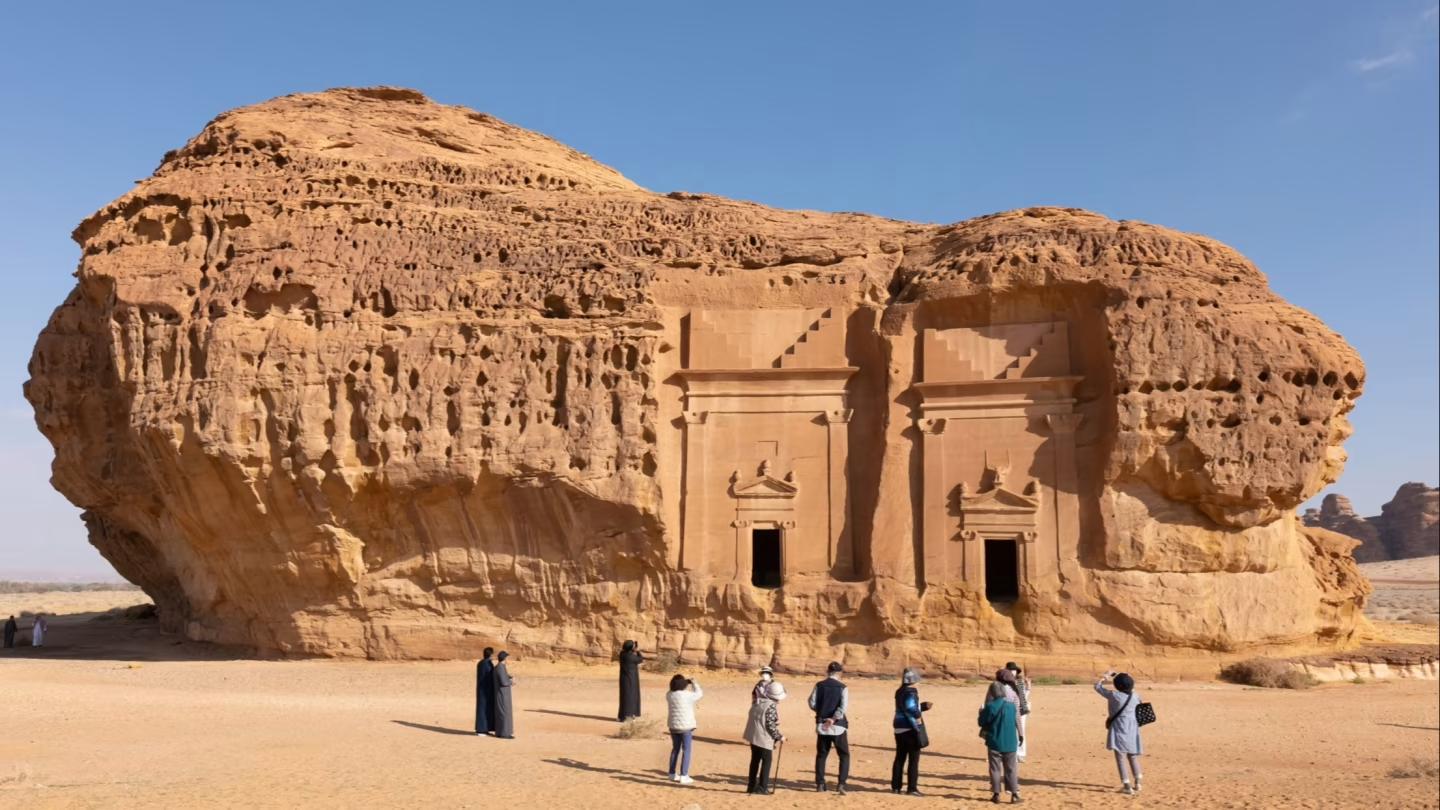
On the 27th of September 2019, Saudi Arabia made the formal announcement of a landmark and pivotal decision in the nation’s history. The state would now issue tourist visas to 49 countries for a fee of $80- meaning that for the first time in the Kingdom’s existence, people could visit for “leisure”- (not for business, pilgrimage or employment). This monumental decision was part of a greater sphere of change surrounding Vision 2030 and other projects aiming to diversify the economy beyond oil, and the Arab country wasted no time in attempting to lure foreign holiday-makers to previously fenced-off riches.
Targets and Where the Kingdom is on their Journey
Like most nations, Saudi Arabia love setting ambitious targets for the future, and the tourism sector is no exception. Initially, the Kingdom aimed to reach a milestone 100 million tourists annually by 2030- stunningly, even their own expectations were hugely exceeded as this number was hit by February 2024, causing the aim to be amended to 150 million. As it stands, 4.5% of the country’s GDP is tourism, however the target for five years’ time is 10%. It’s clear so far that there is indeed a demand for Saudi Arabia amongst foreigners, however when looking at the demographic of those visiting, we can see that they are yet to truly tap into the Western market, with the most common nationalities of arrivals being from Bahrain, Kuwait, Egypt, Pakistan and Indonesia- only 680,000 inbound tourists visited the Middle-Eastern state from the UK in 2023. Other than most of them being very close to Saudi Arabia, there’s something all those previously mentioned states have in common- they’re majority Muslim. The fact Mecca is located in the country means than tourism numbers are vastly skewed due to the sheer volume of people arriving for pilgrimage purposes. For example, it’s reported that around 20 million people visited in 2019, but an estimate of half of those were in the nation for hajj and umrah.

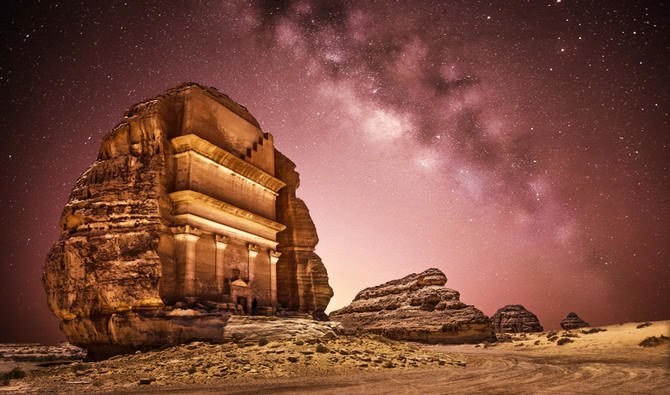
(City skyline (World Finance) Monument at night (Arab News))
King Salman International Airport
It’s a pretty well-known fact that Saudi Arabia’s huge oil industry has given them enviable cash to burn, and a key factor in the state’s current transformation is investment in tourism. The Saudi Press Agency has reported that over $800 million has been poured into the sector, and in February 2023, a new ministry of tourism was established. One of the biggest projects is the King Salman International Airport, which is currently under-development in Riyadh. Built around the King Khalid International Airport, it would be the largest in the world when completed. The airport would include six passenger terminals, a private aviation terminal, six runways and cover a land area of 57km2. In quite stunning comparison, London Heathrow only has four terminals, two runways (there are plans for a third) and covers a site of just over 12km2! Saudi Arabia’s aim is for their model airport to be able to handle 100m passengers per year by 2030, 150m by 2050 and 3.5m tonnes of cargo per year in a quarter-century of time. King Salman is a key factor in the nation trying to “realise its potential” as a tourism superpower.

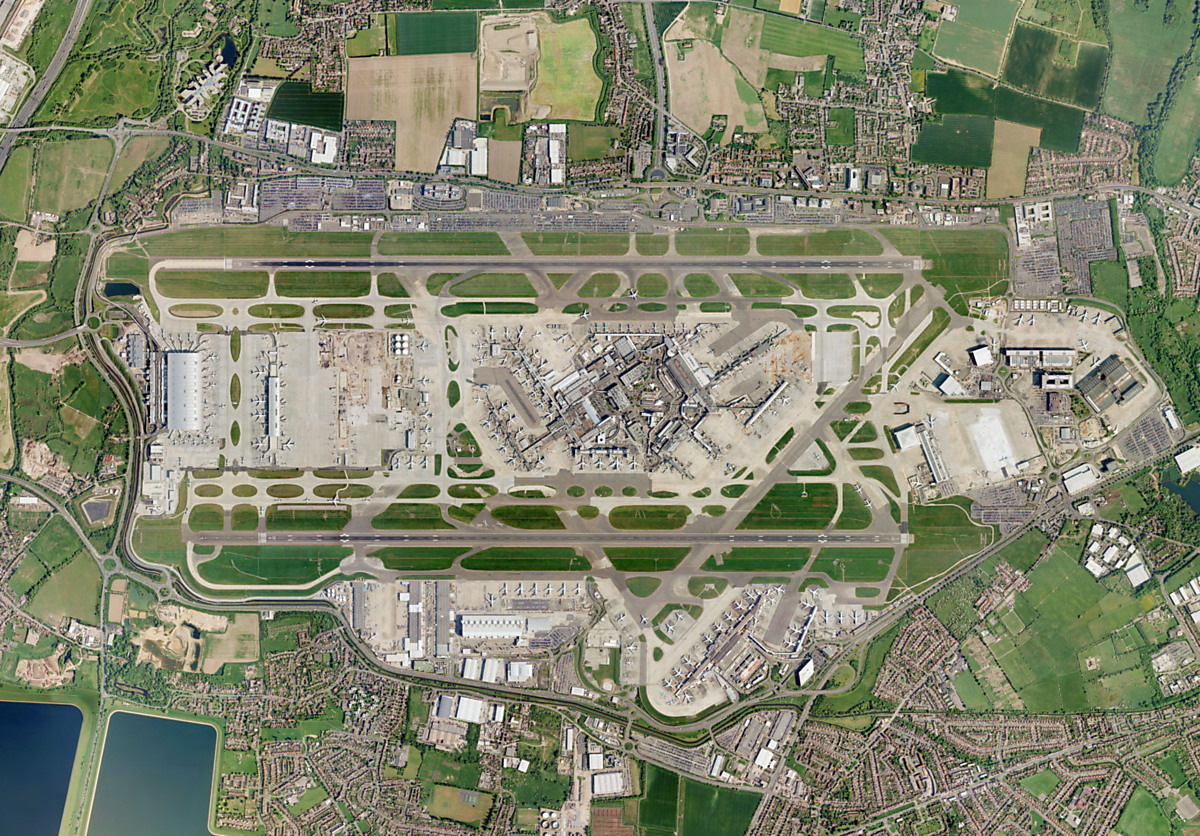
(King Salman International Airport compared to Heathrow aerially (Civil Engineer & Heathrow Media Centre))
Extent of Money’s Power over Tourism
The amount of tourists a country can attract isn’t just controlled by how much money they invest, how safe the country is and how many fancy buildings there are- it’s also about the natural beauty and cultural richness, which is something that money can’t change in a small period of time. That begs a huge question- does Saudi Arabia possess the necessary tools required to be a tourism superpower? Whilst it’s difficult and controversial to analyse how great a nation’s culture and physical landscape is, we can look at the current reasons that people visit the Middle-Eastern state. Certainly as far as I’m aware, Western tourists don’t go for those reasons, and unfortunately for the country, there are more well-discovered, bigger names on the table. I’m not trying to infer that Saudi Arabia lacks heart and natural wonders (because it doesn’t), but if you want to experience the sweltering yet stunning heat of an endless desert, then the first destinations that many think of are north African states such as Morocco, Tunisia and Egypt. Admittedly, Saudi Arabia may take the gold medal if you’re interested in Islamic culture, however when non-pilgrimage numbers are taken out, the nation is outperformed by fellow Muslim countries. For me personally, the best way for Saudi Arabia to attract visitors is to target those wanting a holiday of luxury relaxation, man-made beaches and high-rise five star hotels. I have no doubt the Ministry of Tourism will know this, and the amount of British people who go to Dubai to look at palm-tree shaped beaches from the top of the Burj Khalifa every year will no doubt spur them on to follow that particular route.


(Beach in the UAE (iStock) Pyramids of Giza (New Atlas))
Problems with People’s Opinion
A gargantuan issue that the Saudi Ministry of Tourism have to solve is the motives of people to actively not want to visit their nation. Part of this series explores why Saudi Arabia feel they have to change how people view them in the world due to the nation’s reputation of human rights issues surrounding migrant workers and women. The country is 126th out of 146 in the World Economic Forum’s Global Gender Gap index and this mistreatment of women no doubt discourages female travellers to visit. Additionally, some may be attracted by the nation’s climate, yet there are recent concerns over that as well, because of the fact that temperatures exceeded 50 Celsius in Mecca in June 2024, leading to the death of 1,400 pilgrims. There aren’t many members of the LGBTQ+ community that even like the Saudi Arabian government in any way, let along want to visit their country due to laws forbidding sexual activity of same-sex people, which can sometimes be punished by execution. There will be an article in this series highlighting the issues in the Saudi Arabian legal system that prevent them from fully integrating into the West, whilst past and present controversies discourage people from visiting the nation- many may not want to fund such a dividing regime.
Riyadh Air
Moving on to a better tone however, is Riyadh Air. The three-year development of the airline is a superb metaphor for the rapid rise of Saudi tourism in recent years. Founded on the 12th March 2023, it’s a national airline of Saudi Arabia and a company of the Public Investment Fund endorsed by Crown Prince Mohammed Bin Salman. Despite not yet even having their maiden flight, the company has already purchased 72 Boeing 787-9s and 60 Airbus A321s, with the aim of reaching 100 destinations in five years’ time. That would be some achievement, and we’re expecting the airline to take off in a literal sense very soon. So far, it appears that Riyadh Air is doing quite a lot right- they’re in the UN’s Global Compact and pledge to adhere to global sustainability standards (slightly odd for a jet-engine powered airline funded by PIF oil money), whilst in a commercial sense, the company are already the primary shirt sponsor of Spanish football club Atletico Madrid, and also have partnered with the North American football federation CONMEBOL. There’s clearly a desire within the airline to embrace a modern era of social media brand-ability, as seen with their smart, indigo liveries, cabin crew clothing modelled from 1950s fashion and their own personal “Brand Sonic” music range. All preparations now seem in place for a maiden voyage, from their first flight simulator to partnerships with other airlines (notably Delta), and it’s going to be a fascinating watch as they attempt to become a premium airline, a model for Saudi Arabia, and a flagship for their tourism industry.
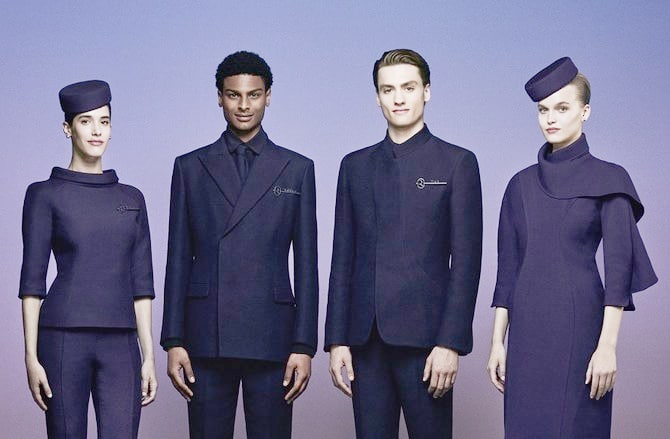
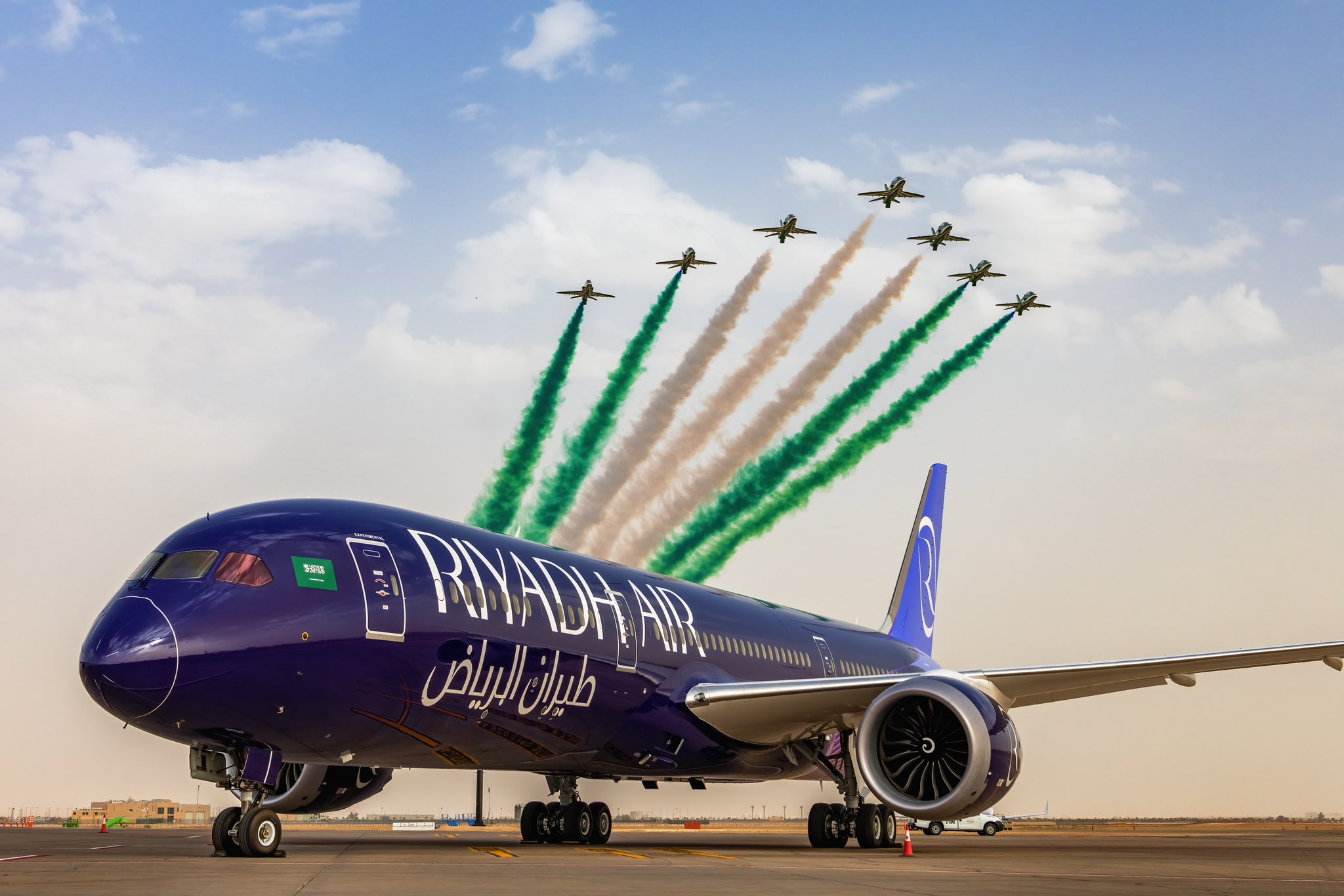
(Riyadh Air uniform (NAUMD) Riyadh Air livery (Aviation A2Z))
How Saudi Arabia are using tourism
With everything taken into account, it’s clear that Saudi Arabia has a hugely exciting tourism industry- vast parts of the nation remain untapped by the outside world, the state has a largely undiscovered 1,118 km Red Sea coastline, huge engineering projects and its towering buildings will no doubt attract people desiring a more “plastic” holiday experience, and there’s an incredibly large case for Saudi Arabia being the beating heart of the Arab world, making it arguably the best place for tourists to experience Islamic culture. Despite numbers being skewed because of Mecca-related reasons, the growth of annual visitors is quite stunning- between 2022 and 2023 there was a 64.8% increase in inbound tourists. Admittedly, it’s certainly a thought for the future, but the Saudi region of Neom (home of “The Line” which will be discussed later in the series) is also looking to become a first-class holiday destination, as the Saudi’s aim to create unique ecosystems within the area. Most notably is Trojena, which aims to become a world-class centre for Winter sports and adventure- soon we may be going on skiing holidays to Saudi Arabia rather than Italy! With all this optimism, we must however look at why the Kingdom is motivated to expand their tourism industry after years of doors being closed to the nation.
Obviously it’s a key leg of their Vision 2030 aims to diversify their economy beyond oil, as it doesn’t just bring in money from tourists, but separate industry has to be created to accommodate them as well. Another alleged reason for Saudi Arabia revolutionising their tourism sector is of course to change the world’s opinions of the state. Clearly the nation’s heaviest critics would never even think about visiting, however those who have passively negative ideas may put the human rights issues to the side, in order to experience a recently made-available destination, and come out the other side of a stay liking the country (if they had a good time). Again, like in the sports section, we can see that this is possibly yet another strategy of the Saudis trying to mask the poorer aspects of the nation by giving people experiences that are controlled to be brilliant in the first place. Yes, there’s a level of nuance, as the World Cup 2034 could be a flat one or you could get an awful hotel whilst on holiday, however chances are that you would enjoy your stay in the Arab state and think positively of the country for the time afterwards. Despite not being the primary intention of the tourism boom in Saudi Arabia, this is a very simple concept to understand and even though there is a lack of evidence that the government has these desires, it’s pretty easy to see that tourism is being used to change itself and global perceptions.
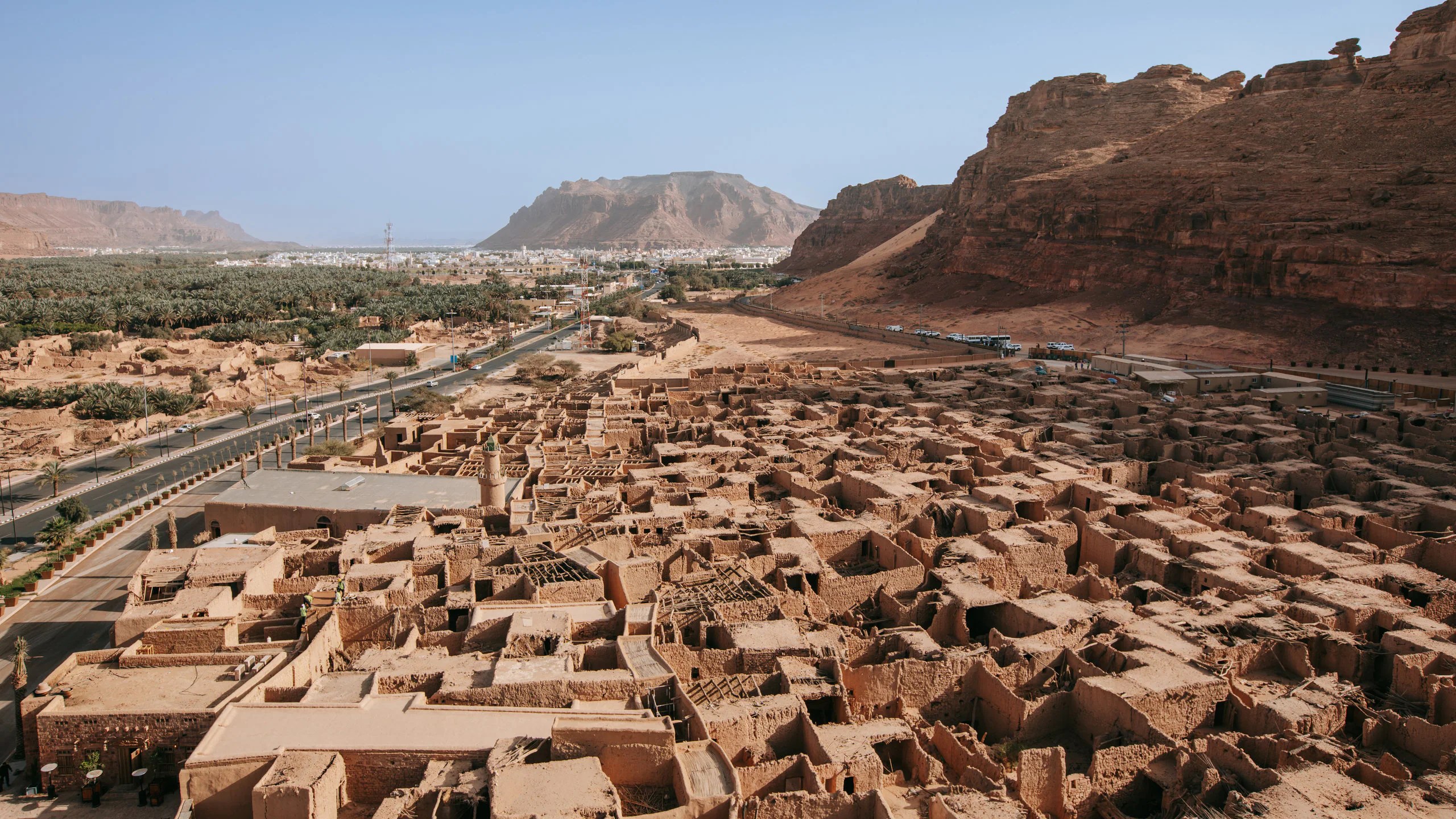
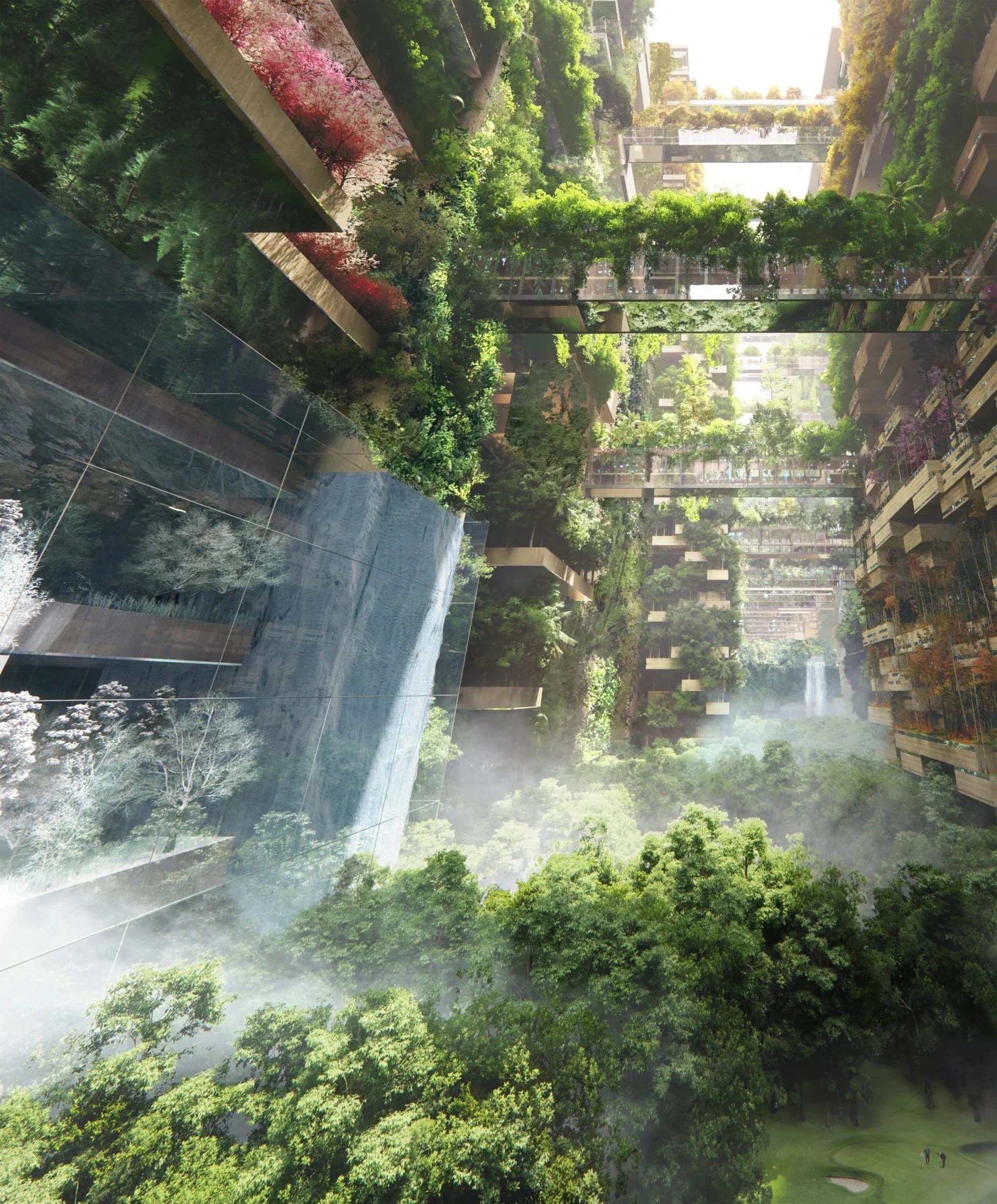
Articles in the series you may have missed so far….
Saudi Arabia’s Transformation: How It’s Changing Itself and Global Perceptions- Sport
Saudi Arabia’s Transformation: How It’s Changing Itself and Global Perceptions- Introduction
Reader’s Voice
I would be delighted to hear reader’s opinions on how Saudi Arabia is allegedly using tourism to alter people’s perspective on the Kingdom. The answers will be put together in a “Readers Voice” post, and the username specified will be included above the quotation unless USERNAME is written in the following box. Answers from readers may have to be trimmed for size or relatability, and words that shouldn’t be featured in the blog will be replaced by more respectable ones. There is no guarantee all quotations will be selected.





 Your World Explored
Leave a comment