

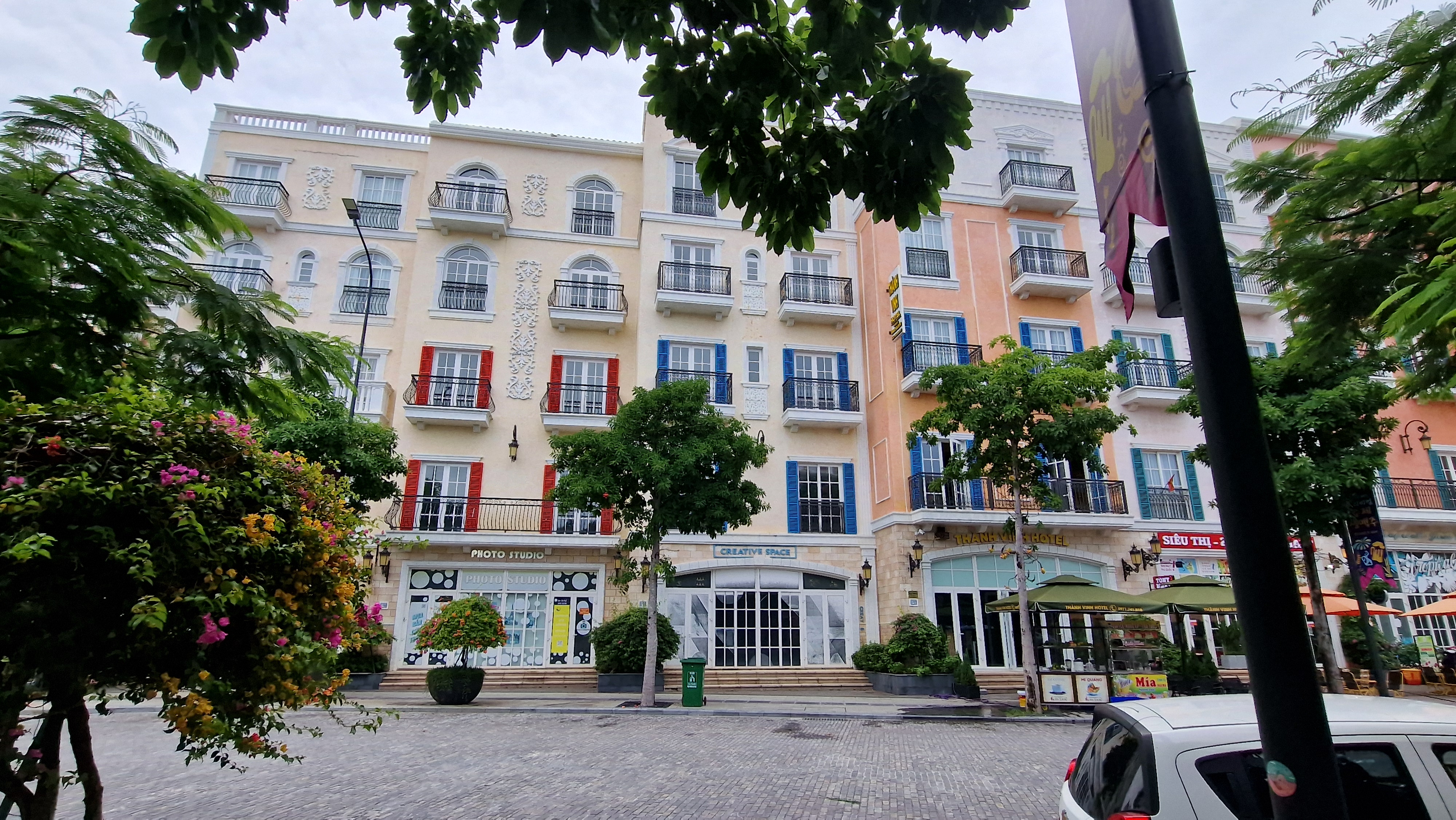
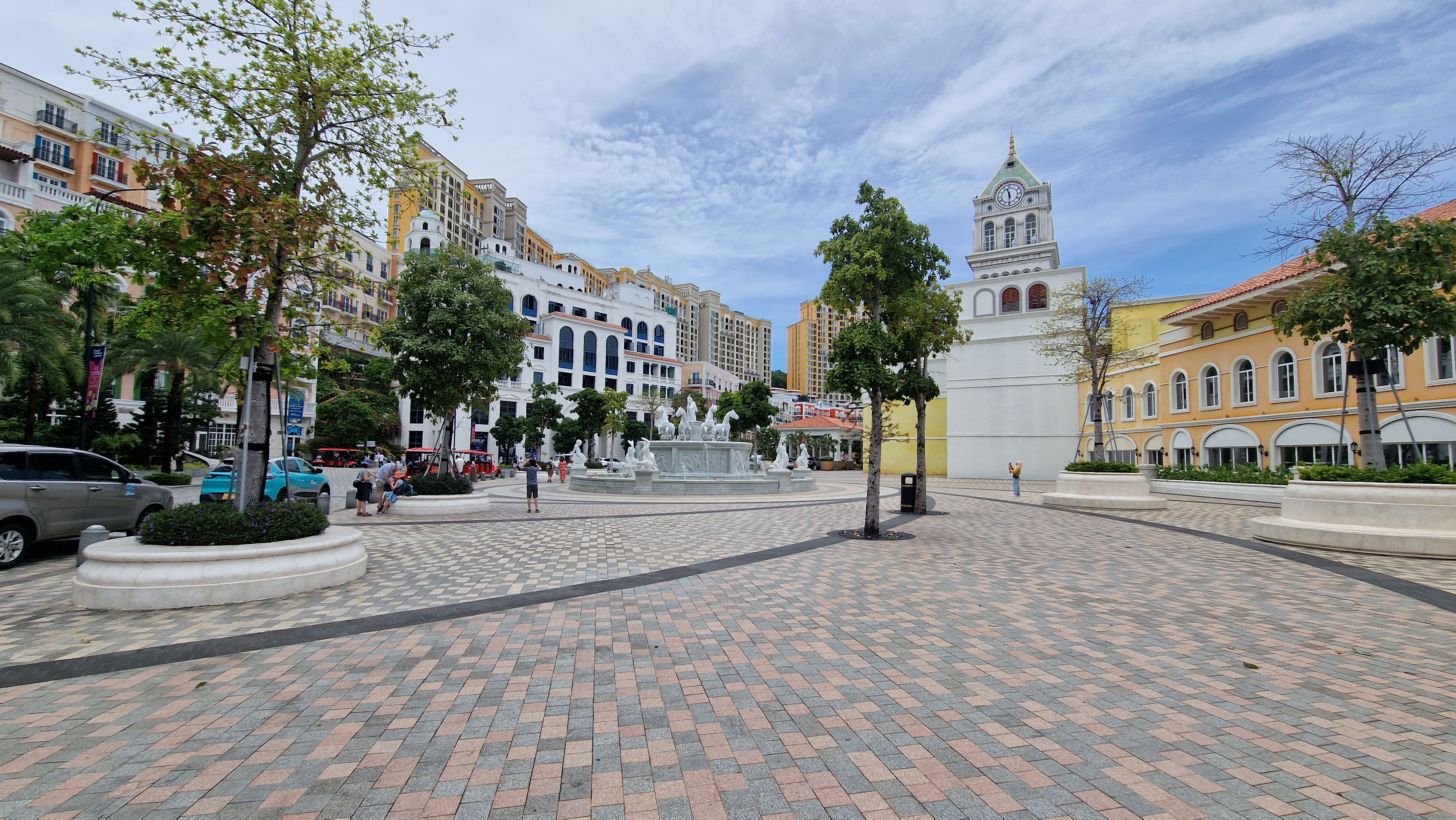
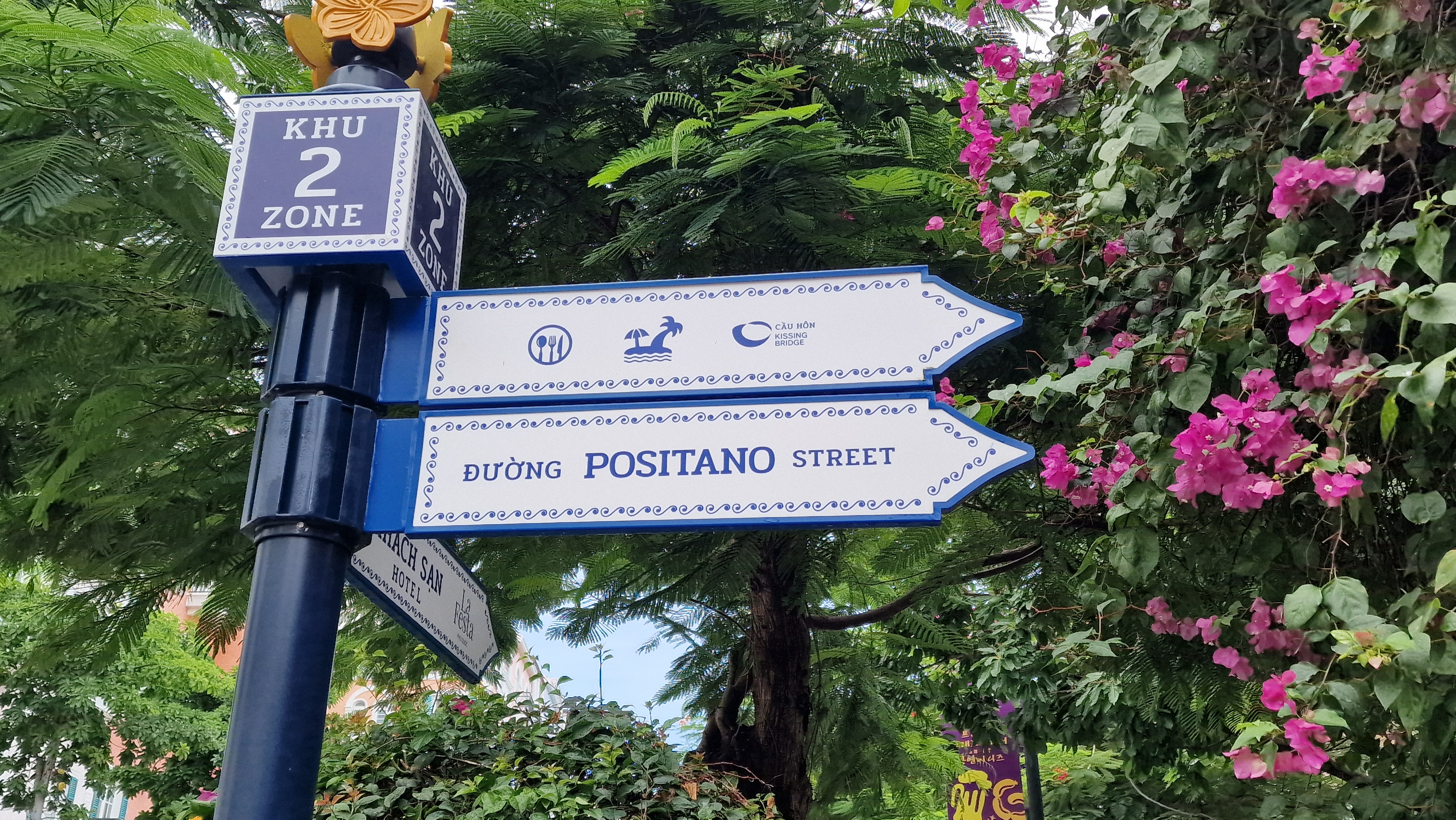
Bathed in morning sunshine, I walk down the cobbled road of Positano Street, with beautiful, pastel coloured buildings either-side. Towards the end is a spectacular Roman-style fountain, and behind that is a huge colosseum, complete with towering statues of gladiators, who are standing tall in the slight sea-breeze. Through the gaps in rows of eye-catching, hill-side buildings, I catch a glimpse of your typical Mediterranean marina, whilst a promenade runs next to the striking azure ocean, populated by fisherman and tour-guides ready for a day of work. You may now be thinking that you’ve clicked on a blog post about someone’s holiday in Italy, but no, I’m walking down a strangely named street in Sunset Town, Phu Quoc- an island belonging to Vietnam.
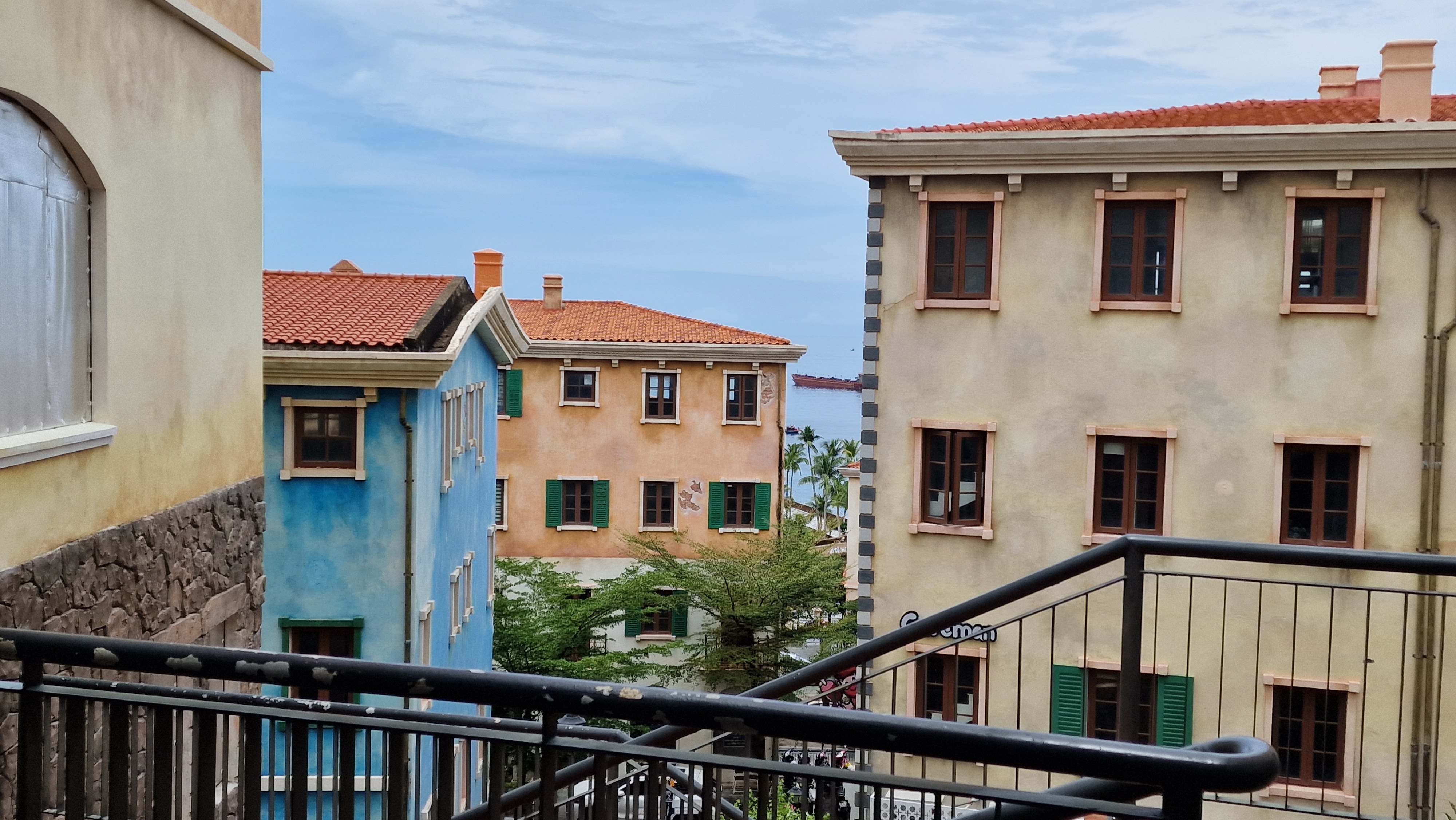
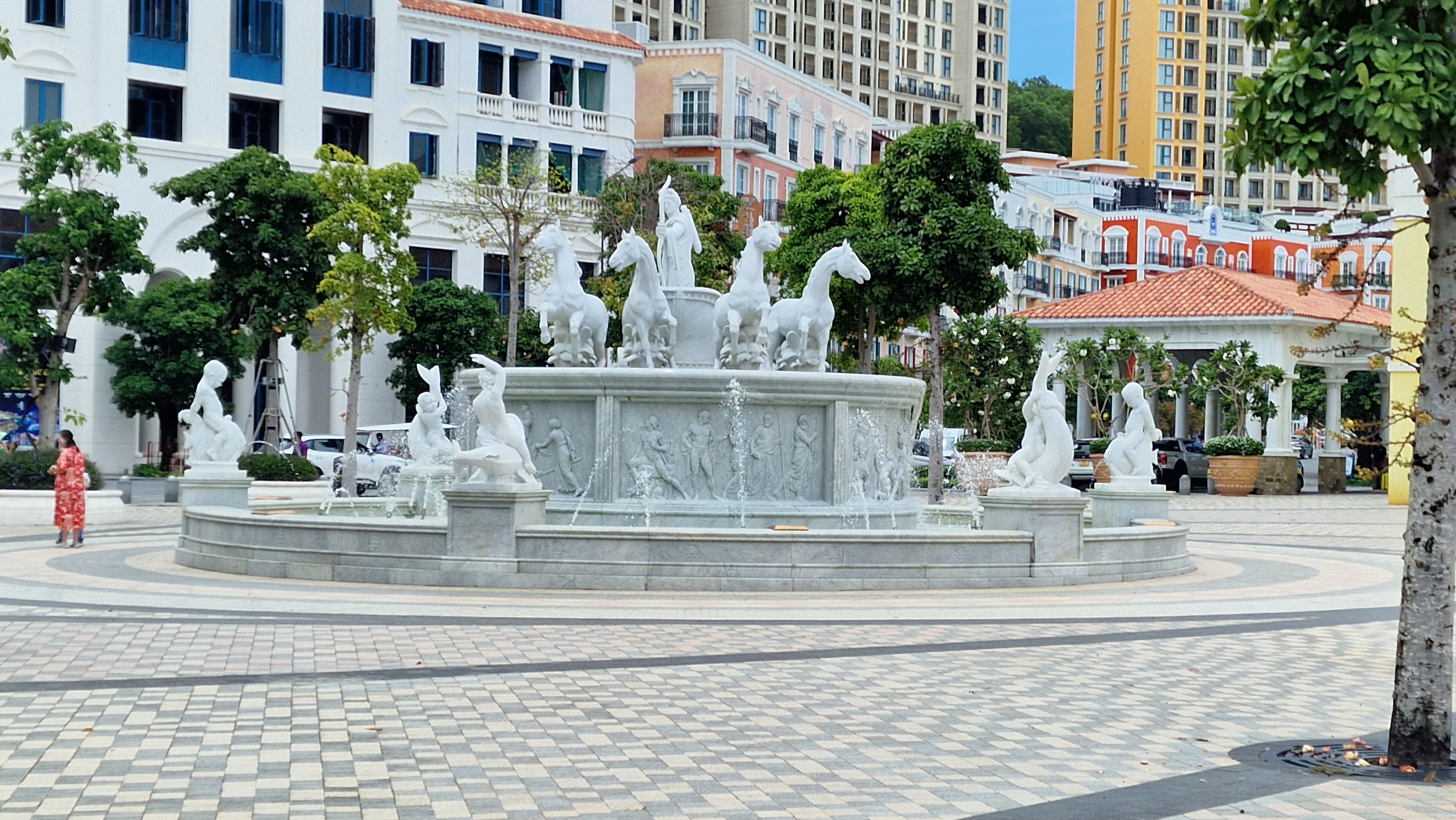
What is Sunset Town?
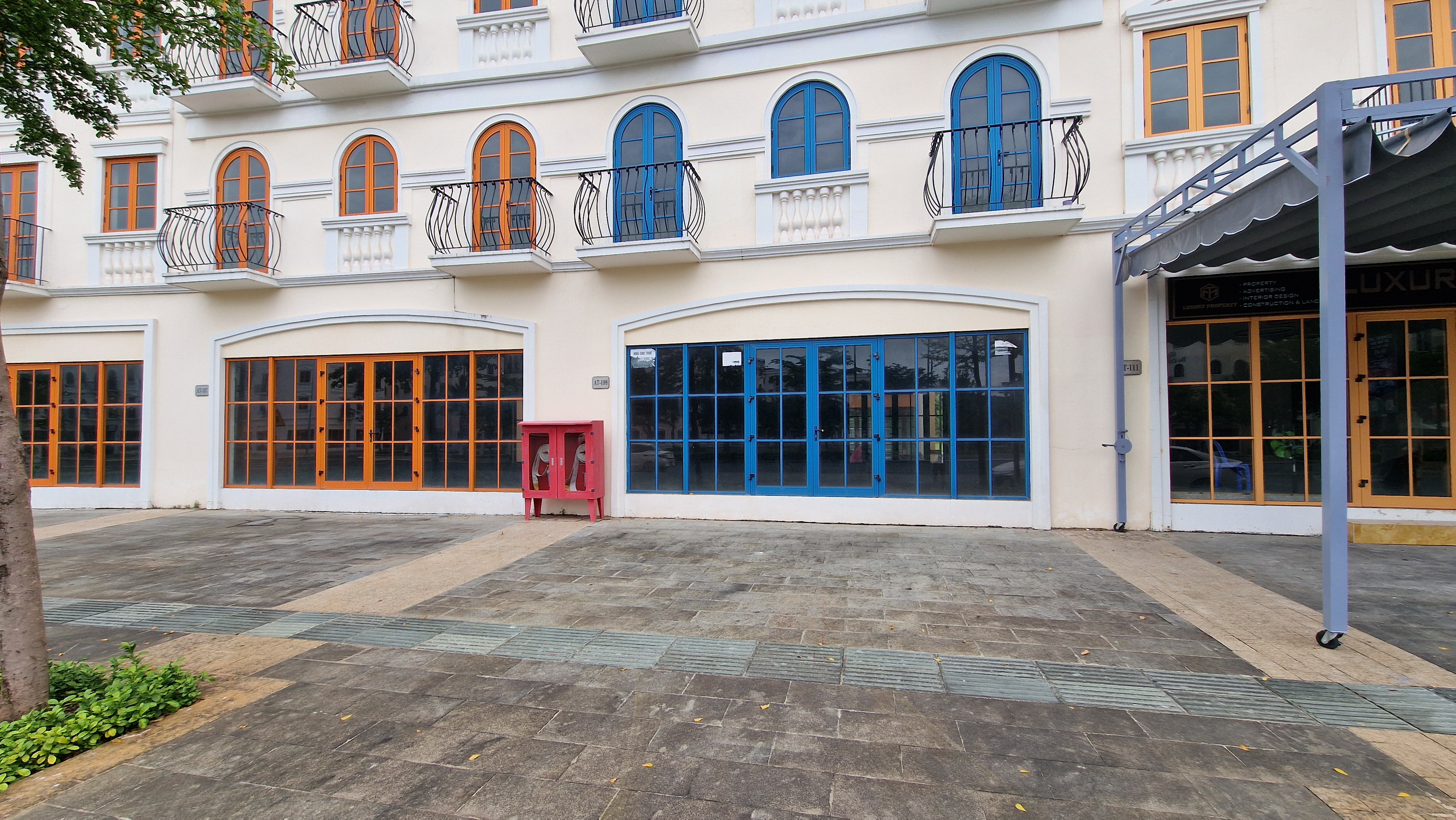
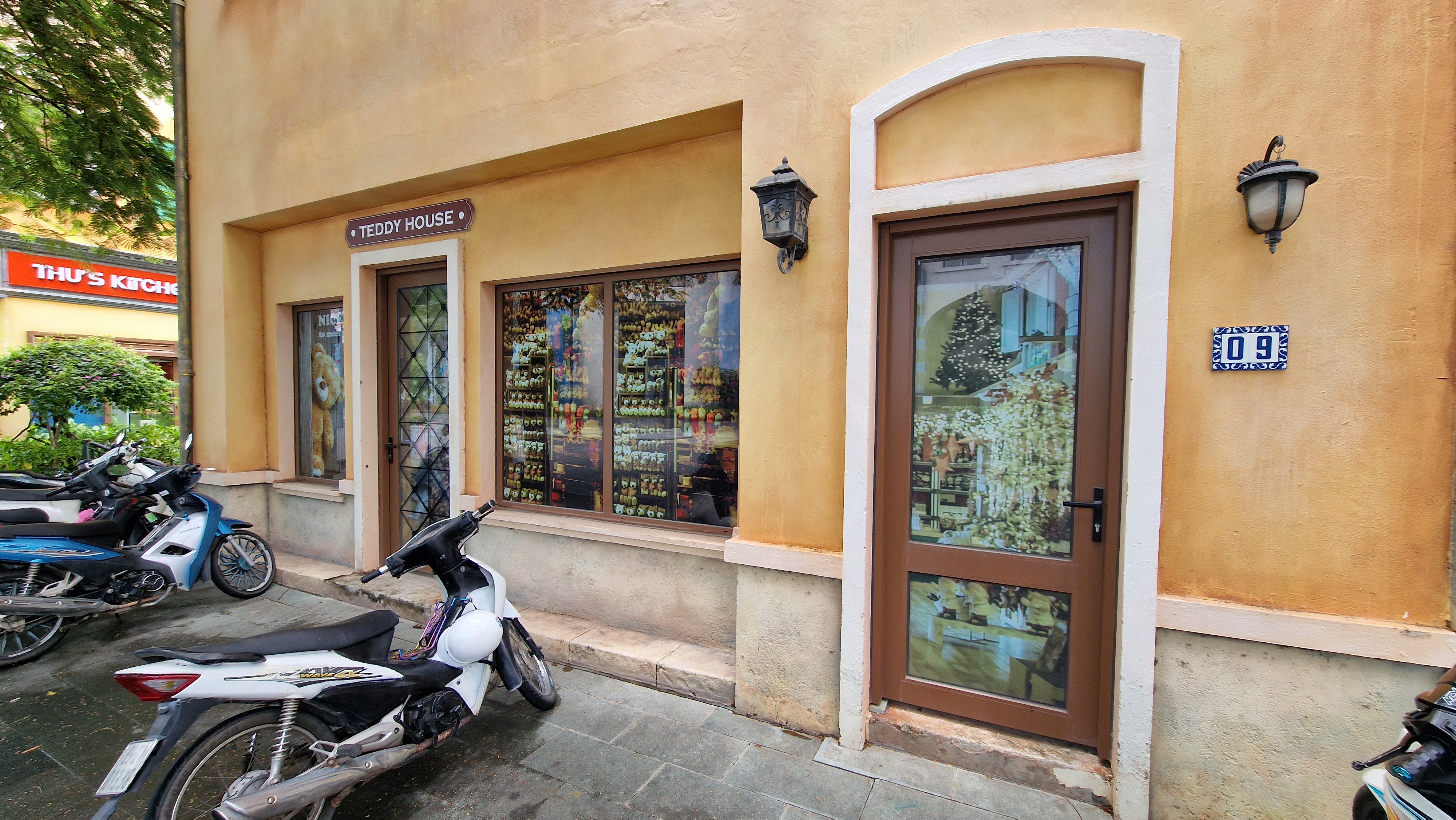
This utterly bizarre vision from another world also carries a strange story, but that will be told later- first I’ll explain truly how unusual this place is. As if a complete textbook replica of the Amalfi Coast wasn’t enough, the true twist in Sunset Town’s tale comes when you actually look a little deeper. Its streets are almost entirely devoid of people- there’s a small hive of activity at the harbour where tourist boat trips set off, but otherwise you could be walking for five minutes and not see anyone else. I find it shocking that a project of this scale can be so deserted- not just of inhabitants. As soon as you go two streets back from the sea, nearly all the buildings are empty, to the point where they don’t have flooring, lights or stairs yet, let alone a business to operate within them. The eeriest part of this particular aspect is that there are quite literally fake shop fronts stuck to windows, which can’t even be truly imagined until you see the picture below.
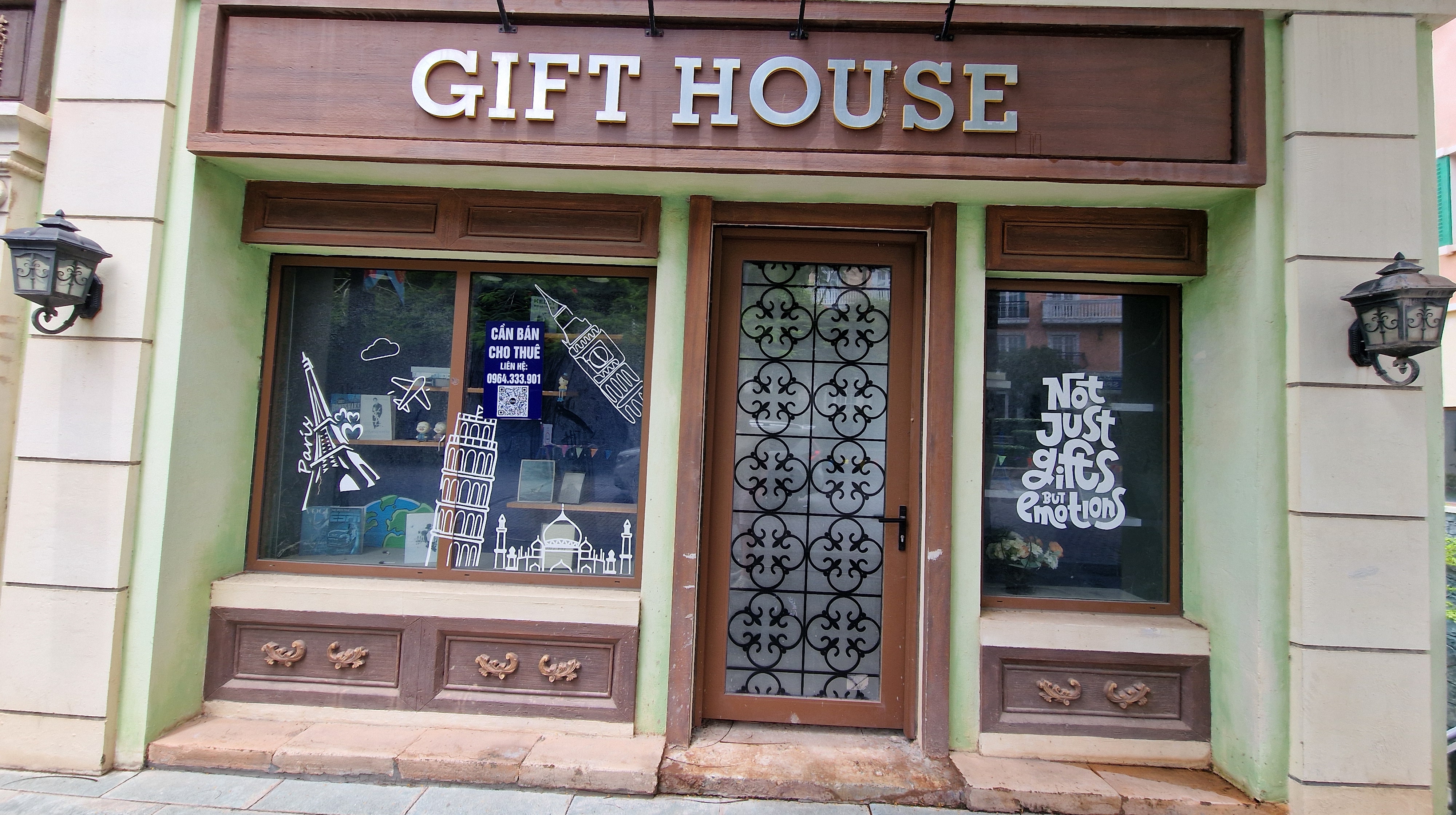
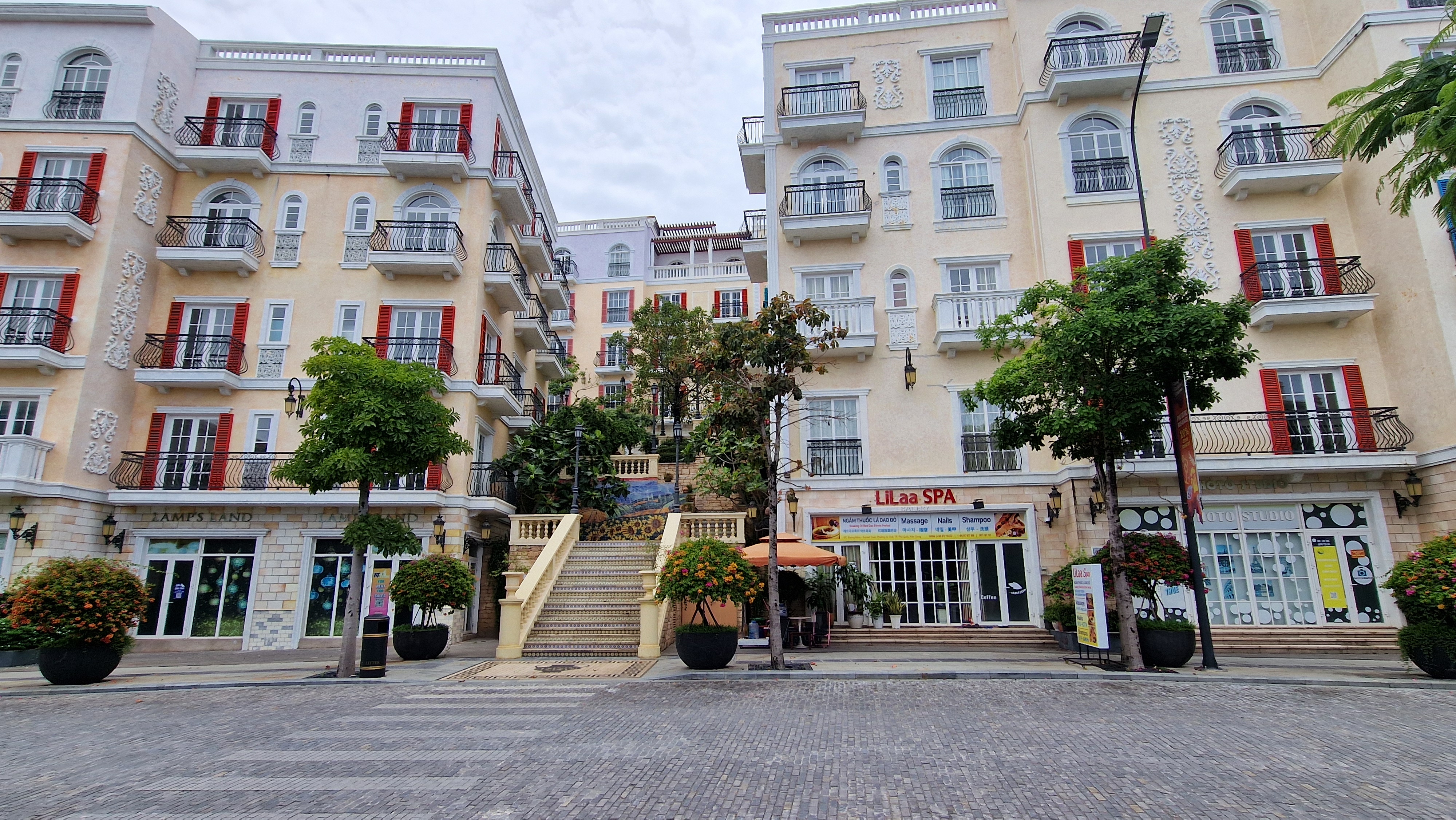
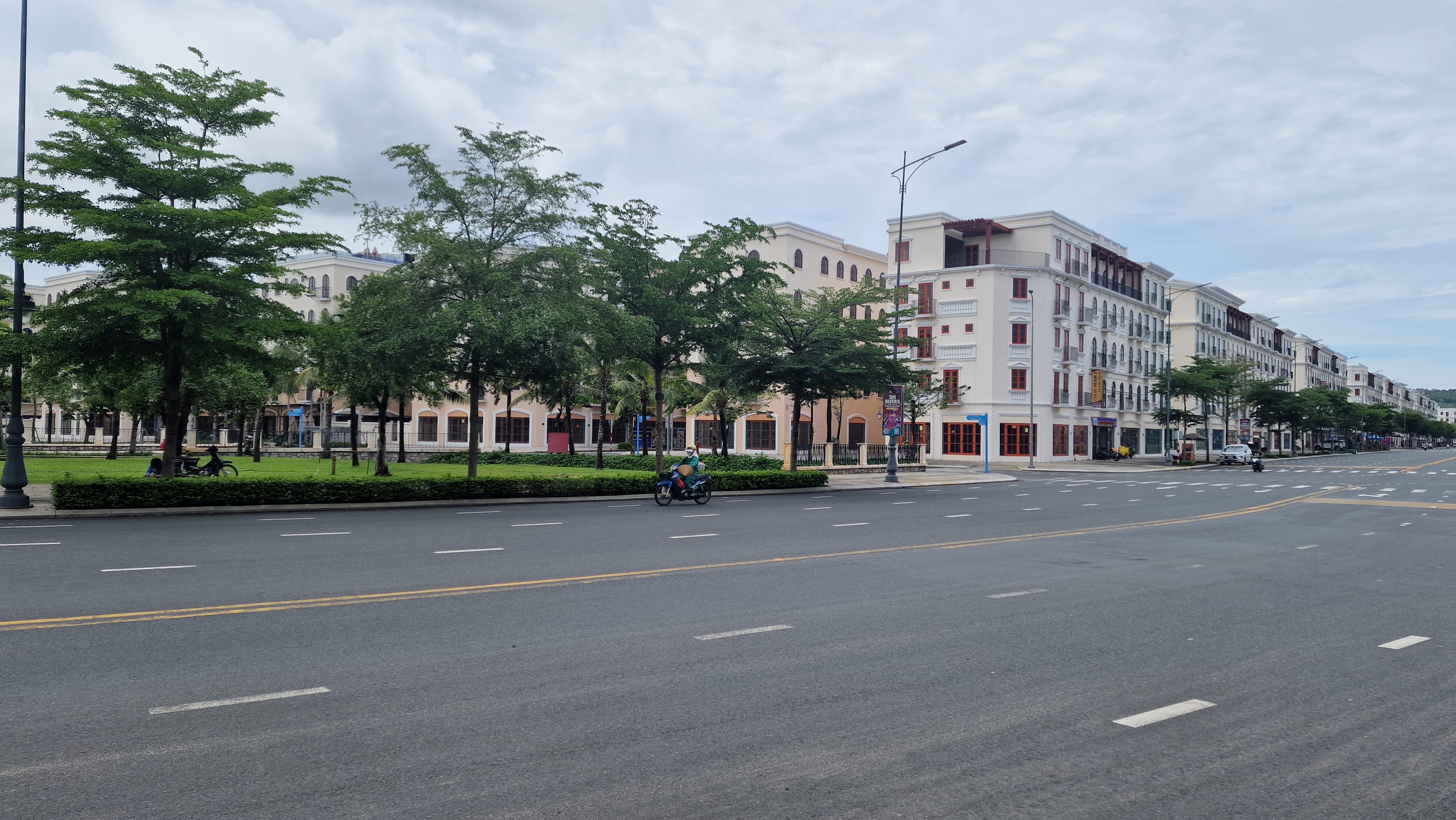
Even Vietnamese businesses that have the desire or finances to move to Sunset Town look completely cut off and are scattered around the area, creating an even more ridiculous look than there needs to be. When the sea-front buildings transform to more uniform, block-structured ones further inland, you can see the most damning evidence of a ghost-town, as there’s quite frankly an apocalyptic feel, with six lane roads barely populated by cars dividing identical-looking Mediterranean style buildings that, when you actually take a closer look, are almost completely bare inside, with dirt and the remnants of construction materials the only things preventing emptiness. Clear problems arise when you exit the town, as there’s an immediate transition to tin shacks inhabited by people clearly living somewhere near the poverty line, leading to extensive questions surrounding why on earth money has been spent the way it has.
Who has built Sunset Town?
On the 8th of August 1993, a dried food products company named Technocom was founded in Ukraine by Vietnamese national Pham Nhat Vuong and a group of young associates, including a man called Le Viet Lam. By 1995, they were producing instant noodles under the name Mivina, which grew to be extremely popular and profitable, transforming Pham Nhat Vuong into Vietnam’s first billionaire, leading him to create the real estate giant Vingroup back in his home country after Mivina was bought by Nestle in 2009. Before this, however, Vuong’s business partner Le Viet Lam left the company to found the Sun Group in Vietnam. Admittedly, the new company already had great amounts of money to play with in the first place, but since then they’ve gone from strength to strength, constructing various forms of infrastructure, ranging from hotels to theme parks. By far the most headline-grabbing project so far was the building of the world’s longest 3-wire sea cable car in 2018, which is now surrounded by our topic of today- Sunset Town.


(Le Viet Lam (SOHA) and Landmark 81, the tallest building in Vietnam, which belongs to Vingroup))
That also happened to be the year that the first sketches for the town were drawn up, and construction was completed (around about, it’s a bit obscure) in 2023. Sunset Town is certainly the Sun Group’s flagship project- it’s the only one listed as “special” on their website, and whilst its slightly clouded about how much money they’ve poured into the tourist destination, Vietnam News reports that the Vietnam Investment Report states VND 203 trillion ($4.54bil) was spent across the group’s 24 projects being built on Phu Quoc island. In case you haven’t realised, Sunset Town is the biggest. In fairness, there isn’t any evidence at all to say that Sun Group is “dodgy” in any way- it appears the company’s founder earnt his money from being a talented businessman alone, and when he got the cash, he made large but clever investments. Despite this, the jury is certainly still out on his biggest yet.


(Hon Thom Paradise Island and Sun Grand Boulevard, some of Sun Group’s other major projects (Sun Group Website))
What is the controversy surrounding Sunset Town?
The target audience of Sunset Town is shrouded in a degree of mystery. Whilst I was in Phu Quoc, it was suggested that, understandably, the destination was actually built for Vietnamese tourists, as many didn’t have the money or desire to travel to an actual Mediterranean country. However, when you look on look online, it’s stated that Sunset Town was created for both people of Vietnam, and foreign visitors. The thought that the place is aimed at Europeans is slightly preposterous- those with the money to visit some far-flung nation in Asia certainly have the cash to take a three-hour flight and stay in perfectly respectable accommodation somewhere in the Mediterranean, where the pastel-coloured hill-side buildings and beautiful marinas are authentic, not built at the exact same time, and not with concrete moulds (like the so-called colosseum). Generally, us people in Europe travel to an island like Phu Quoc to experience incredible scenery, vastly different wildlife, amazing cuisine, and fascinatingly dissimilar culture. To put in quite frankly, no-one in their right mind who travels to Phu Quoc is wanting what Sunset Town offers, and those desiring what the destination gives are well better off travelling to Italy for authenticity and fractions of the price. The idea it’s aimed at Westerners is almost as strange as the music they play from speakers on streetlights.

The idea that it’s aimed at the Vietnamese population however, is not so stupid at all. Vietnam’s middle-class is amongst the most rapidly growing in the world, which brings with it a greater number of people yearning for travel. No matter how much they want it though, many are unable to go- flying from Ho Chi Minh to Rome is takes more than 15 hours, and this is exceptionally expensive. Sun Group’s solution to that problem appears to be trying to bring a little bit of Italy to Vietnam, and whilst us in the West may turn our noses up to plastic-looking buildings and fake shop fronts, the truth is that most people in Vietnam simply can’t get any better.
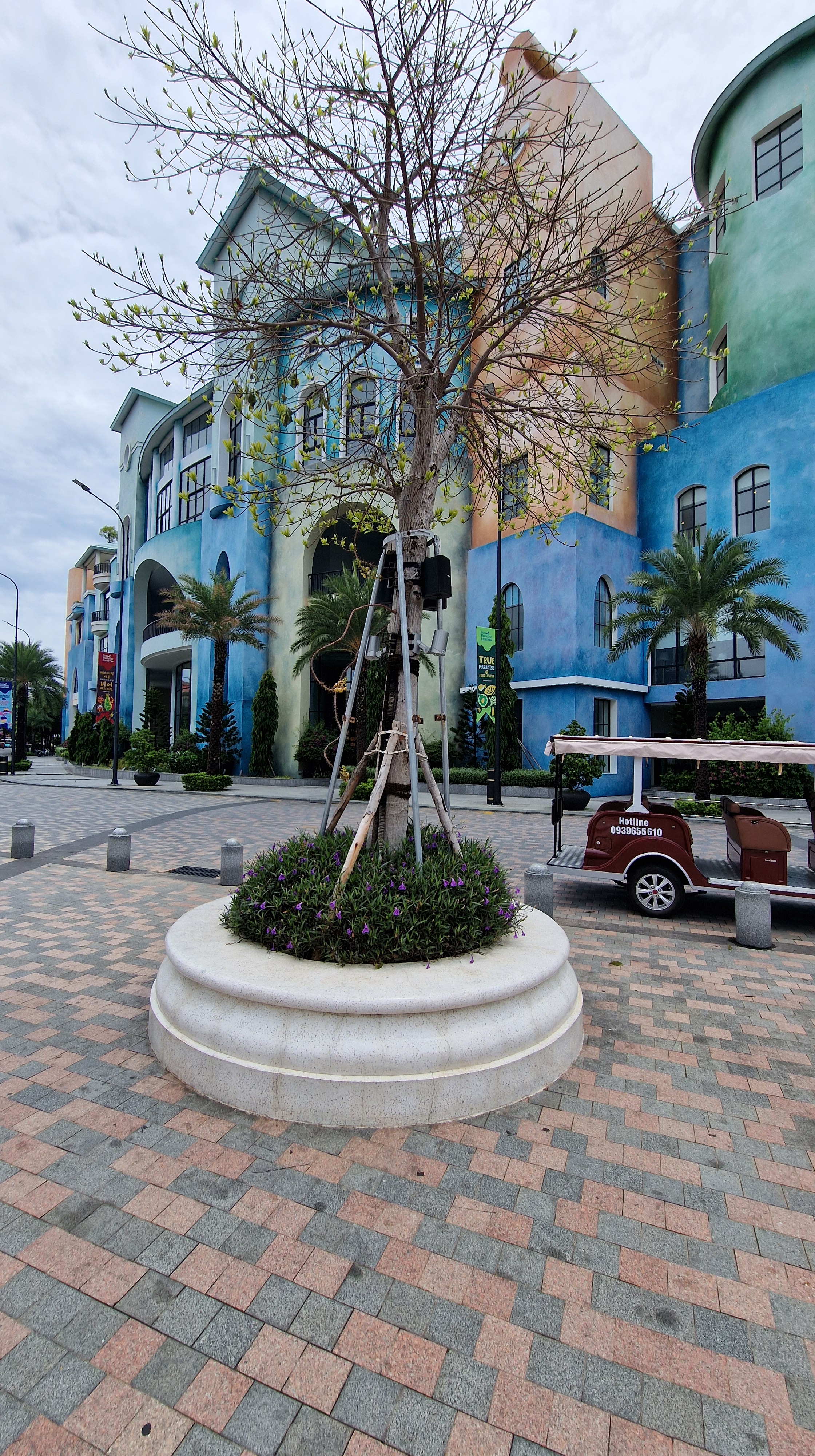
On the surface, it may seem that I’ve just justified the madness, and perhaps I have- but there are still deep-rooted problems, many stretching beyond Sunset Town to the country of Vietnam as a whole. What about those that can’t afford to travel at all? What about the people living in tin shacks immediately outside the town’s boundaries? For them Sunset Town is an immeasurable frustration. Obviously, the money belonging to Sun Group is theirs to spend, however questions still arise about whether there are better and more ethical ways to spent it. Is it right to paint the nation’s ceiling pretty colours, when the floor looks as though it may fall in? Many feel that the destination also neglects why the island of Phu Quoc is so brilliant. We asked a local restaurant owner with superb English in Duong Dong about his opinion of the project, and he explained that “locals don’t go there very often” and that perhaps Sunset Town could be seen in a better light if it had been built near a city, but it and the other 24 projects on the island had no place amongst the nature and Vietnamese culture that attracts tourists there in the first place. A big upside of the construction is that the town was built by Vietnamese nationals, and that Sun Group didn’t use migrant workers from the Indian sub-continent like many huge Middle-Eastern real estate companies do., which obviously offers jobs to the locals of Phu Quoc. Perhaps the biggest question surrounding the controversy of Sunset Town is do the pros outweigh the cons- is spending millions on a tourist destination foreigners have little desire to visit worth it when it gives the Vietnamese middle-class a chance to experience the Mediterranean? It that worth it when there’s people living near the poverty line immediately outside the town? There’s so many complex questions which lead to equally complex answers when looking at Sunset Town, and maybe I’m not qualified to ask them.

Is there hope for the future of Sunset Town?
It goes without mentioning that perhaps I’ve been too quick to judge this strange, theme park-looking, Positano 1:1 scale replica. Maybe foreign tourists will come in time (at least the price of food is less than on the Amalfi Coast) and one day it might be a bustling, thriving plastic Italy. But if you ever get the chance to visit Sunset Town, you’ll realise just how distant and hard to even imagine that prospect is. Vietnam’s growing middle-class may gradually fill it up over many years, however I do query whether the emptiness can be sustained. Additionally, even if enough demand is there, the town’s infrastructure in place currently couldn’t cope- yes there’s many, many blocks of buildings, but the point is that they are empty, and many businesses are priced out of moving into them. Another piece of weirdness that I’ve not yet mentioned is what fills the Italian-style shops are Vietnamese companies- it looks rather odd when there’s a building looking like it’s been picked out of a street in Naples with some great big sign for a massage above the door. In truth, we’re just going to have to keep an eye on Sunset Town’s progress in the next fifty years, and that will decide whether the huge, problematic investment is justified or not. Will the Sun Group be known as the company who gave the Vietnamese people, who never had the funds to travel to Italy in the first place, a taste of the Mediterranean, or will they be known as the senseless idiots who spent hundreds of millions on a project that only features on a television programme about failed projects and deserted ghost towns?

Conclusion
I feel for the Phu Quoc locals, whose landscape of their beautiful paradise island is being blotted by dozens of mega-money projects, and who have to watch hundreds of millions being spent when they’re living near the poverty line. Not to mention the fact that to European’s, it appears that the Sun Group are trying to replace their own brilliant Vietnamese culture that we all yearn to see with that of another country, which is located thousands of miles away. Surely those in the lower classes feel neglected by those who cater to the upper and middle. In reality, Sunset Town isn’t the only problematic project in Phu Quoc- its status as an unspoilt paradise island is being threatened by many others, such as Vingroup’s giant Vinwonders theme park (literally this time, not just a real town that looks like one). Once branded as “Ko Samui before tourism”, I fear that these massive real estate companies are quickly diminishing that name. Of course, it’s very easy for someone in the UK like me to criticise from afar, without considering the magical opportunities these developments provide to millions of Vietnamese tourists, but there are just so many imperative questions surrounding Sunset Town. Is it right to have such a contrast between rich and poor given the circumstances? Is it right to destroy an “unspoilt paradise island” just so the Town can have a pretty backdrop? Is it right for a country to stray from their own culture because they don’t think it meets foreign demand? Finally, the biggest question of all is will Sunset Town turn out to be a hundred-million dollar stunning success, or absurd embarrassment of a ghost town?
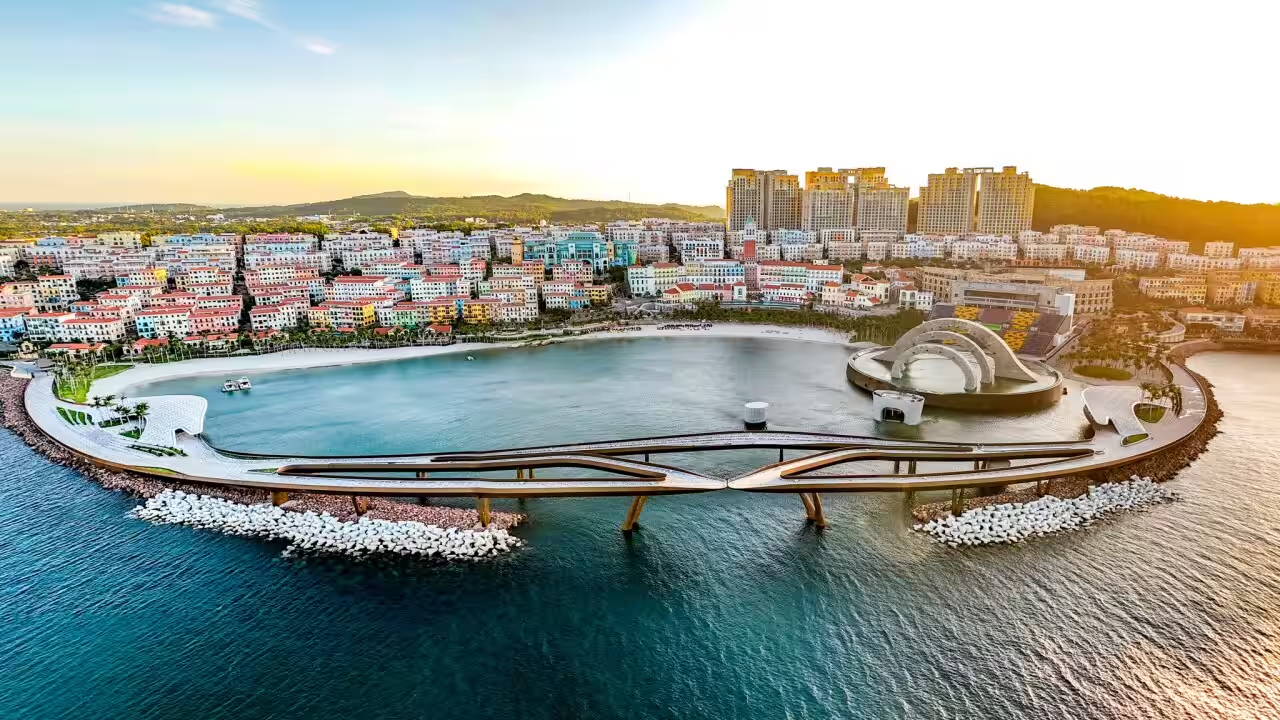

(The utterly bizarre Kissing Bridge (SBS) and some largely empty high-rise buildings (Booking.com))
If you enjoyed this article, feel free to read about my equally strange (but this time in a fascinatingly different and good way) visit to Vietnam’s second city, Ho Chi Minh, and subscribe to be notified when I release the full post about my trip to Phu Quoc (it gets a lot better than Sunset Town). Also, you can voice your opinion about the construction of this ghost town in the form below, which will be released in a “Reader’s Voice” post some time in the future.
Reader’s Voice
I would be delighted to hear reader’s opinions on the construction of Sunset Town. The answers will be put together in a “Readers Voice” post, and the username specified will be included above the quotation unless USERNAME is written in the following box. Answers from readers may have to be trimmed for size or relatability, and words that shouldn’t be featured in the blog will be replaced by more respectable ones. There is no guarantee all quotations will be selected.






 Your World Explored
Leave a comment