
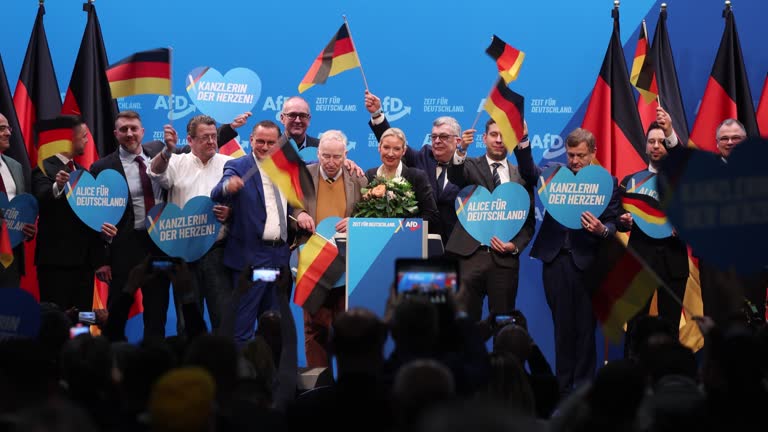
The last decade has seen an undeniable and alarming trend seep through European politics. Current headline issues such as immigration, healthcare troubles, inflation, and even Euroscepticism are slowly beginning to make people lose faith in traditional, well-established, near-centre parties, as they don’t believe they are solving these huge problems to a good enough degree. This of course means that they are looking elsewhere- on most occasions, across to the right.
Despite many ideas being extreme, parties like Reform have offered the public a clear stance on these issues- they have pledged to eliminate small boats in the channel, change the healthcare system, and lift people off benefits. The UK certainly isn’t the only nation where these ideas are developing- the massively controversial AfD party recently received one fifth of the German vote, even with their worrying anti-Islamic views, and the Brothers of Italy (who have neo-fascist roots) are currently in power in their namesake. In an attempt to reclaim some of their shrinking popularity, the centre-right are now even beginning to be inspired by and adopt various far-right stances, which adds to the sense that Europe faces a worrying political future. The increasingly common view that conventional parties are failing the public is creating a vast chasm of popularity, which the far-right has quickly leapt to fill. In an age where the furthest left major British party are the Greens, many people see no other direction than right.
Increasing numbers are becoming willing to push aside extreme views in order to create an alleged better future, however there are powerful questions to be asked about just how concerned we should be. Are the recent shortcomings of standard parties and leaders to blame, or is the jump in support a deeper-rooted issue, moulded by economic troubles, immigrant arguments, and in some cases, especially with those running these growing parties, outright racism? This article will explain who exactly the major far-right parties of Europe are, and precisely why they’re seeing a rapid rise in influence.
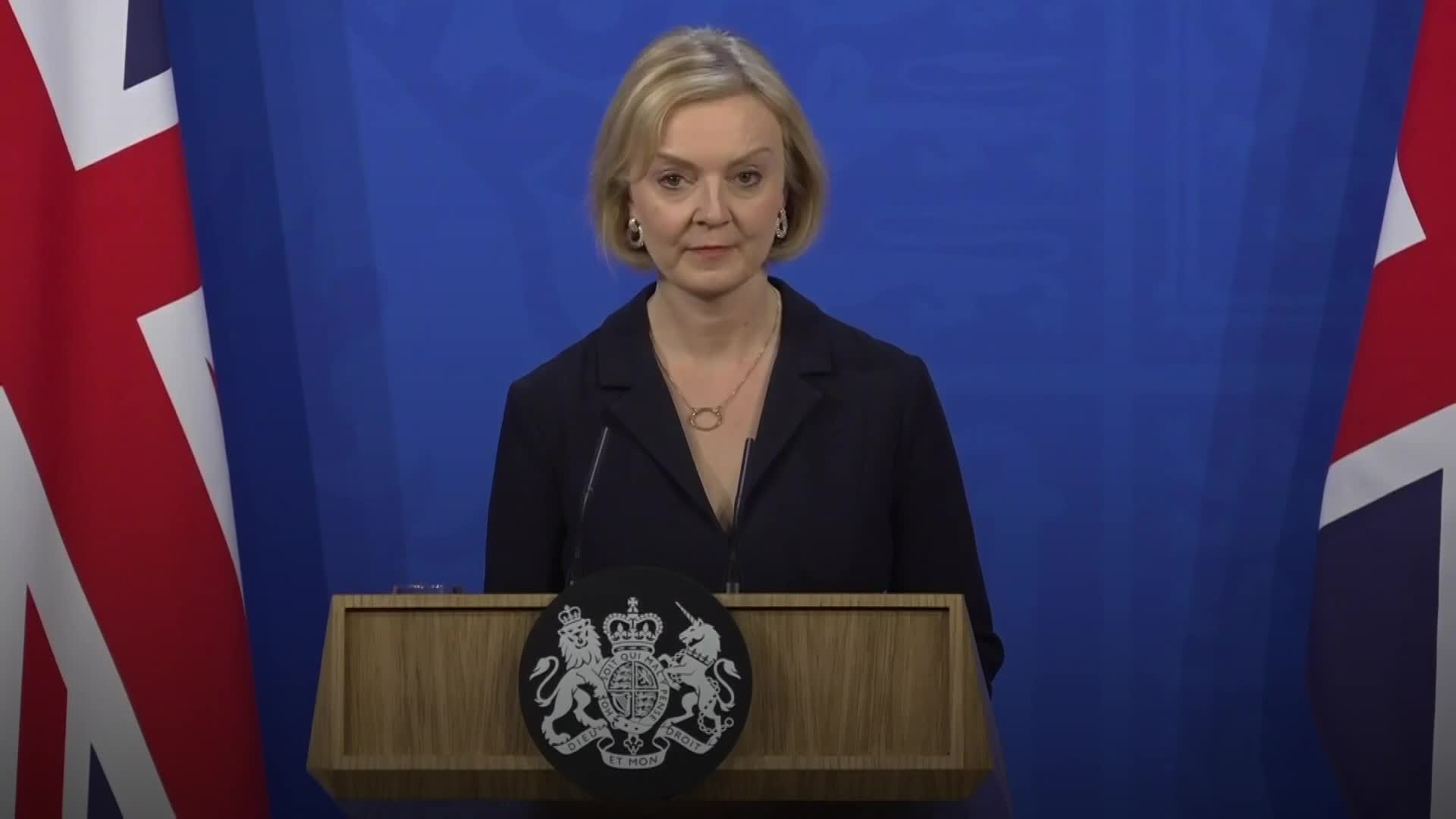
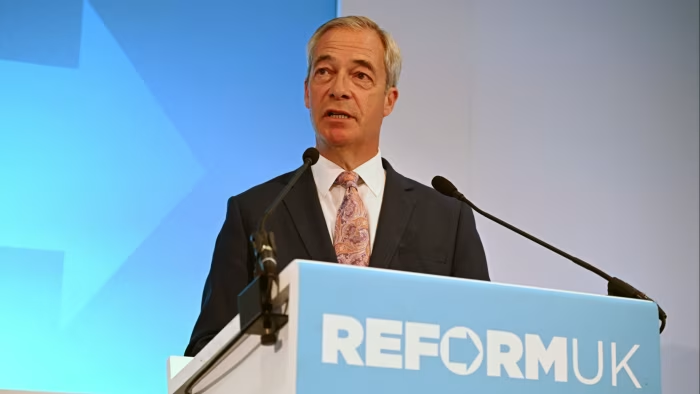
Are the big parties failing, or the fringe ones succeeding?- Liz Truss (Evening Standard) and Nigel Farage (Financial Times)
Who are the far-right parties in major European countries?
Reform UK
Startling recent polls have revealed just how incredible the growth of Reform UK is. Stunningly, it’s suggested that if the election was held tomorrow, the party would win 271 seats- by far the most, yet still not enough to form a majority. Interestingly, projections show that even the most likely Reform coalition (with the Tories) would still not reach the 325 seat mark, with the polls indicating 46 Conservative MPs- leaving them fourth behind the Liberal Democrats. Obviously these projections must be taken with a large pinch of salt, as the next general election is in 2029, and the Conservatives could very well sort themselves out by then, however this data encapsulates the rapid rise of Reform perfectly.
Originally named the Brexit party until a 2021 rebrand, Reform shocked Britain with their 5 seat, 4 million people 2024 election result, however it appears that the best may yet to come for them, with staggering recent polls (mentioned above) suggesting that Nigel Farage may one day, despite failing to even become an MP many times, become Prime Minister of the UK. A nation run by Reform is a scary prospect, and certainly shouldn’t be taken lightly, however there’s no denying that they’re giving much of the public exactly what they want. Admittedly, the basic pledges of the party look like they’re heading in the right direction- smart immigration rather than mass immigration, no more NHS waiting lists, and the lifting of the income tax threshold to 20k, which would take people off benefits.
The problem lies however; with the way the party goes about situations. Nigel Farage has a history of making racist remarks, and the party itself has also been accused of this on many occasions- recently the nation’s largest education union called Reform “racist and far-right”. The party has listed its reasons for deporting and detained those on small channel boats as being “to boost wages, protect public services, end the housing crisis and cut crime”. Obviously we’re not talking about discrimination on the scale of the AfD, but Reform’s populist status and relative inexperience begs powerful questions over whether they would just come in, solve short-term problems and be gone like a flash in the pan, or whether they have the capabilities to build a stable, long-term future for the United Kingdom.
“Britain is broken. Britain needs Reform”. Most people in the Britain would probably agree with the first part of that statement- many would believe the second is correct as well. Farage’s party have leapt upon a unique political landscape, and are filling in the gaps of their more conventional rivals. The Conservatives have hit an all-time low, fuelled by mishaps and poor leadership, whilst Labour certainly aren’t getting themselves headlines for all the wrong reasons, but their term so far hasn’t exactly been ground-breaking either. Reform are now targeting the current majority’s more economically deprived voters in the nation’s manufacturing heartlands, who feel “betrayed” (the Guardian). The reality however, is that many outside that demographic are also being lured by the prospect of change and a “better future”. Reform UK may not be the furthest right of those in Europe, but they certainly grab the headlines, and could very well be grabbing significant numbers of seats in 2029.
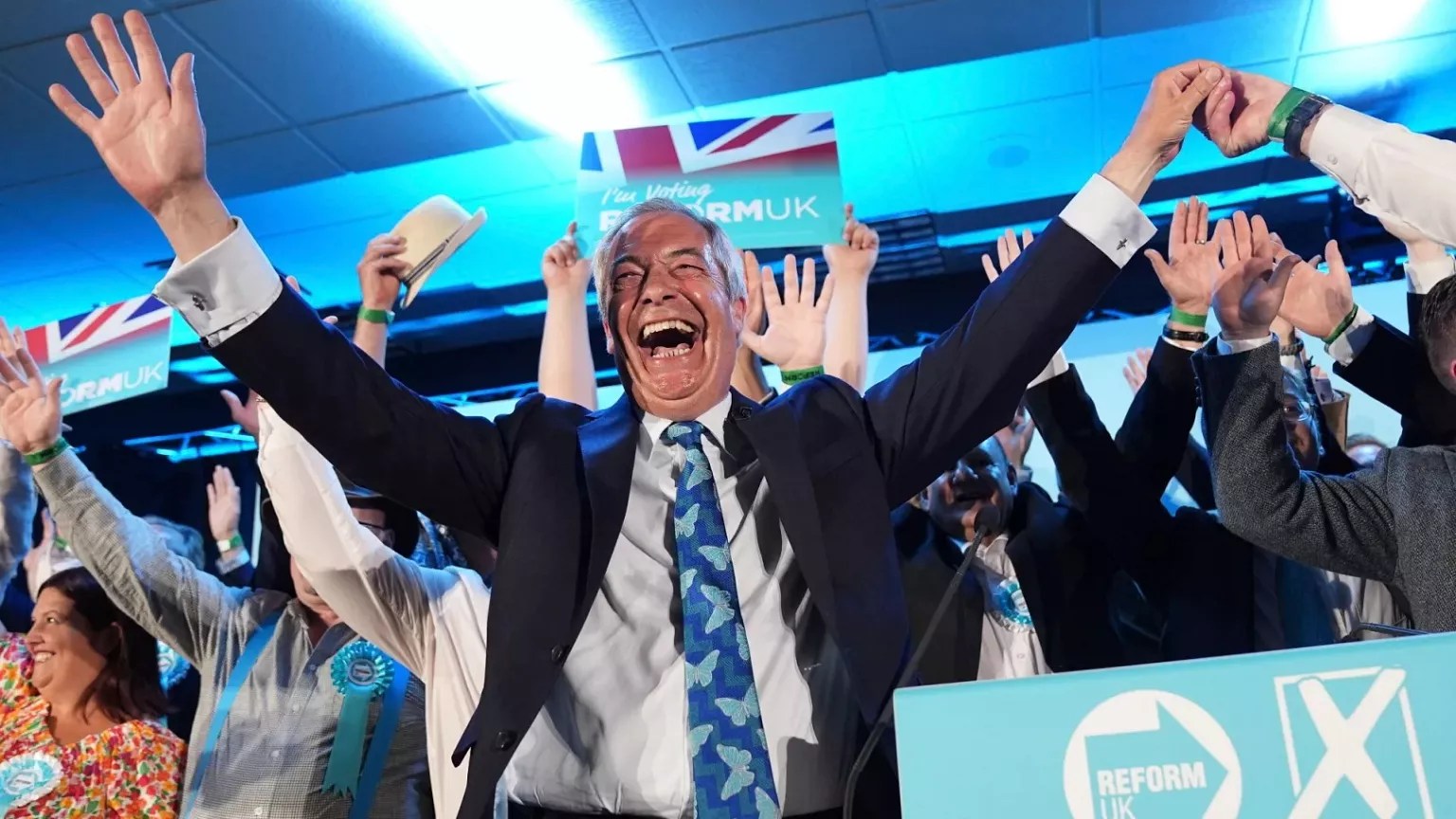
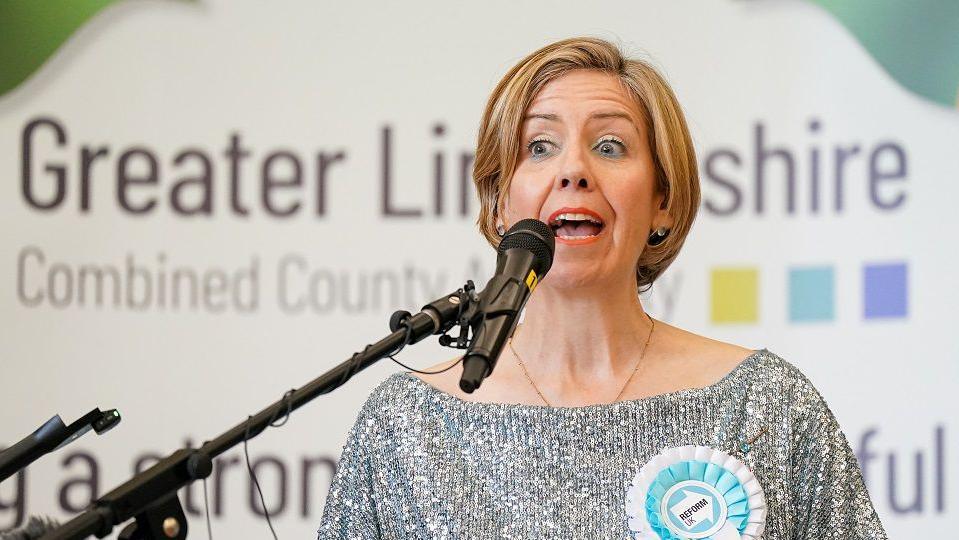
Farage after winning by-election (Euronews) and Andrea Jenkyns, the winner of the Greater Lincolnshire election (BBC)
Alternative fur Deutschland
The fact that one fifth of Germany voted for Alternative für Deutschland in the 2025 election is a concerning, almost unnerving thought. Alice Weidel’s party were predicted to come 3rd, however a bad night for outgoing chancellor Olaf Scholz and the centre-left Social Democrats saw them drop to a shocking 16.4% of votes, bringing with it the bronze medal. New leader Friedrich Merz’s CDU/CSU took gold with 28.5%, with the nation almost completely divided between the centre-right in former West Germany, and the rapidly rising AfD in the east. Just 4.7% voted for the far-right party in 2013, 12.6% in 2017, down to 10.4% in 2021, before they then doubled their percentage to achieve 20.8% of the country’s support. Like Reform, the AfD’s ascent is admittedly quite stunning, but there’s also an air of fear that such parties are so close to coming into power.
Founded in 2013, the AfD were also an anti-EU based party in their early stages, but have since radicalized and evolved into an extremist, anti-immigration party who’s aim is “to eliminate the free democratic basic order”, according to a 2023 report by the German Institute for Human Rights. Co-leader Alice Weidel is not the person you expect to be leading the far-right movement in Germany, as she’s gay with a Sri Lankan partner, whilst also splitting her time between Berlin and Switzerland, which is strange for a party that obsesses about its love for Germany. Not to mention that fact that she’s also from the west, and leads the AfD, that has received most of its votes from the east. Additionally, the party has been accused of harbouring extremists, which is shown through Bjorn Hocke of Thuringia, who has been fined twice by German court for using the slogan “everything for Germany”, which was used by Nazi storm troopers. Earlier this year, the national intelligence service classified the AfD as extreme right-wing, putting it a step closer right than Reform.
Throughout their election campaigns, the AfD have flirted with racism and used nationalist rhetoric, leading many to think they have no place in politics at all. They’ve also tapped into “anxieties” to do with Islam, whilst also promising to abandon the Euro, and even go as far as pulling Germany out of the EU, should it continue centralising, and there not be reform. One of the party’s biggest “successes” so far came with them challenging Angela Merkel after she let in 1.3 million, mainly Middle-Eastern, undocumented migrants and refugees. The name Alternative for Germany does actually sum up what the AfD are trying to offer their nation- they’re trying to solve key issues, and compete with other more conventional parties, however many inquiries have to be made surrounding the anti-Islam tone. There’s growing concern that the German “brandmauer” is finally starting to crack. This firewall represents a strategic approach from other parties to freeze out the far-right. Obviously they’re nowhere near the evil of the Nazis, but the threat of parties like the AfD has to be taken seriously, amplified by the fact that they’re growing in a nation where the extreme-right have been cut off from the political scene for many years, partly because of the most-recent in power extreme government.
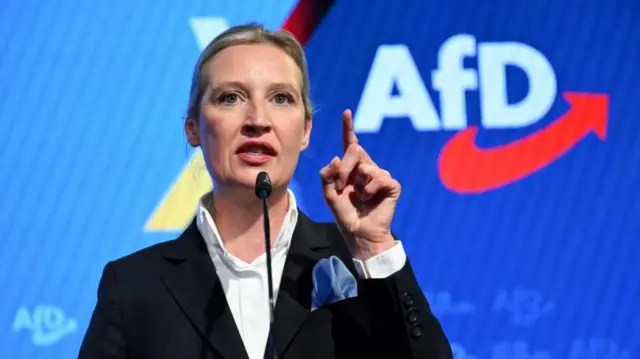
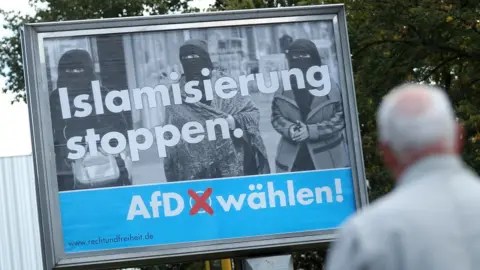
Co-leader Alice Weidel (BBC) and a worrying AfD billboard (BBC)
Brothers of Italy
The Brothers of Italy was founded in 2012, has post-war neo-fascist roots, and is currently in power in the country. Long-term leader Giorgia Meloni has stated on many occasions that the party has distanced itself from its controversial past, and is now a long-term conservative party. Like most of the far-right parties of Europe, they have experienced huge growth in the last 15 years, with 1.96% of votes in their inaugural election, 4.35% in 2018, before a huge jump to 25.98% in 2022, which resulted in a spectacular election win for the right, with the nation a sea of blue.
Meloni’s party share many ideas with others in the far-right, however they are particularly focused on Italy’s position on the world stage. The Brothers of Italy want to protect the nation’s borders, whilst also preserving and promoting its culture and traditions. Somewhat controversially, the party strongly opposes abortion and euthanasia rights, as well as being a firm advocate for conventional family structures. The Italian majority are against tax increases and want to seek a revamp of EU-funded investment programmes, however, despite some scepticism about European integration, the Fdl support international alliances such as NATO, and emphasises the importance of maintaining such agreements.
Obviously the Brothers of Italy has many far-right views, however there is an argument over whether they truly are a far-right party. As previously stated, Meloni has said that they have distanced themselves from the title, and admittedly their strong ideas surrounding immigration and traditional stereotypes suggest that they perhaps aren’t the best party to rule Italy, but many of their pledges are clearly centred around creating a more powerful country on the world stage, which is a key reason they received the large election win they did. The Fdl are the leaders of a right coalition, that also includes Lega, who are far-right and populist, and Forza Italia, who are centre-right. Opinions of their time in office so far are divided, however Meloni has kept a more moderate figure than their far-right title implies, and they can perhaps be seen as the closest-to-centre of the major right-wing parties I’m investigating. As perceived with the 2022 election, much of the Italian public believe that the Brothers of Italy’s hands are safest, when trying to enhance their nation’s influence on the international stage, and lead them into a prosperous future.
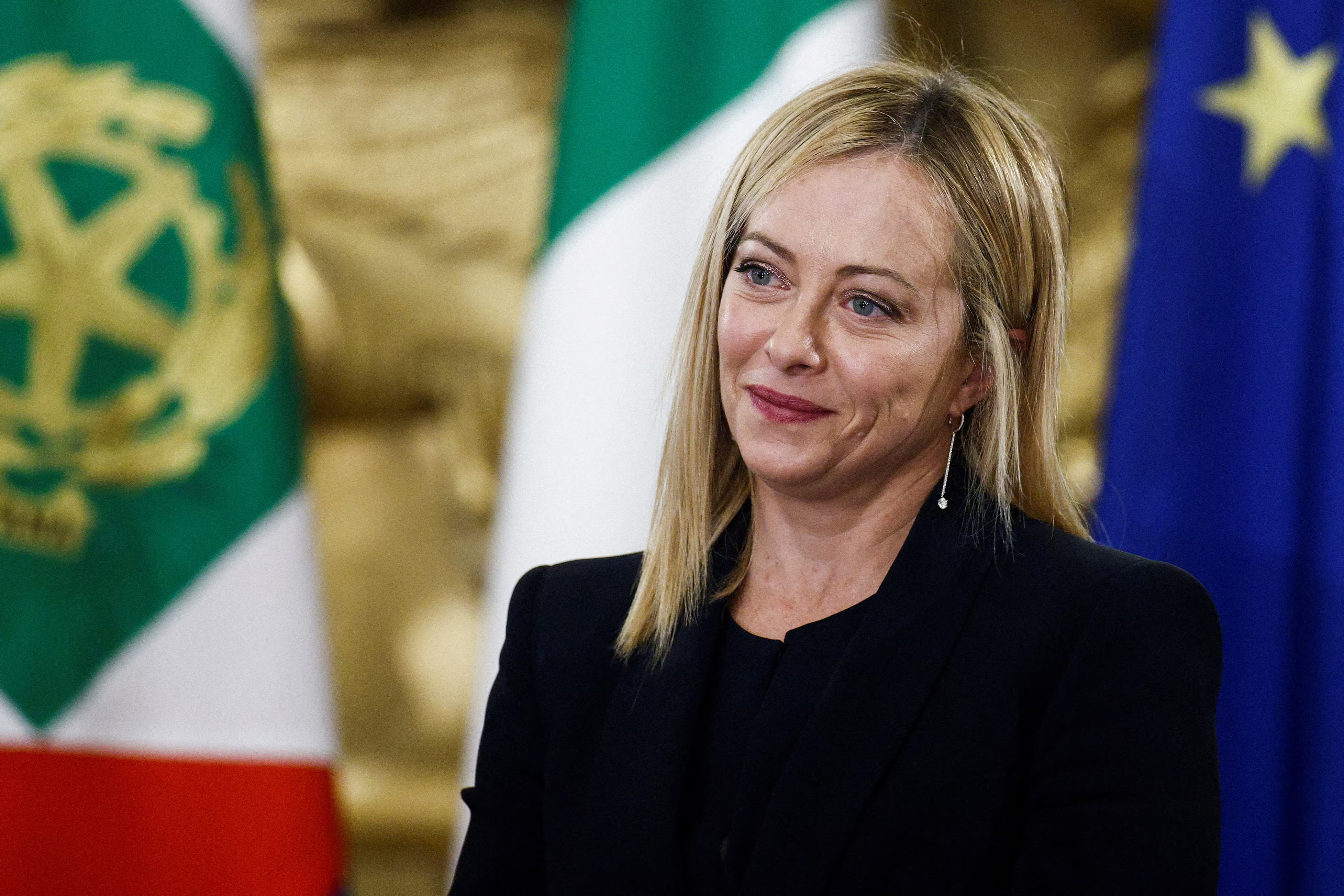
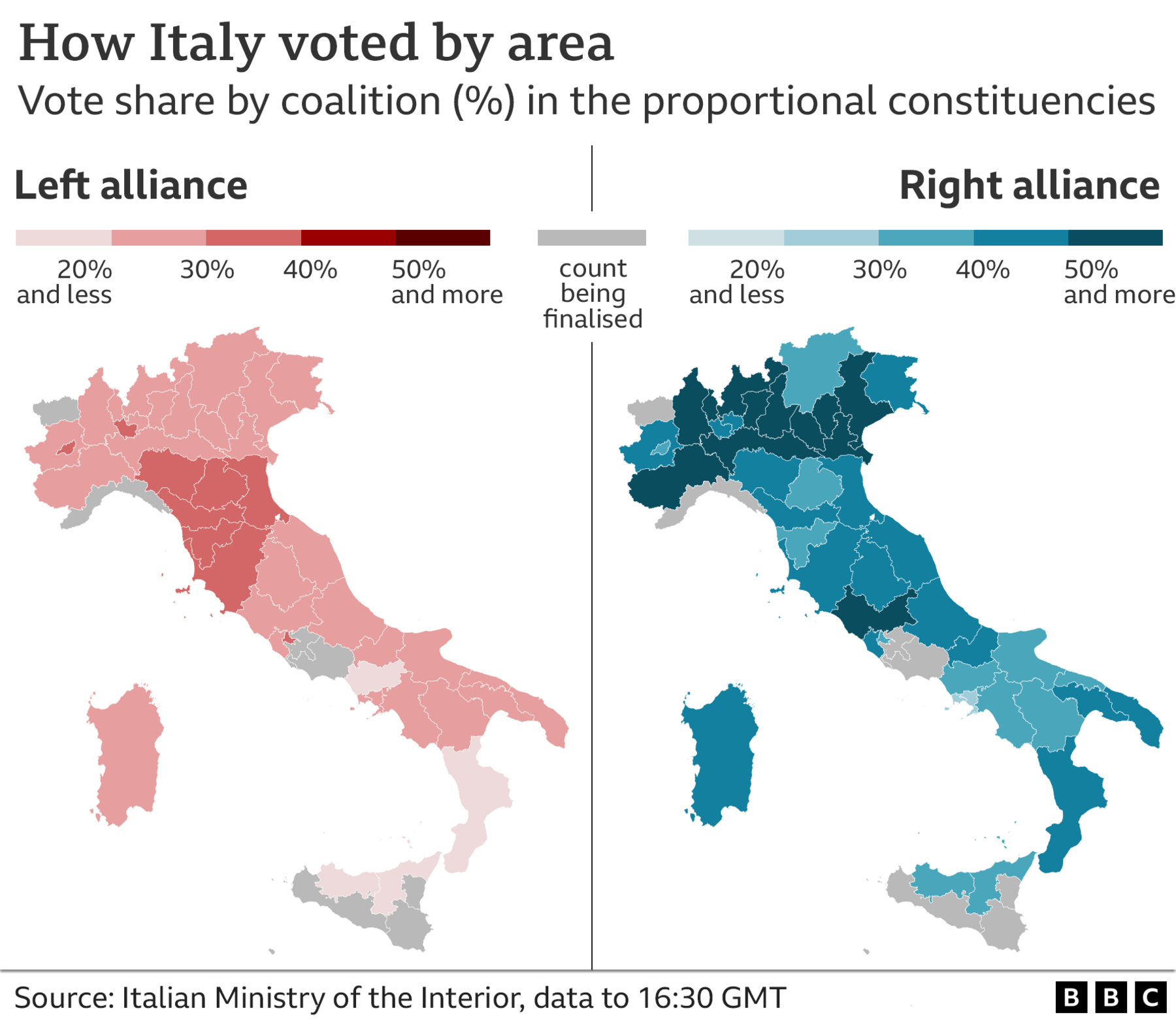
Current Italy prime minister Giorgia Meloni (Reuters) and a map of the 2022 election results (BBC)
National Rally
Formerly known as the National Front, the National Rally is practically the le Pen family business, and is also amongst the oldest and most established right-wing parties in Europe. Marine le Pen led the National Rally to become the largest opposition to Macron’s Renaissance party, after they received 41.5% of votes in the 2022 elections second round, following a tense edging past Melenchon’s left-wing la France Insoumise in the first. The party lacks the rapid rise that many other groups in this article have experienced, due to their more storied history, with results seeing a steady rise throughout the 21st century. They were founded by Jean-Marie le Pen in 1972, before his daughter Marine took charge in 2011. The major controversy surrounding Marine le Pen is that she has been barred from running for office in 2027, after her and other high-standing members of National Rally were found guilty of embezzling millions of European Parliament funds to finance their own political activities. These events mean that president-since-2022 Jordan Bardella will now be the main competitor with Macron’s successor in 2027.
In recent years, National Rally has slowly been detoxifying itself and preparing for power, however still have controversial, yet typical, far-right views on key issues. They oppose immigration, and want to seek stricter control over illegal immigration, whilst also advocating for significant cuts to legal migration. Bardella’s party want to protect the traditional French identity. In the 2022 election, the party also pledged to boost spending power, along with “restoring law and order”. The more controversial side of National Rally comes to the fore when looking at accusations against them, which include fostering xenophobia and antisemitism. Additionally, the name-change also highlights the party’s far-right status, with le Pen announcing at the time that it was an effort to stoke populist resistance to the “arrogant tyranny” of the European Union.
Overall, the National Rally’s repeated dislike to and tussles with the EU show why it could be a problematic leader of France, along with its hard-line stances on immigration and national identity. However, these problems could be flipped on their heads, as many could argue that this is part of how they believe the nation can be governed more effectively.
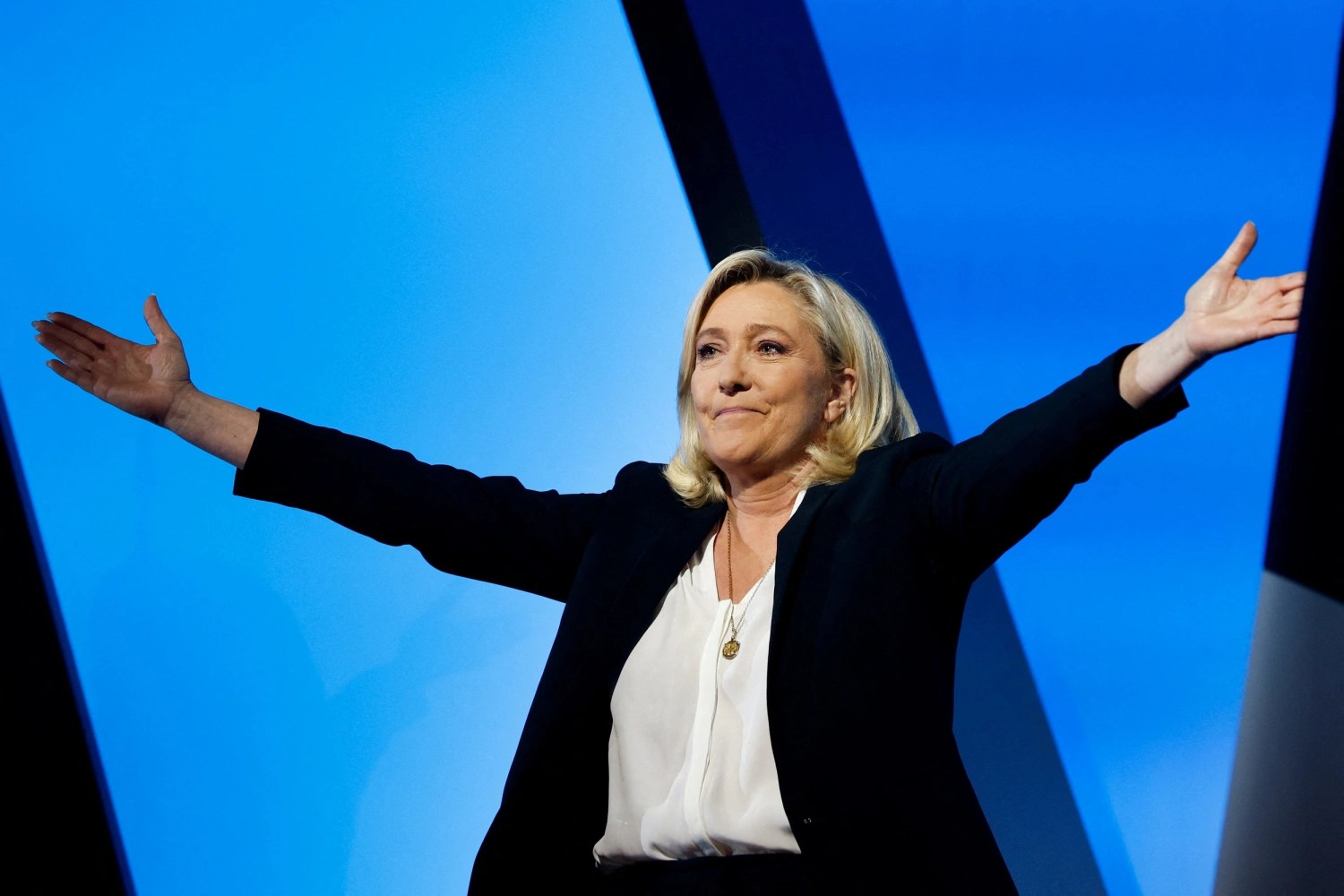

Criminal? Former leader Marine le Pen (NBC news) and her successor, 2027 candidate Jordan Bardella (Reuters)
Vox
Vox are the least known of the parties I’m investigating, however their status as the bronze medal winner in Spain’s most recent general election makes them impossible to ignore. They were a fringe party until 2019, where a jump saw them take 52 seats, comfortably third, yet still a long way of the two giants of the political scene, the People’s party, and Spanish Socialist Workers’ party. The emergence of Sumar in the 2023 snap election saw Vox remain in third, but fall to 33 seats, which was still a solid result for a party that hugely struggled in the years between their 2013 founding and 2019 breakthrough. The current Spanish political scene will be an incredibly difficult one for Vox to fully crack, with the PSOE and PP being historically and presently dominant on either side of the spectrum- Sumar’s arrival as the dominant far-left party will worry leader Santiago Abascal as well.
Vox have been described as being ultra-nationalist, as they have anti-immigration, anti-abortion, and anti-devolution views. They previously had regional deals with the PP, but they broke down. The main controversy surrounding the party is their view on the separatist movements of Spain- Vox advocates for the recentralisation of the country, by abolishing autonomous communities, in order to establish a unitary state. They strongly oppose ideas such as Catalan independence, and Basque nationalism. Vox shares many views with other major European far-right parties, and wants a return to “tradition” when addressing social issues. It was formed by breakaway members of the centre-right People’s Party, who were disgruntled by “lacklustre” economic policies and a “weak” response to separatist movements.
A majority win seems incredibly unlikely, however one way Vox could get into power is by forming a coalition with the PP, in the event that the conservative party are unable to get a majority over their centre-left rivals. Despite initially receiving criticism for their hard-line stance on some of Spain’s biggest issues, the party are now seen as genuine contenders when it comes to 2027, and shouldn’t be taken lightly when analysing who could be the next in-power far-right party within Europe’s major nations, and who could have a heavy influence on the continent’s political scene in years to come.
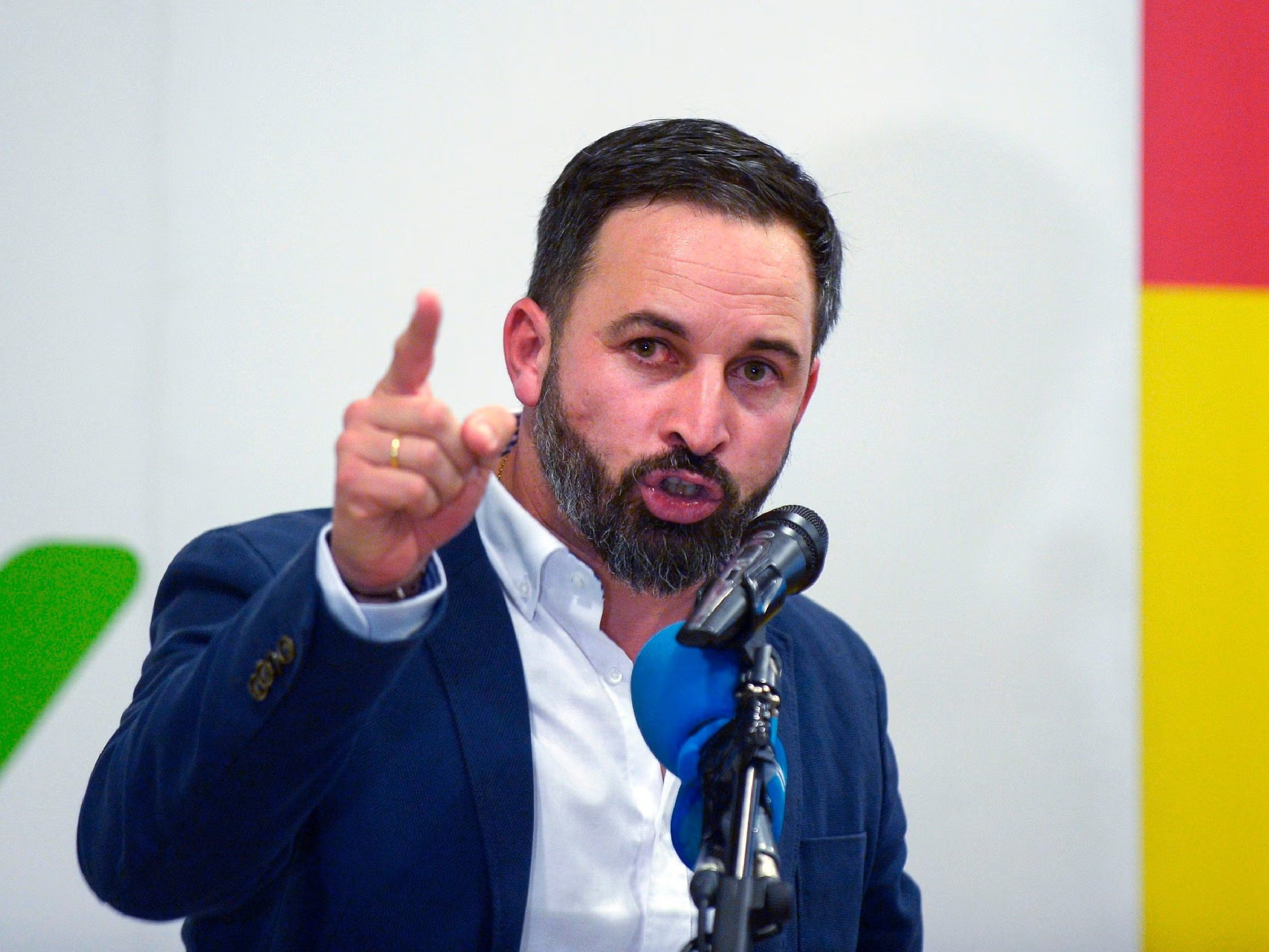
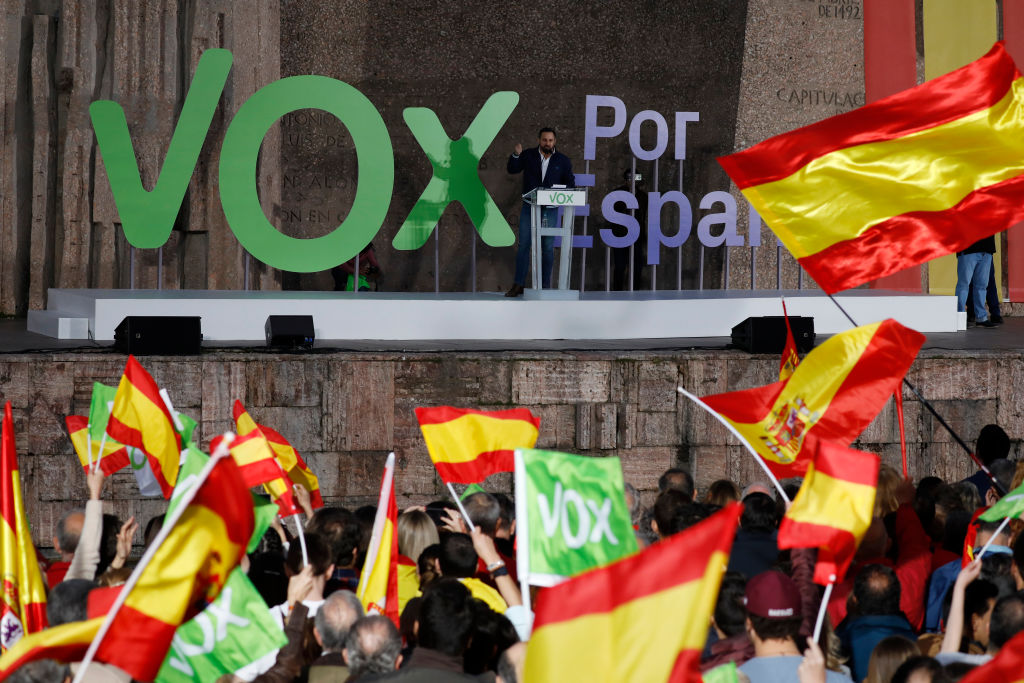
Leader Santiago Abascal (The Independant) and Vox supporters (Jacobin)
Why are Europe’s major far-right parties on the rise?
Dissatisfaction with conventional major parties
In some shape or form, the Tories have always been a major force in British politics, and have dominated the post-war scene, along with arch-rivals Labour. It says something then, that in their 400+ years storied history, this could very well be their lowest point. In the last three Conservative terms (including the 2017 snap election), there has been at least two leaders- David Cameron resigned after the vote to leave, Theresa May resigned because she wasn’t competent enough to facilitate Brexit, Boris Johnson resigned after the infamous “party-gate” scandal, all before the nightmare 49-day reign of Liz Truss. Rishi Sunak was then able to slightly steady the slowly sinking ship, yet not fill the gaping holes, and after a disastrous 411-Labour-seat, 121-Tory-seat 2024 general election, new leader Kemi Badenoch has plugged a few holes, but not turned the Conservative vessel into one that can compete with Labour’s. So far, Labour’s reign certainly hasn’t been disastrous, but it’s also definitively not been the game-changing revolution of change that many believe the country needs. Meanwhile, Liberal Democrats have slightly taken advantage of the fall of the Tories, however they remain sat on the fence, almost living on it.
All of this has paved the perfect path for Reform to walk towards a 2029 majority, and concocted the perfect potion to win over much of Britain’s population. As mentioned previously, current polls suggest that if the election was held tomorrow, then the UK would be a sea of light blue. More and more of the public are quickly desiring change, and many don’t see that on the horizon with a conventional party in power. When they look right, they see Farage with his arms open, beckoning them towards a new era, and a fixed Britain. This yearning for something different has made it a lot easier for people to look past the bad sides of Reform, like the racism and possibly socially inappropriate means of bringing about change. It’s a similar story when you look around Europe- those in Germany are slowly moving away from the SPD (except in the north-west industrial heartlands), which the AfD profited from greatly with their shock 2nd place in the 2025 election. Obviously for Alternative for Deutschland to be more successful, their reach must be better outside of the East, however this will obviously be a lot easier if the SPD keep on losing their grip throughout the nation.
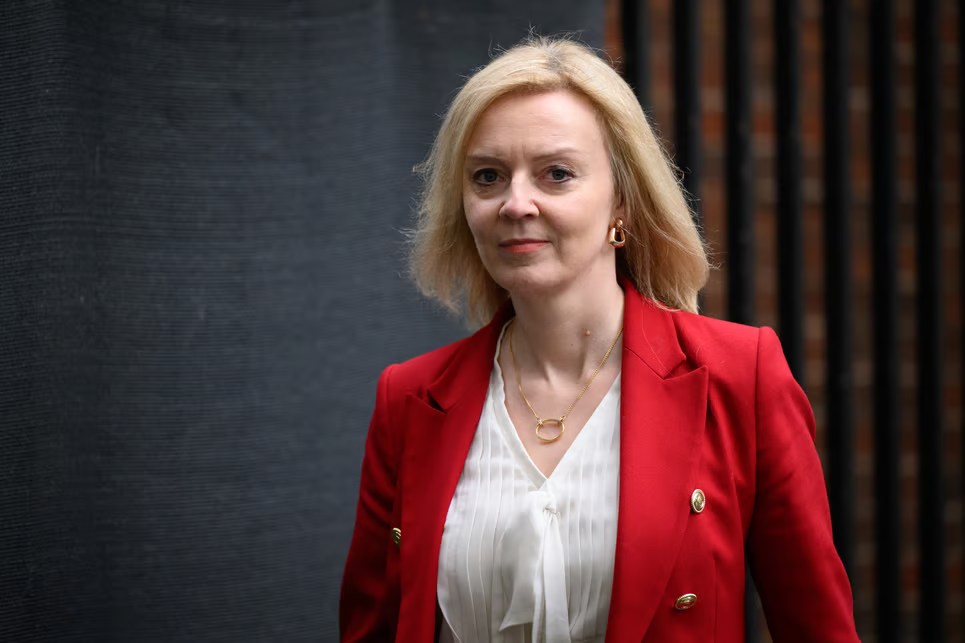
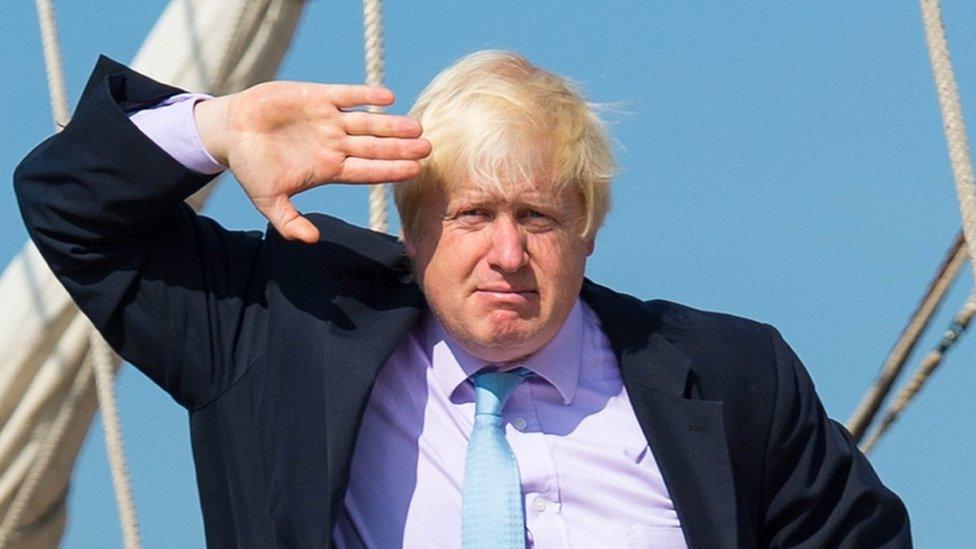
Incompetence and scandal, Liz Truss and Boris Johnson (Politico.eu) (BBC)
The fall of firewalls against the far-right
Ever since the horrific reign of the tyrannical Adolf Hitler, the metaphorical Brandmauer firewall has stood strong, outlasting the famous physical Berlin Wall. Despite this, many are now beginning to question whether cracks are starting to form, following the emergence of the AfD as a major force in German politics. The Brandmauer is an unofficial rule meaning that Germany’s conventional parties are unable to negotiate with the far-right, in order to maintain diplomacy, with the past in mind. However, the rise of the AfD puts strain on this wall, given that they may soon be a key player in forming coalitions to achieve a majority in Germany’s proportional representation system. Chancellor Friedrich Merz almost immediately ruled out a coalition with the AfD after his 2025 election win, and ended up freezing out the party after forming a surprising agreement with perennial rivals, and 2025 underachievers, centre-left SPD.
This willingness to side with a historic rival “for the greater good” highlights that the Brandmauer may very well still be intact, however this is counteracted by Merz being slightly hypocritical, as he has previously flirted with the AfD in parliament, in order to form various laws, notably surrounding immigration. Notably, AfD co-leader Tino Chrupalla stated that “anyone who erects firewalls will get grilled behind them”. The French Cordon Santitaire is also beginning to show signs of wear and tear, aided by their two-round system, as the National Rally appear to be edging closer to an election win. There are no such boundaries in the United Kingdom- we’ve already seen a degree of co-operation between Reform and the Conservatives (a coalition has even been mooted should neither get a 2029 majority), however the fall of firewalls in Germany and France could be key if the far-right ascend to power in those nations.

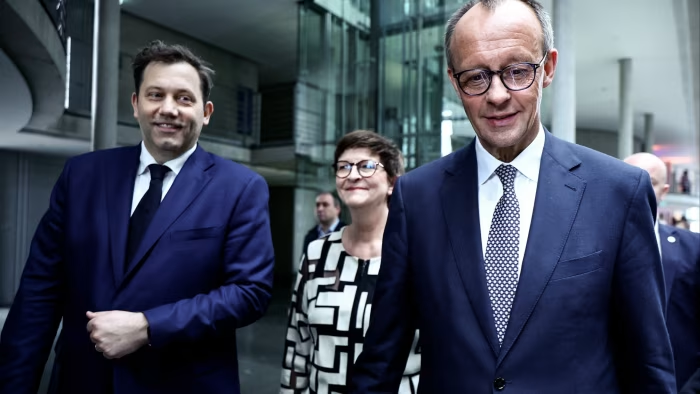
CDU leader Merz with AfD leader Weidel, and with SPD leader Klingbeil (Politico.eu) (Financial Times)
Pledging to solve key issues
There are many issues floating heavily around European politics at the moment- immigration, inflation, Euroscepticism, and in Spain, many independence movements. There’s also an increasingly common sense amongst the public that conventional parties are failing to do enough to solve these massive issues. Possibly the biggest pull of the far-right is that they’re saying they’ll solve these problems. Reform have pledged smarter rather than mass immigration and the lifting of income tax, the AfD have said they’ll impose stricter immigration methods whilst also seeking to pull Germany out the EU if there’s not significant change. Brothers of Italy, National Rally, and Vox have all kept to the anti-immigration trend, as well as looking to preserve culture and tradition, to create a greater sense of nationalism- Vox have even pledged to put a stop to Spain’s infamous and huge independence movements. This is perhaps the simplest reason that people’s heads are being turned towards the right- there’s problems that aren’t being sufficiently solved by conventional near-centre parties, and the far-right are saying they’ll solve them.
The centre-right moving further right
Despite the Brandmauer and Cordon Sanitaire in Germany and France respectively, the conventional centre-right parties are slowly beginning to adopt more extreme ideas, and in some cases, succumb to the far-right. It’s a poorly kept secret that parties such as Reform, AfD and Brothers of Italy have been incredibly successful over the last decade, and this is obviously leaving many MPs within the centre-right anxious that their ideas are not the preferred way forwards. In an attempt to win their rapidly evaporating votes back, conventional parties are starting to seek policies that they believe the public desire.
The problems this strategy leads to were excellently explained by Italian political scientist Nathalie Tocci when speaking to the Guardian- “when moderate parties rule out cooperation with the radical right citizens know … a vote for the far right is wasted, but when they wink at the far right, that disincentive evaporates. And voters tend to prefer the original to the copy.” This not only highlights the effectiveness of firewalls, and the problems created if they crumble, but it also shows us that centre-right parties may be shooting themselves in the foot in a desperate effort to win back support. In a way, they’re following an extremely popular trend, but they’ve started too late, so that everyone then believes they’re just copycats. Other problems created by this include a gradual normalisation of the extreme, as more standard parties adopt more “out-there” views. Europe moving further right on mass scale is something that has to be avoided at all costs, as it reduces democratic competition, changes general views on the far-right, and produces a frightening future.
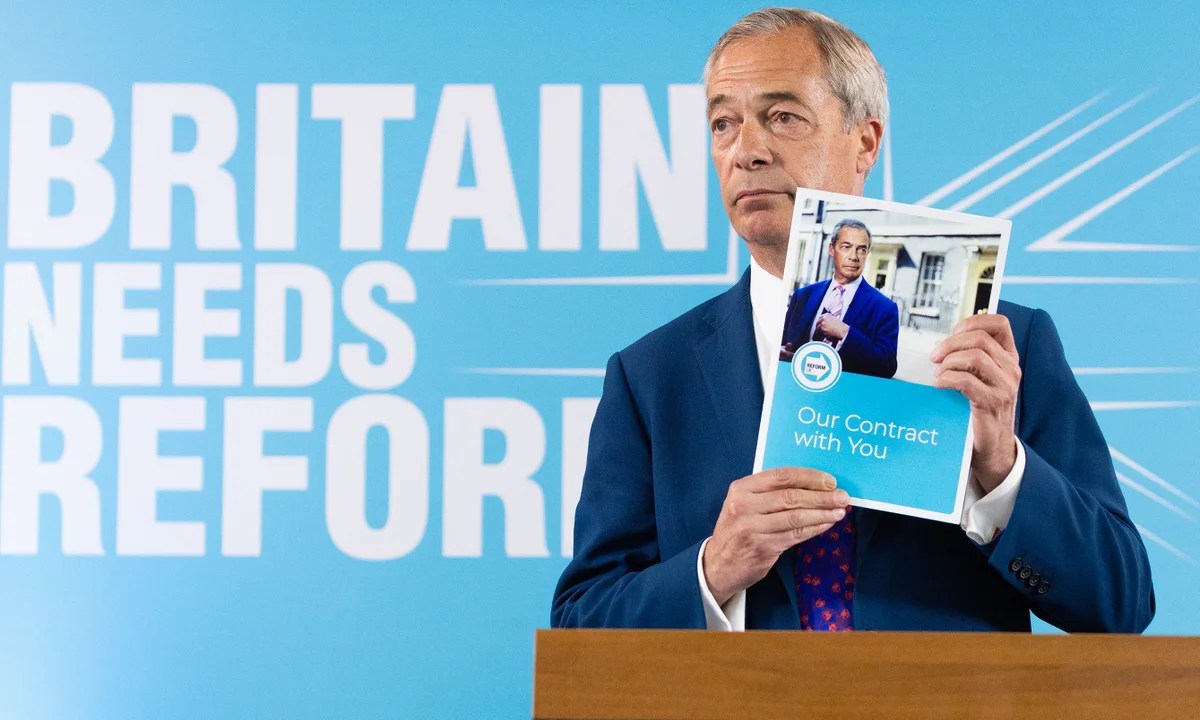
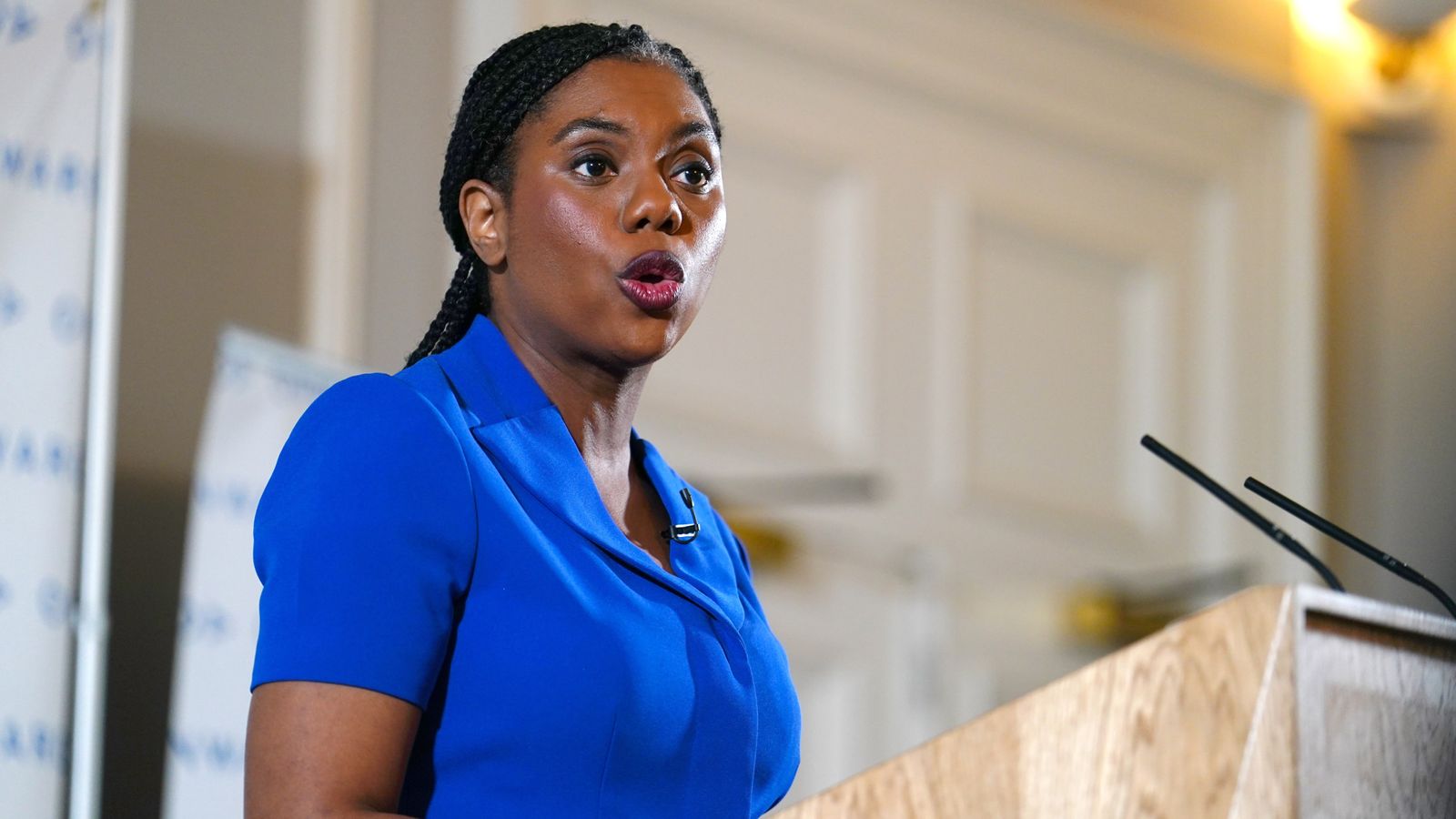
Nigel Farage with Reform’s pledges (The Guardian) and Conservative leader Kemi Badenoch (Sky News)
Dissatisfaction amongst the younger generation
There’s often calls for the voting age to be lowered, and as much as that’s not the topic in question here, it shows just how much we see youth as the future. That statement is counteracted however, by how many believe they have been cheated by the government system. Our younger generation is arguably the worst hit by the cost of living crisis, and many of the youth of Europe are angry at their leaders, because of dwindling economic opportunities being on offer, and extreme difficulty being felt when trying to establish themselves (buying a first house etc.).
Many feel annoyed at the economically stable older generations, who they believe had it easier when climbing up the financial food chain, whilst also feeling betrayed by major parties, who are failing to solve these problems. Unemployment is already a huge issue for governments, with 4.6% of the UK population finding themselves without work in 2025 according to the Office of National Statistics- appallingly, these figures stand at more than three times higher for people aged 16-24, with 14.3% of the younger generation not having a job. It’s understandable then, that Europe’s youth are angry at politicians for not ensuring stable, well-payed jobs for younger people. Obviously there’s a huge other side to this argument, however this fury has once again formulated a desire for change, and once again the far-right are feasting upon it.
Dissatisfaction surrounding the European Union
Along with the Covid-19 pandemic, the biggest challenge facing the British governments this century was the now infamous Brexit. Europe was shaken into shock as it was announced that “leave” had taken 51.9% majority- a key reason for the surprise was that most of the people within the media at the time were those with ideas pointing towards “stay”, therefore a false narrative surrounding the ultimate outcome was created. The election had, and still does have huge impacts today- don’t forget it saw off two prime ministers, and created a massive issue involving how migrants would enter the country. Despite the UK not being a founder, the EU had lost one of its key and most powerful members, however this could very well not be the limit of membership problems for the union.
Along with the idea that it threatens and undermines national identity, many in Europe’s most influential countries are growing tired of the perceived economic burdens that the European Union creates, with frustration in Germany and France about how they are the primary financial contributors of the group, and how they believe that some of the more prosperous nations in southern Europe aren’t sufficiently pulling their own weight. A cornerstone of many far-right parties is Euroscepticism (Reform were originally the Brexit party), and this is seen most severely with Alternative for Deutschland. Alice Weidel’s party have pledged that if in power, they would seek to abandon the Euro and return to the German mark. More extremely, the AfD have also said that they’d try to withdraw the state from the EU all together, should there not be significant reforms to rules such as the fiscal ones. People’s doubts of the European Union are a key fuel for far-right parties when trying to gain important seats, as they fit their own traditional ideas of Euroscepticism perfectly.
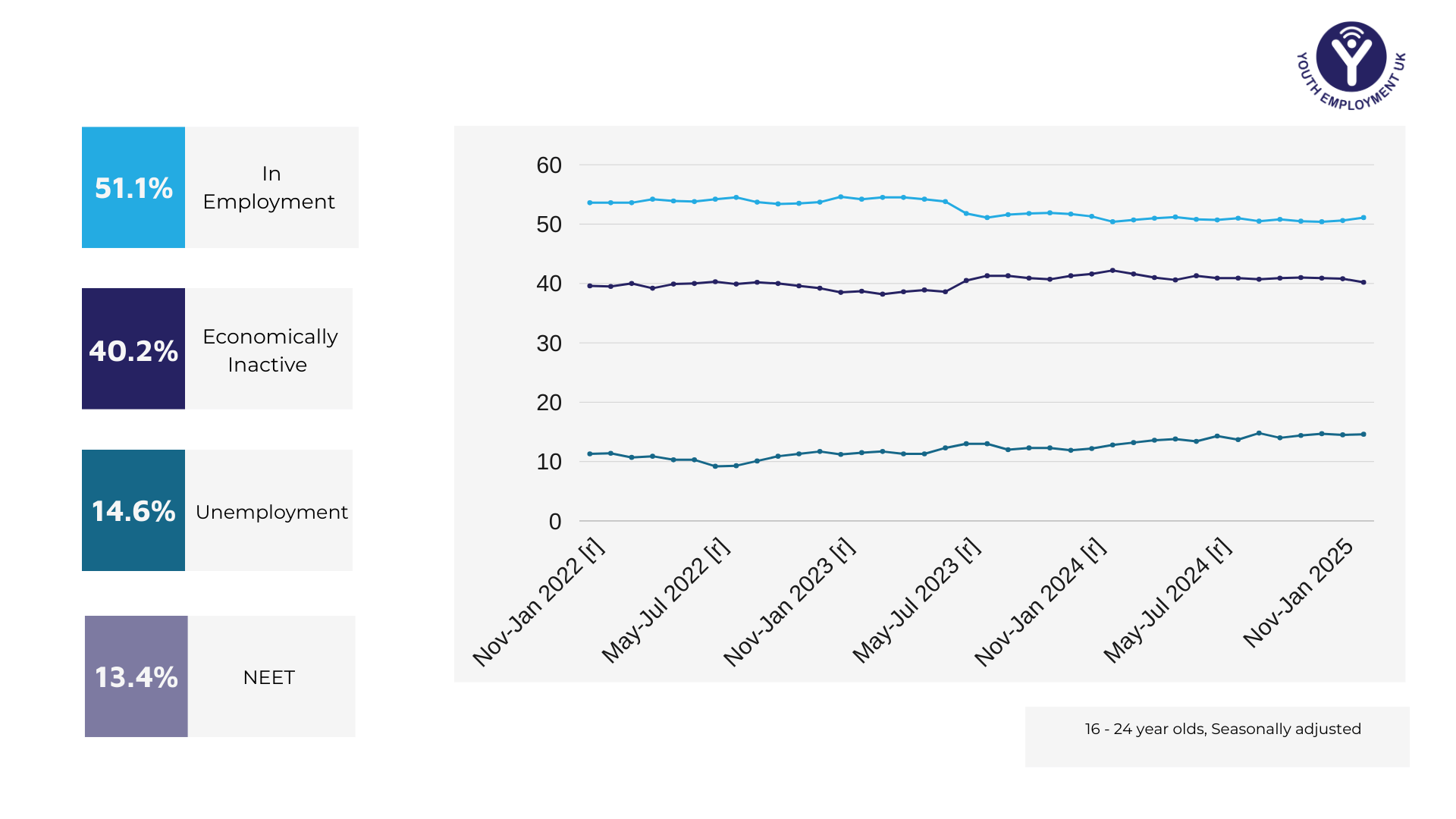
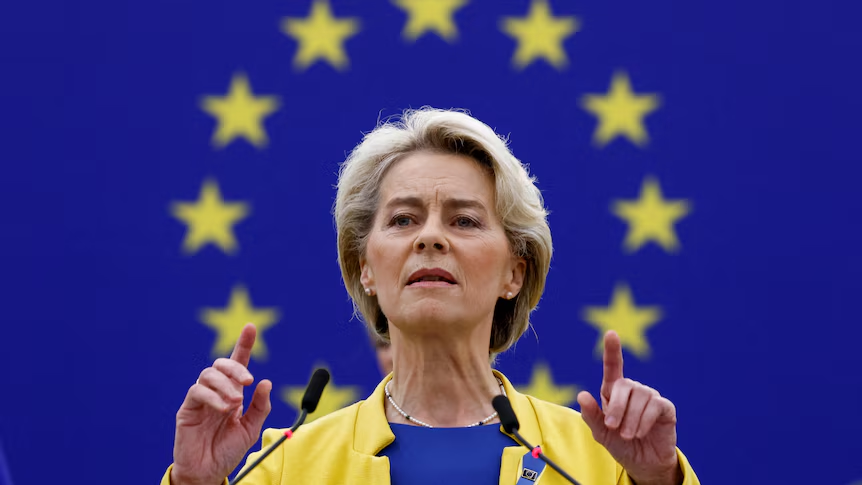
Youth unemployment rates (Youth Unemployement UK) and EU president Von Leyen (ABC News)
Conclusion
Hopefully this has been an engaging and thorough guide to who the major far-right parties of Europe are, and why they are on the rise. In my opinion, they pose a significant threat to the fabric of European politics, and perhaps democracy itself, however their desire to solve key problems is hard to argue with. Despite this, their socially inappropriate means of conduction also poses significant problems, along with the huge baggage brought with accusations of racism, and the harbouring of extremists. Unfortunately, an easy path has been paved for the far-right to come into power- the Brothers of Italy are already there, AfD are now genuine contenders, Reform are projected to win in 2029, it may end up being a toss of the coin for National Rally in 2027, and Vox are now the strongest party outside of Spain’s formidable big two. The issues in European politics at the moment, such as immigration, inflation, and Euroscepticism play massive roles in the far-rights growth, due to the inability of the major conventional parties to sufficiently solve these issues. In order for this trend to be prevented, there needs to be a clearer direction and hope for the future amongst near-centre, traditional big-players, as well as the maintenance of coalition and negotiation firewalls such as the Brandmauer. The public must be informed about the negatives of the far-right, especially given that polling suggests they’ve already realised the positives. After all, a well-informed population are far more likely to lead a better future for Europe.
Thanks for reading my latest blog post on Your World Explored by me, Lewis Defraine. Feel free to offer your support, or even constructive criticism in the comments section below. A like would be greatly appreciated, and if you’d like to receive more articles from Your World Explored, you can also subscribe.
Key sources- the Guardian, Anti-Defamation League, International Bar Association, Journal of Democracy, Blatavnik School of Government, France 24, Vox, House of Commons Library, Office of National Statistics
Key election statistics articles-
https://www.bbc.co.uk/news/election/2024/uk/results
https://www.theguardian.com/world/ng-interactive/2023/jul/23/spain-election-2023-live-results


 Your World Explored
Leave a comment