

Colour has a huge, often unrecognised, influence over our lives. Years of history have given each shade unique connotations, which play crucial roles throughout our society, especially in marketing, where different hues can be used to create emotion, enhance aesthetics, and even impact consumer behaviour. Colours have diverse meanings, which often vary depending on who you ask- for many, red means love, courage and strength, whilst for others, images of anger, violence, and danger may spring to mind. It’s certainly no surprise then, that the sheer power and sway of a seemingly simple shade also has a key role to play in the world of politics. Shortly after the colourisation of television, the US began to agree on the colour of each party, resulting in the now famous red/blue state split being formed. The red flag has become synonymous with the communist ideology, as it has flown strong over recognisable past nations like the USSR, and those in the present, such as China.
Colour often conveys a nation very well, and is a great source of nationalism- look at the notable orange “Koningsdam” in the Netherlands. Each hue of the colour spectrum is aligned with one or more sections of the political one in most countries, inspired by centuries of history, and often, just what feels right. It’s not just the far-left that’s distinguished as red, it’s the centre-left as well, due to origins stemming from the bloodshed of the working class in the French Revolution. Conservative’s now clear identity of blue came from attempting to differentiate from their rivals, which has caused a chain reaction around Europe and the world, with many centre-right parties now adopting the colour.
The way a simple hue can influence people on a large scale, and signify things so important clearly isn’t talked about enough- many sports physiologists believe that red makes teams more intimidating, whilst a plain-looking tint can have huge consequences in marketing- for example, those looking to portray luxury may opt for purple, but others wanting a fresh, exciting feel might choose yellow. In the UK, most colours have obvious yet crucial involvements in politics, and in this article, I’m going to investigate how the major parties found their now famous, iconic hue, and how whole ideologies can be represented by a mere section of the colour wheel.
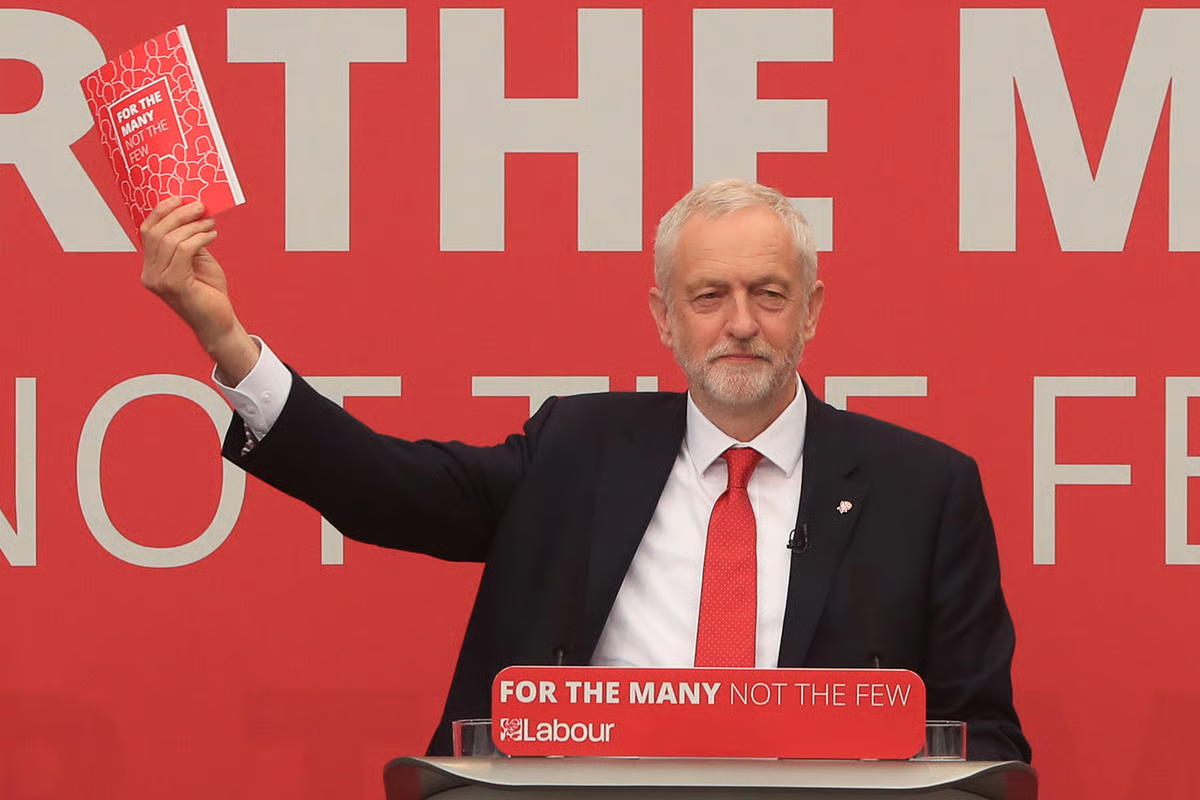
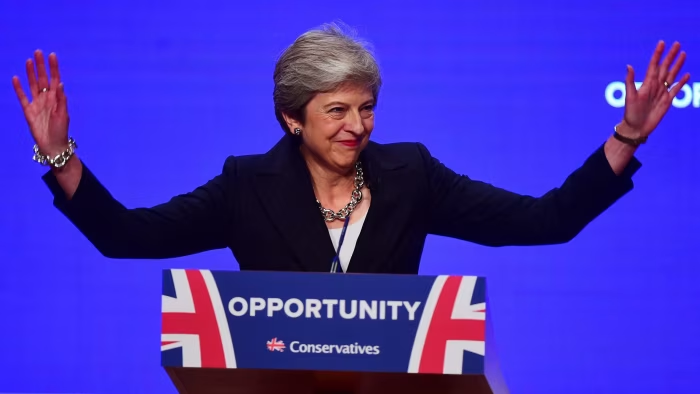
Jeremy Corbyn and Theresa May with contrasting coloured press conference backgrounds (Evening Standard and Financial Times)
How each major UK party obtained their colour
Labour- Red
For a centre-left party allied with trade unions, social democrats, and democratic socialists, red was always the natural choice. The colour’s association with the left-hand-side of the spectrum dates back to the French Revolution, where it symbolised the blood shed by workers, who died in the struggle against their oppressors. Since its inception at the beginning of the 20th century, Labour have used red, which wasn’t utilised by either of the big two parties at the time (the Conservatives and the Liberals). Red is often used in marketing, as seen with brands such as Coca-Cola and Kelloggs (who are both the main player in their fields), and it is a colour that creates strong feelings that lead to action, largely due to its connotations of anger and power. This combination of working-class related history, and stimulation of movement means that red is perfect for a party that has historically wanted widespread general equality, with change often needed to produce it.

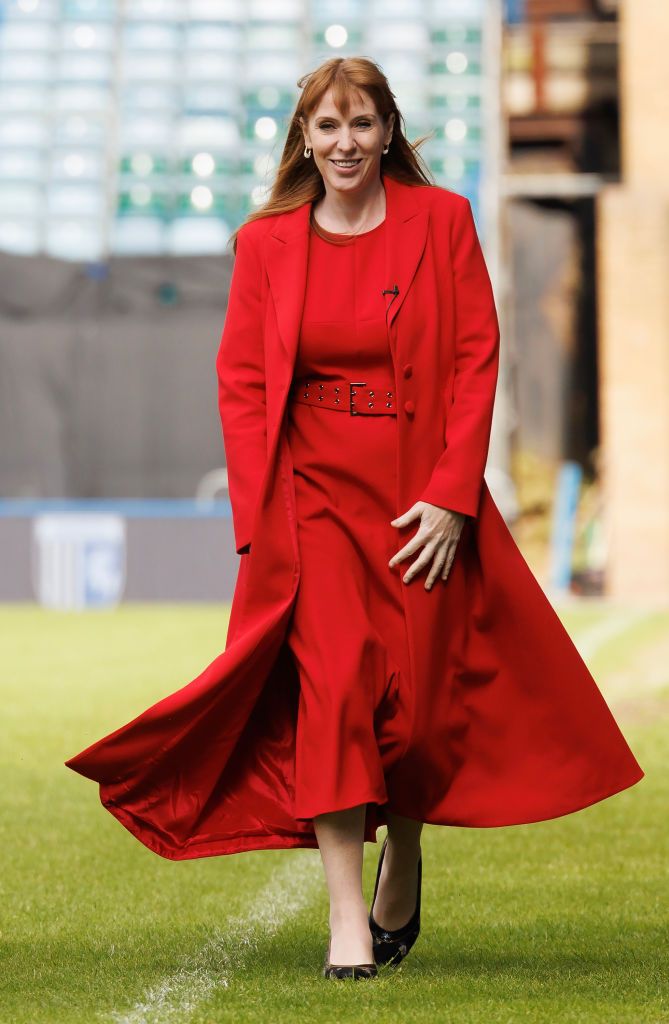
Kier Starmer amongst Labour supporters holding red banners (Bloomberg News), and Deputy Prime Minister Angela Rayner wearing an all red outfit (ELLE)
Conservatives- Blue
For the Tories, the journey to their signature ultramarine blue has been a little less straightforward. After they were formed in 1834, the Conservatives adopted the traditional blue, white, and red of the Union Flag, perhaps due to their position of wanting to preserve the conventional British values (part of the literal definition of Conservatism). Despite this, Labour emerged as a genuine threat in the 1900s, with a very strong usage of the colour red. To avoid this association with their direct rivals, the Tories dropped the red from their branding, and overtime blue has evolved to become an easily recognisable symbol of the party. Even though the current tree is a lighter shade, a deeper, darker ultramarine is the true hue of the Conservatives, and the colour itself has been the most expensive and difficult to produce for most of history. It therefore symbolises wealth, but also has connotations of reliability, trust, and confidence, making it an ideal option for many banking companies and technology firms, such as Paypal, American Express, Samsung, and HP. This also makes it great for a conventional party, that is often in control, and that is reflected around Europe and the world (not the US), as many centre-right parties have chosen blue as their colour.


Leader Kemi Badenoch wearing light blue (The Independent) and boards still featuring Union Flag branding (YouGov)
Liberal Democrats- Orange
Whilst the Tory blue was born out of rivalry, the orange of the Lib Dems was created by union. In March 1988, the historically powerful, yet then struggling Liberal party combined with Labour offshoot Social Democrats, who had left the party out of frustration surrounding trade union members influence. The Liberals had famously been represented by yellow in the past, whilst the Social Democrats’ Labour roots meant that they were using red- therefore, when the new Liberal Democrats party was created, it made sense to combine the two to create orange. Obviously, there were other reasons for the colour’s convenience as well, including the need to differentiate from other parties, as the Scottish National Party had grown throughout the 1970s, and were utilising a pale shade of yellow.
This unique set of circumstances has created a very distinctive and individual colour scheme for the Lib Dems, whose bright hues often stand out against the more conventional blues and reds of the Conservatives, Reform, and Labour. Admittedly, the official colour of the Liberal Democrats is actually yellow, however orange is more often than not used in election campaigns and branding, partly because it surveys the party’s aim of balancing various forms of liberalism, such as social, economic, and political. Orange is seen as a fresh, attention-grabbing, energetic colour in marketing, as seen with successful brands such as Fanta, Amazon, Reese’s, and B & Q. What makes the Lib Dems’ hue truly unique is how orange is used elsewhere, as yellow usually represents liberalism in Europe, whilst their colour is generally used by Christian democratic parties on the continent.
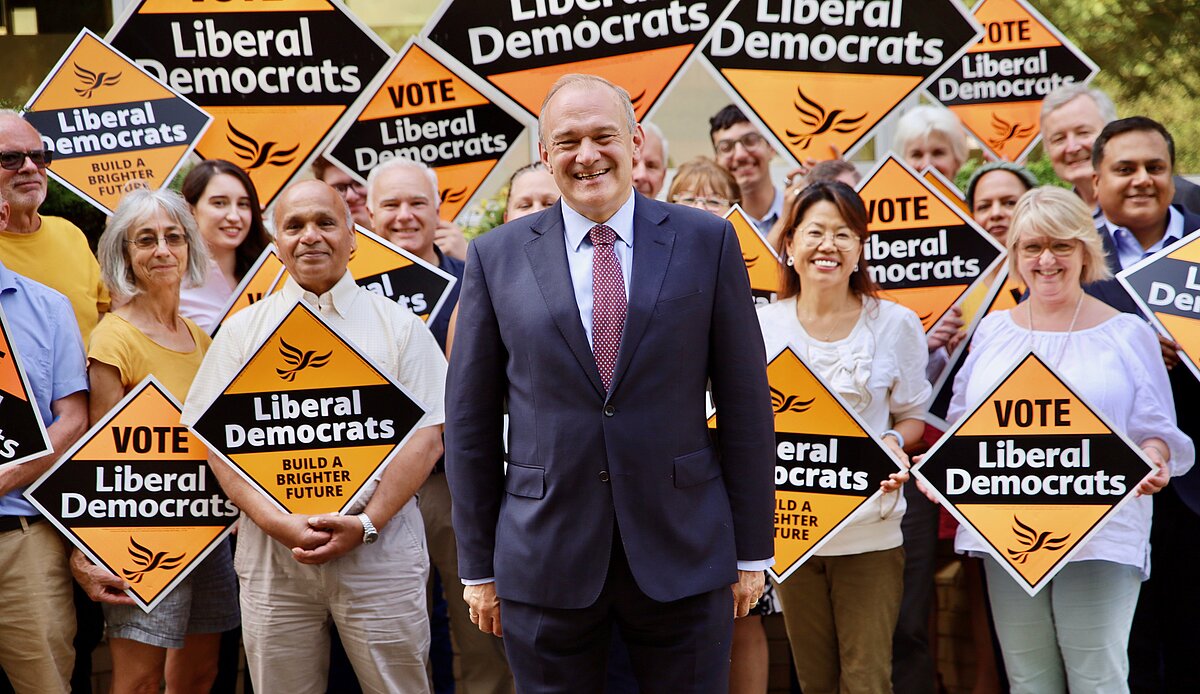
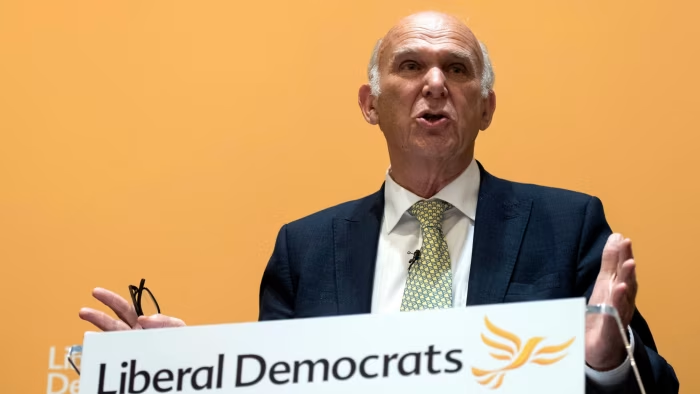
Current Lib Dem leader Ed Davey with supporters (libdems.org.uk) and former leader Sir Vince Cable (Financial Times)
Scottish National Party- Yellow
For the SNP, the origins of their colour are a little more obscure. This paler shade of yellow is often associated with liberalism, and indeed they are socially liberalist, however many are often surprised that they don’t utilise the colours of the Scottish flag- blue and white. Obviously, this is partly because they don’t want to use similar colours to the English-centred Conservative party. According to Firstpost, the hue originates from David Lloyd George’s 1928 report “Britain’s Industrial Future”, which is also known as the “yellow book” due to its appearance. It was a significant review of the nation’s future, created by the Liberal Party, that aimed to make readers think about what was right, and what changes should be made- there’s some pretty notable ones in the minds of Scottish National Party leaders. In marketing terms, yellow is the most noticeable hue in the spectrum, and symbolises happiness, optimism, and creativity. The colour is used by brands such as National Geographic, McDonalds, and IKEA, to emanate energetic, exciting, and adventurous qualities.
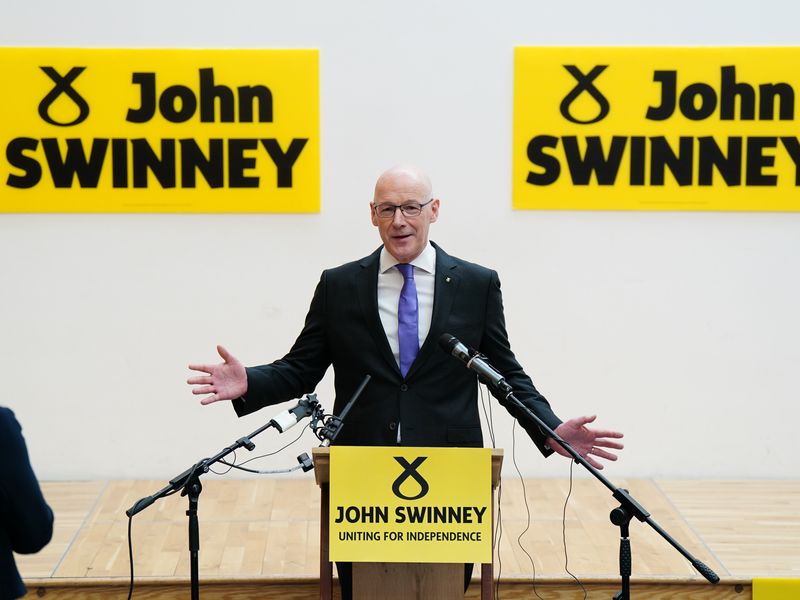
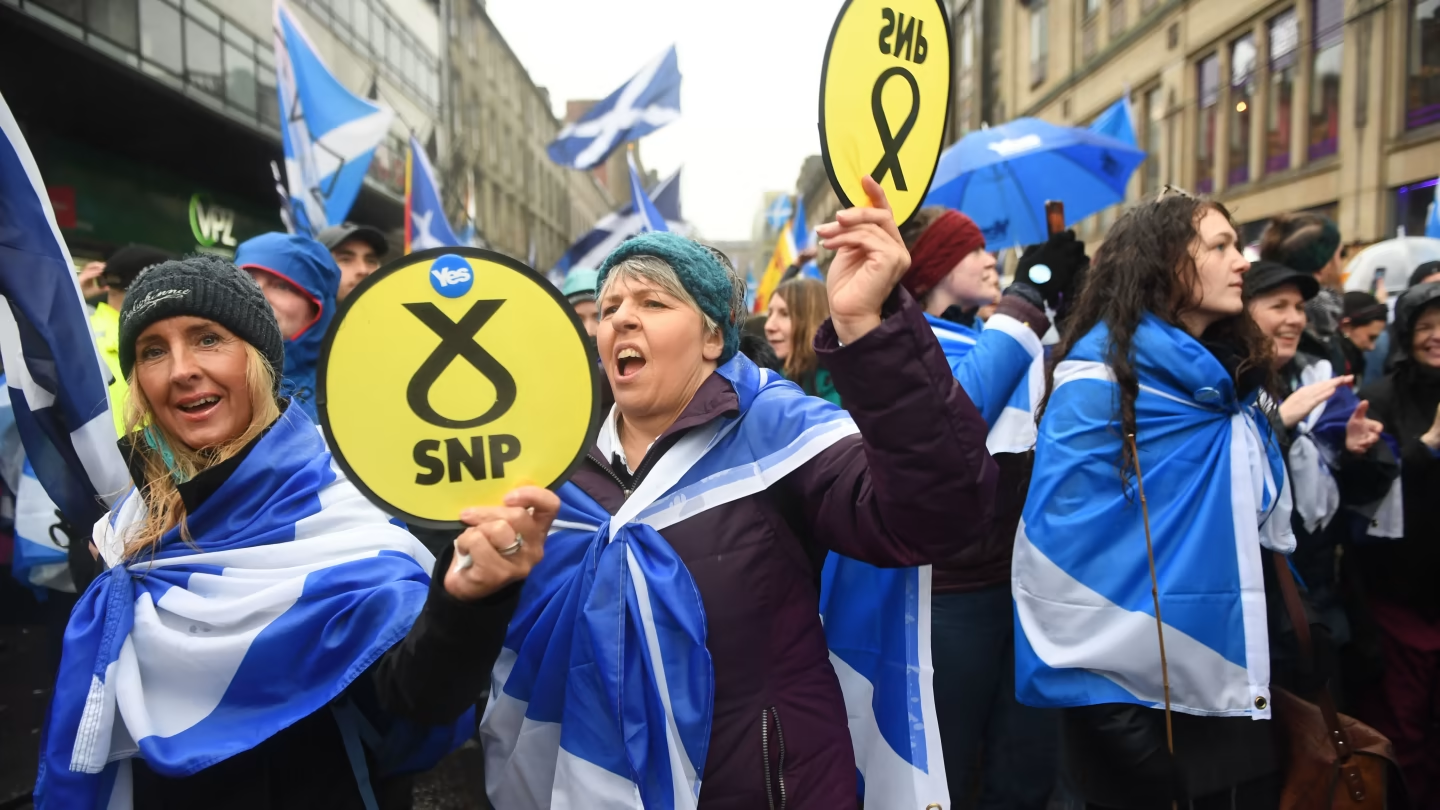
SNP leader John Swinney (Sky News) and SNP supporters (Financial Times)
Green Party- Green
There’s no more obvious reason for a party to use a colour than this one- it’s quite literally in their name. Green is so synonymous with nature, and the environment that the party was branded with it, making it the only logical option when picking a hue. We hear it used so often when talking about how to combat climate change, and sustainability goals, which are the Green’s core aims for the future. However, they are a notable, yet understandable exception to the red left rule, as they are actually the furthest left of England’s major parties. It goes without saying that not selecting green would be extremely strange, and almost embarrassing for the party, not to mention its convenience of not already being used by an English opponent (it is by large Welsh and Irish groups). In marketing terms, green signifies freshness, sustainability, and eco-friendliness- major brands like Starbucks use the colour to display a sense of calm and growth, however its part in nature is shown with Land Rover utilising the hue due to it being used for camouflage vehicles in the Second World War.

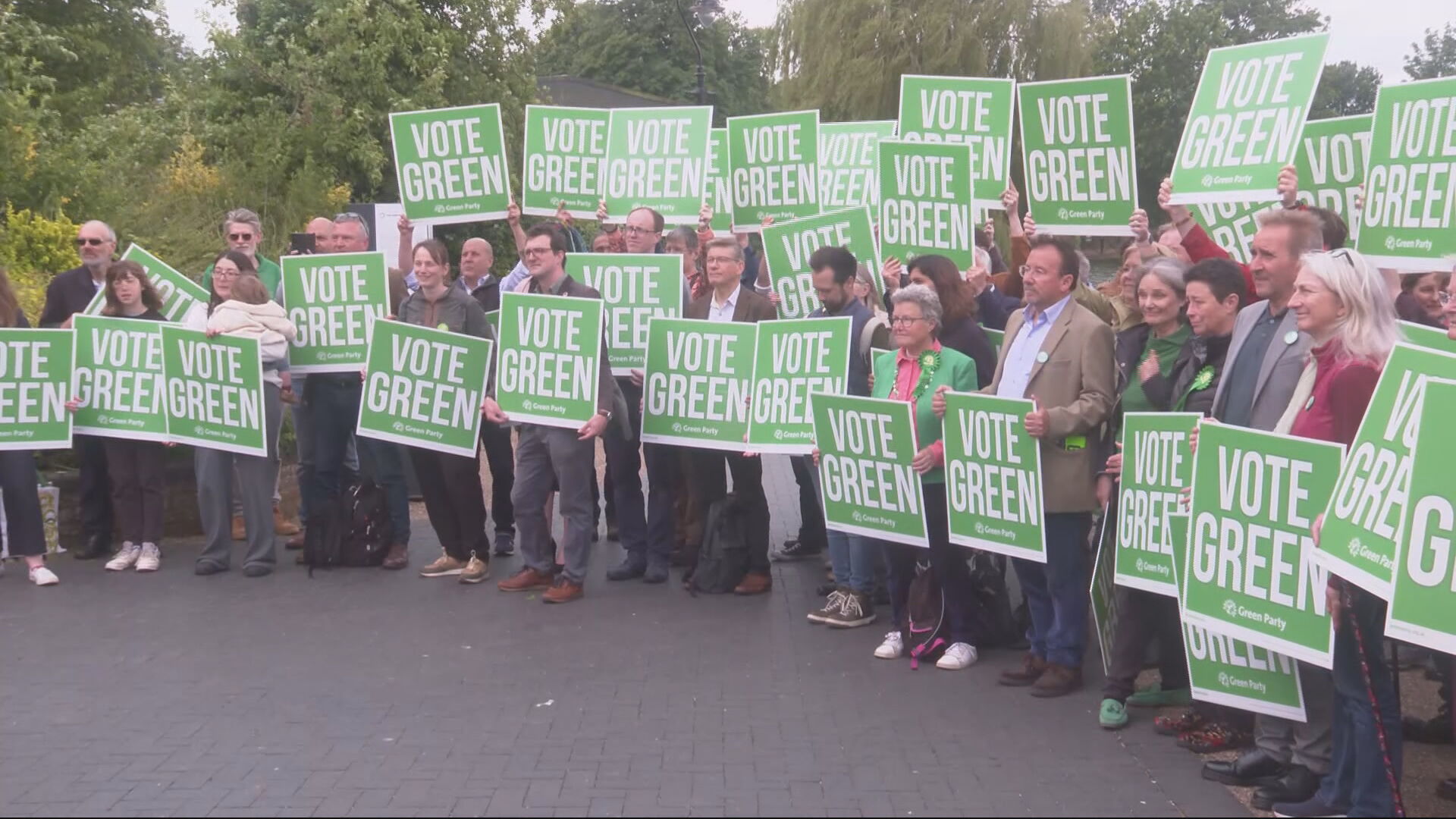
Green Party leader Carla Denyer (The Guardian) and its supporters (ITVX)
Reform UK- Light Blue-
For a party with such a dramatic rise, largely through fresh new ideas, and attracting the masses who want change, Reform’s light blue takes surprising inspiration from their rivals. As discussed earlier, ultramarine blue has slowly emerged as the prominent Tory colour, and Farage’s party opted for a lighter shade of the Conservative hue, due to the obvious right-sided similarities. Cyan was also largely unclaimed in the UK, and offers a new, distinctive feeling, much like the group themselves. Whilst other major far-right European parties like Brothers of Italy, and National Rally use a more conventional blue (Vox even use green), the AfD, arguably the most controversial of them all, have also opted for a lighter shade of blue since their 2013 creation, which highlights the fresh outlook offered by the colour, as the normal, traditional blue used by the right is surprisingly unclaimed. Similarly, to this more traditional blue, cyan offers a sense of serenity and calmness in marketing, and is also often used to display dependability. Because of this, the hue is used by many computer companies, as well as being the easily recognisable symbol of former social media platform Twitter, and former communications giant Skype.
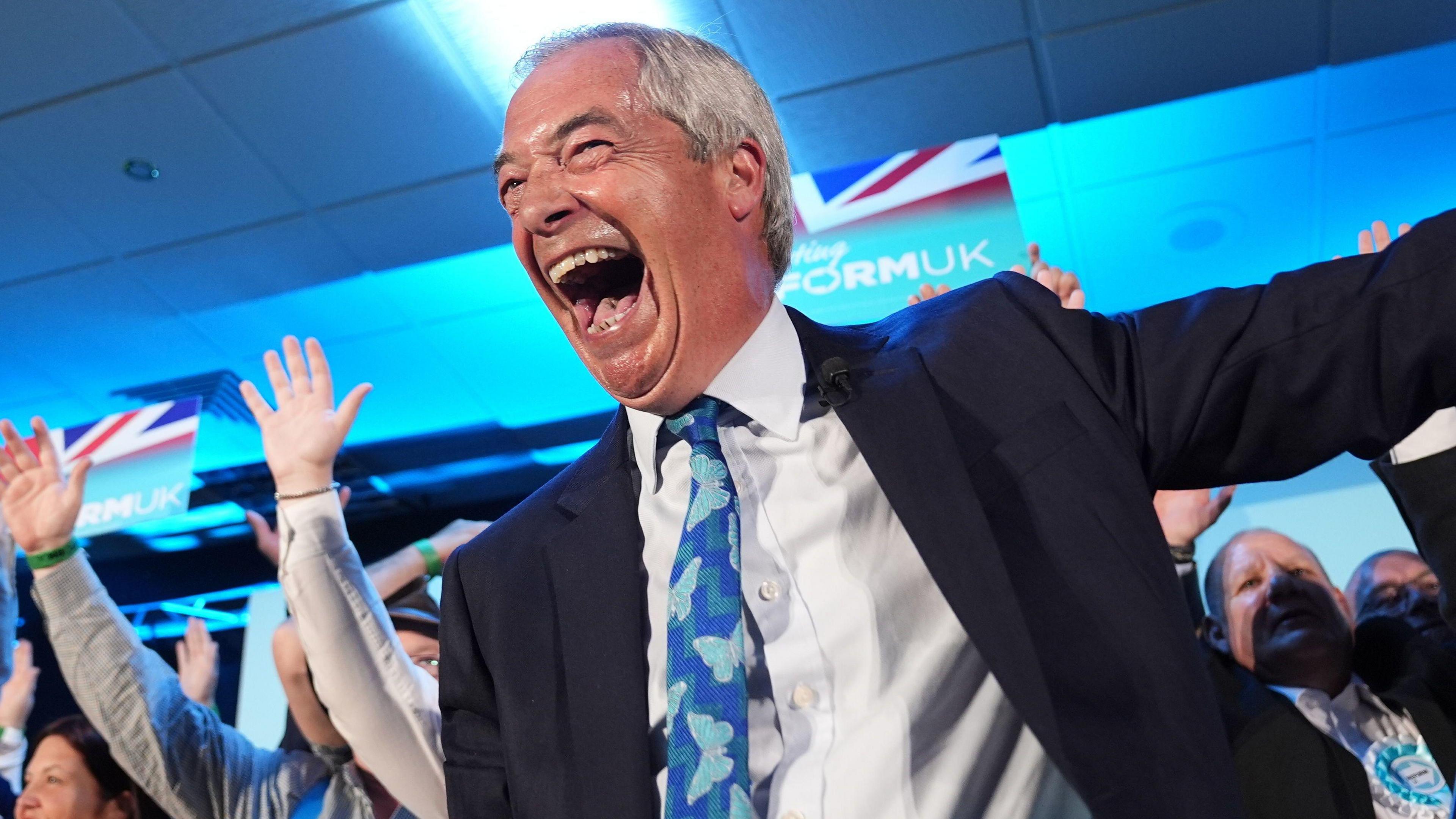

Reform leader Nigel Farage (BBC) and the party’s supporters (Local Government Chronicle)
Other smaller parties
Sinn Fein- Green- For a catholic party aiming for a united Ireland, there is no other option than green. The colour is synonymous with “the Emerald Isle’s” culture, due its place amongst national pride, and identity.
Plaid Cymru- Green- After the Welsh party’s 1933 reform, the logo became the green “triban”, meaning three peaks, which represented the group’s three core goals of self-government, and also cultural and economic prosperity. Plaid Cymru’s emblem is now a yellow daffodil, but a green backdrop remains, as it is a colour “anchored” in Welsh history and identity.
Democratic Unionist Party- Despite the Northern Irish protestant party being founded in 1971, and holding five seats in parliament, there is still disagreement within the media over whether the group’s colour is a claret/red, or dark navy hue- white and copper are also used.
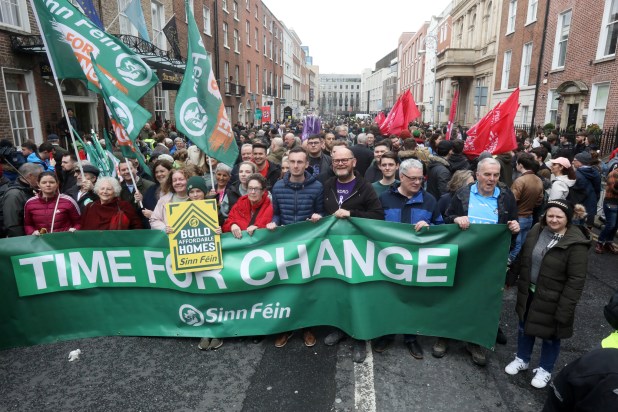
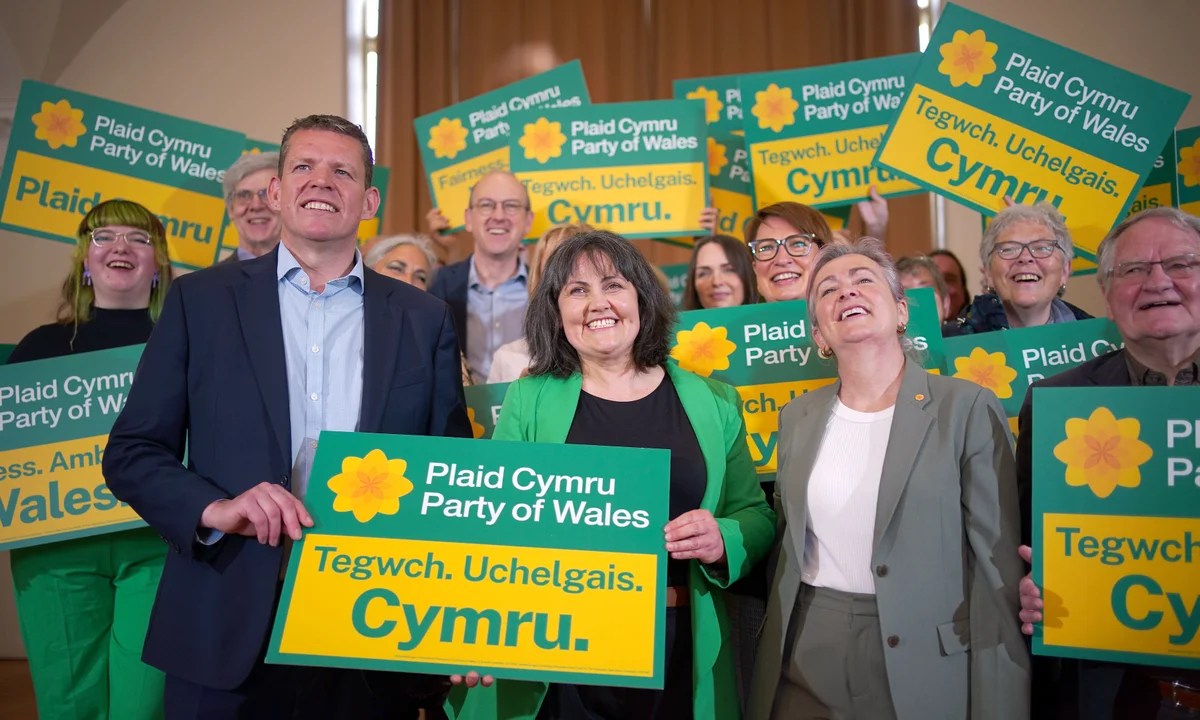

Sinn Fein (The Times), Plaid Cymru (The Guardian), and Democratic Unionist Party (DeSmog)
What the colours not currently used by a major UK party represent
Purple- In many countries, purple is used to signify a coalition, or union between two sides, largely due to the fact that in most nations, the top two parties are represented by blue and red, which mix to make the colour. It can sometimes be associated with populism, and is used by dying right-wing party UKIP, because it traditionally surveys connotations such as wealth and luxury.
Pink- This colour doesn’t necessarily have a place in the political spectrum, but it signifies a lot. Pink is often utilised for key feminist and LGBTQ+ movements and marketing, due to historical stereotypes surrounding gender. Additionally, it can also be seen with “softer” social democrat parties, and interestingly, was also seen in many 20th century South American communist movements.
Black/Brown- These two colours are often used together to display the furthest sections of the political spectrum- fascism and anarchism. Brown’s connotations stem from the infamous Nazi “storm troopers”, who were known for wearing military-style shirts in the colour. Black is also known for the extreme ideologies through parties adopting it, as many fascists liked the colour, because it’s a symbol of power and discipline (also often death). On a different note, the hue is often used to combat racism, obviously because it’s the name of the race that is discriminated against.
White- This is a colour which usually is a symbol of peace, and this extends into politics, with white being used to display purity, innocence, and virtue. Despite pink being widely used in feminism, white is heavily used in women’s suffrage, as it reflects good morality and rejection of negative stereotypes. However, the colour can also be used by white nationalists, who use it as an emblem of racial superiority. In the UK, white is used to represent independent politicians.
Grey- This colour is usually used to represent the independent politicians elsewhere, but also has a strange meaning. Grey is often associated with older voters, and used to describe them collectively through phrases like “the grey vote”, whilst the hue can also be utilised to describe a perceived lack of alignment, or tendency to compromise in politics.
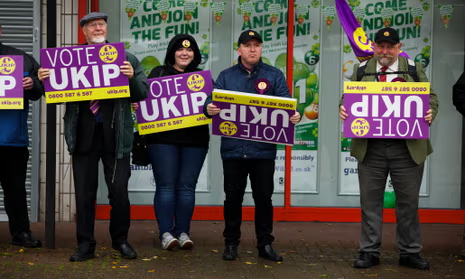

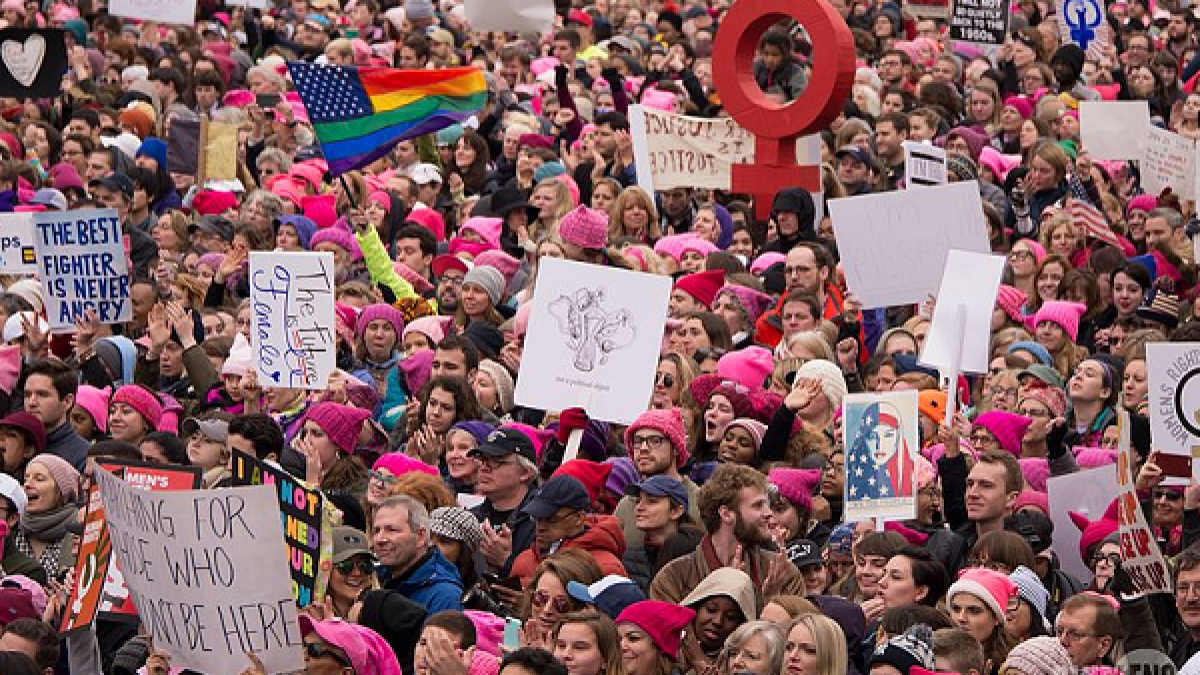
UKIP supporters (The Guardian), a feminist movement (WUNC), and a BLM protest (Britannica)
Conclusion
Years of history, desire to stand out, and ideology have forged the diverse, colour-filled landscape of UK politics we know today. It follows many of the trends seen in Europe, some of which it has set (Tory blue for centre-right), but there are also some notable differences to the hues seen on the continent. The marriage of red and yellow created the iconic Liberal Democrat orange, however for many European countries, orange means Christian democrat, an idea that has never really gained traction on the other side of the channel. Yellow is the staple of liberalism, but the Scottish National Party lean a little more to the left than your conventional liberalist, whilst the fact that the UK uses white instead of grey to represent independents really stands out. Obviously, Europe doesn’t follow a strict script when colouring its parties either- far-right Vox are green in Spain, the Christian Democratic Union of Germany are seen as black on most election maps, whilst far-left La France Insoumise use purple. Not to mention that the Democrats and Republicans across the Atlantic utilise the blue/red colour scheme the opposite way round to almost everyone else.
Colour in marketing’s influence over the public is a hugely underrated one, as is the idea that a hue can evoke emotion, and even cause an action out of a viewer. The connotations over a colour in politics usually work a similar way, and these feelings often fit with (whether coincidence or not) the party itself. Perhaps the reason blue fits with the Conservatives so well is that it is a colour that instils a sense of trust and reliability, which is obviously crucial for a party that so often has the most power, often goes into elections as favourites, and could also very well be out of a string of terms. It goes without saying that green fits snugly with its party as well, whilst red’s natural ability to spur people into action and change has always been brilliant for Labour, who frequently go in polls with aims and pledges of reform. Talking of reform, Nigel Farage’s party don’t surprise when you hear that they selected a lighter shade of blue to fit in the far-right trend, but also to be different, however they do shock when you hear that this was because they wanted a version of the Conservative hue. It’s strange for a party that constantly goes at its rivals would find branding inspiration from one of them.
As mentioned in the introduction, colour’s impact in politics is often unspoken of, yet huge. Obviously, it’s far from the biggest factor on election day (people have brains), however those brains can be subconsciously influenced into making key decisions. The psychology behind a simple shade is a deep study, however connotations built into the mind from the day we were born heavily affects our thoughts later on. It’s also incredibly interesting to see the differences about how the United Kingdom sees colour in politics, compared to the rest of Europe, and even the world. It highlights key differences as a whole, which is shown through the usage of orange for Christian Democrats on the continent, that is virtually non-existent in the UK, suggesting that religion’s pull on political parties isn’t/wasn’t as big in Britain. The story of colour shows just how much Britain’s politics is steeped in history, with many hues being allocated decades ago, and others slowly emerging over time through a sequence of events. Colour is a way people can identify themselves and feel a sense of pride, perceived with green’s involvement with Sinn Fein and Plaid Cymru. With everything taken into account, hopefully you realise that its more than just a colour- it’s the impact of decades of history, the desire to stand out, a strong sense of nationalism, and the very ideologies that politicians fight for.
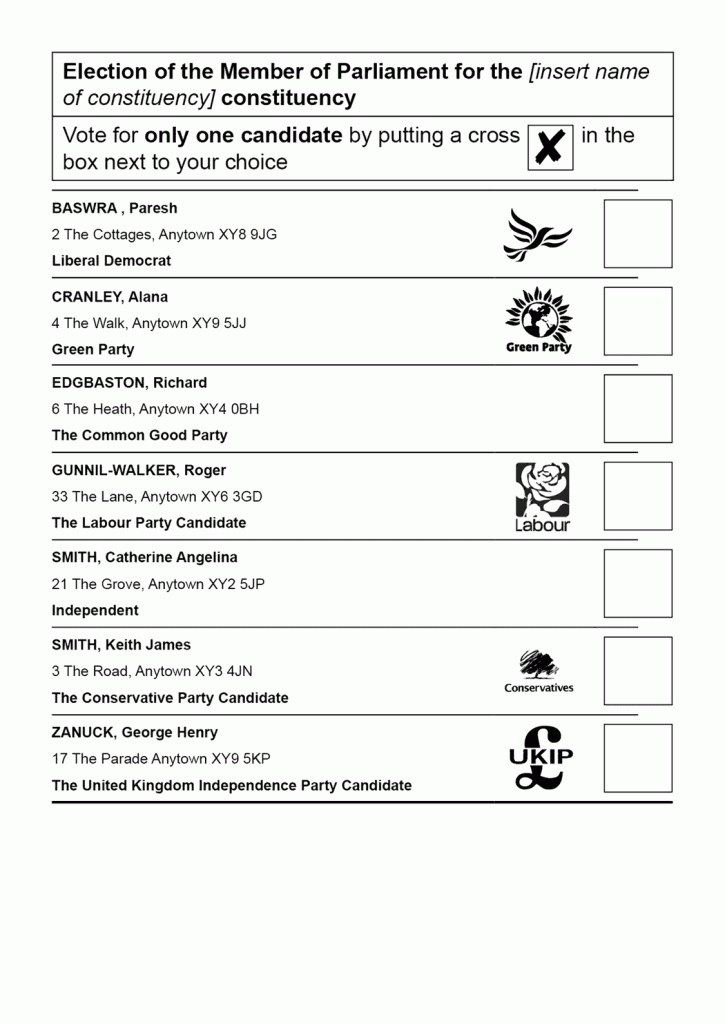
All for nothing? Ironically, the ballot sheet is printed black and white!
Thanks for reading my latest blog post on Your World Explored by me, Lewis Defraine. Feel free to offer your support, or even constructive criticism in the comments section below. A like would be greatly appreciated, and if you’d like to receive more articles from Your World Explored, you can also subscribe. Also, you can take part in the poll down below.
Key Sources-
https://edition.cnn.com/2024/07/01/style/how-britains-political-parties-got-their-colors – Article on how each major UK party got their colour
https://www.itv.com/news/2024-07-01/where-did-the-political-parties-get-their-colours-from –
Article on how each major UK party got their colour
https://www.datawrapper.de/blog/partycolors –
Article with infographics on how the media gives colour to each party
Article with more information about colour’s use in marketing and connotations




 Your World Explored
Leave a comment