Europe has reached a crossroads in its long and complex history. It is a continent that is growing ever closer, yet it feels as though full-blown conflict is on its sharpest knife-edge since the Cold War, once again due to the influence of Russia and the United States. Vladimir Putin’s war with Ukraine has highlighted just how close we are to conflict, as well as accelerating deep fears about nuclear weapons throughout the public.
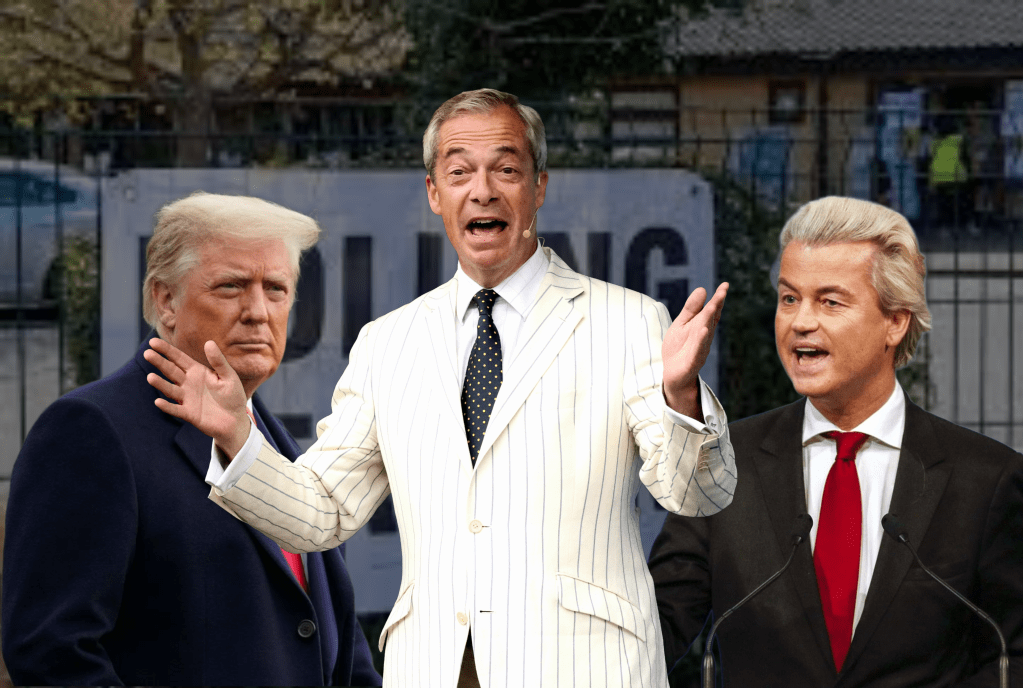
Donald Trump’s noisy return to office has once again created a US that “puts itself first”, and the president’s questioning of how the burden is shared within NATO has led to uncertainty surrounding America’s commitment to European defence.
It appears that now more than ever, Europe’s major powers must align themselves with one another, and put differences aside for the common interest of world safety.
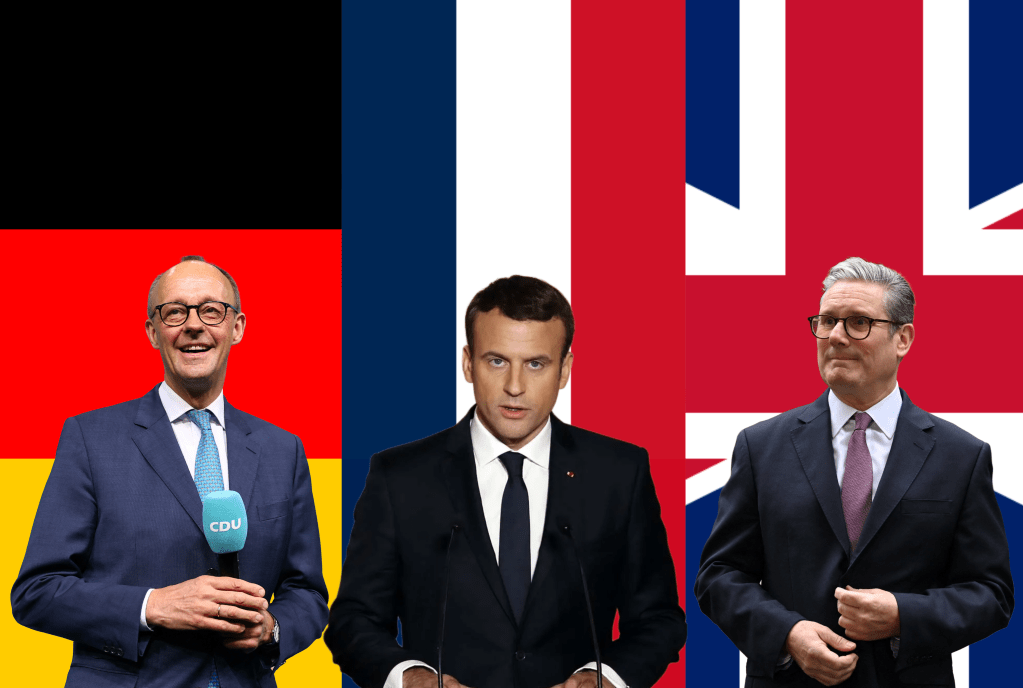
Germany, France and the United Kingdom appear to have recognised this, with the steady development of a tight-knit axis, forged by the positive relationships between Friedrich Merz, Emmanuel Macron and Keir Starmer. Throughout this article, I’m going to explore how this alliance is being formed, and exactly why it makes post-Brexit Europe a much more stable environment, despite the looming shadow of ever-increasing threat from the east, and quickly diminishing support from the west.
The Kensington Treaty
The 17th of July 2025 will go down as a historic day in Anglo-Germanic relations- this marks the date upon which Merz and Starmer put pen to paper and signed the first major treaty between the UK and Germany since the Second World War.
As well as signalling the beginning of a formal friendship between the powers, the agreement, named the Kensington Treaty, set out plans for greater co-operation on trade, education, immigration and, crucially, defence.
The pact stopped short of creating a full-on military bloc, however there will now be joint procurement and development of technologies including typhoon fighter jets, boxer vehicles and long-range missiles, greatly increasing military co-operation between two of Europe’s strongest forces.
Recognition of a shared view that Russia poses “the most significant and direct threat” to both nations also came with the treaty, making the core motives of the agreement even clearer to the public. Merz has been extremely keen to express his belief that Europe is far too dependent on the US for defence, going as far as saying that the continent has been “free-riding” on Trump’s country. The Kensington Treaty is not only a statement of intent and independence, it’s also a key way in which this can be achieved.
Why Merz is the driving force
It’s become pretty obvious that Merz is the driving force behind this axis, which is partly down to his own domestic political interests. In a German state where the pressure and threat of the AfD party is felt increasingly more severely, and where issues such as immigration and defence have become politically volatile, Merz has looked to position himself as a stabilising force in Europe.
This can be seen with his pledges to better Germany’s relationships with neighbours France and Poland, something that he’s repeatedly accused predecessor Olaf Scholz of failing to do.
The Chancellor has also promised to make Europe entirely independent from the US in terms of defence. Whilst this does seem unlikely (especially after hinting that UK co-operation can supplement, rather than substitute), it’s clear that his Oval Office visit went significantly better than many others.
Merz satisfied Trump by promising more defence spending, despite appearing nervous and saying little compared to the president in a press conference.
It’s obvious that Merz is crucial to an “E3” alliance- he’s currently the largest and most integral cog in the machine, principally highlighted by his desire for France to be part of an updated tripartite Kensington Treaty. The German appears incredibly keen to integrate the UK into European security operatives, emphasising that despite “deploring” Brexit, a post-EU Britain must not stand on the side-lines of a united front in the face of Russia.
The “Northward Declaration” and the Merz-Macron relationship
Starmer also signed a huge deal in early July, this time with France. The two nations will co-ordinate their nuclear deterrence systems for the first time, marking a key pillar of an alliance between Europe’s three major powers- especially given that Germany are barred from possessing nuclear weapons. An announcement of the “Northward Declaration” came following Macron’s state visit, which aimed to turn the page following a turbulent few years post-Brexit.
Both nations will maintain their decision making and strategic ambiguity, however this again represents a key step towards a Europe that is defensively independent from the US, amidst concerns surrounding their commitment.
France and Germany have maintained a formal friendship for more than 60 years in the form of the Elysee Treaty; however, this bond has been strengthened by the seemingly great relationship between Merz and Macron, something that Starmer supports substantially.
Immigration
Immigration is the hottest topic and most decisive issue in European politics at present. Hard-line stances from parties such as the AfD, Reform UK and Brothers of Italy are huge factors behind their rapid rises, so it’s clear why it’s in the best interests of Macron, Merz and Starmer to co-operate when solving these pressing problems.
The “Northward Declaration” wasn’t the only agreement reached during the French president’s notable UK state visit- a returns deal was concurred, meaning that some people who arrived in the country will now be sent back to France in a “one-in, one-out” format.
This agreement could represent a key step in reducing the amount of illegal immigration into the UK, as well as dividing migrants between safe European nations more evenly. Keir Starmer has confirmed that Germany will now allow authorities to seize boat engines and smuggling components destined for Channel crossings, as part of the Kensington Treaty.
These two deals prove that the United Kingdom can still co-operate with its neighbours in a post-Brexit environment, even with an issue that was a key trigger-point for people to vote leave.
Will it just be the “E3”, or will other nations be involved?
Taking Russia out of the argument, it is clear that Germany, France and the UK are Europe’s three biggest economic powerhouses. However, there are indeed other key players in the continent’s current geopolitical climate, some due to strength and others due to proximity to conflict.
The absence of Meloni in key talks on Europe’s future is incredibly revealing, as you can’t really deny their status as 4th most powerful. Donald Tusk and Poland have also been involved in “E3” talks regarding the Russia-Ukraine conflict, however they aren’t likely to be involved, because their part in Russia-Ukraine is due to border tensions rather than economic/military power.
Spain is often seen as a powerful country that should have more involvement; however, it’s never one of the EU’s biggest contributors, and economic frailties were uncovered by the Covid-19 pandemic. Turkey is often noted as a possible destination for talks, but Europe has continuously rebuffed their desire for integration.
In truth, the train journey that Macron, Starmer and Merz took together to Kyiv says it all. Meloni was nowhere to be seen and Tusk joined negotiations later, signalling the desire of France, Germany and the UK to work exclusively for a better European future. This apparent elitist thinking suggests a significant shift in ideas, from the more collective idea of EU protection, to the proposition that weaker nations may slow the quest for defensive independence down.
Why an alliance would create a better future
Friedrich Merz’s proposal of a tripartite alliance between Germany, France and the UK must be taken with huge positivity and a little gratitude. In an unknown and worrying environment, where the threat of a Putin-led Russia is ominously ever-growing and the support of a Trump-led USA quickly diminishing, the alignment of Merz, Macron and Starmer isn’t just a glimmer of hope, it may be the future. The “E3” may be exactly what a post-Brexit United Kingdom needs- a more elite, streamlined organisation where Europe’s finest and biggest powerhouses can co-operate, creating an environment that not only makes each member stronger, but protects the continent as a whole.
Alignment on immigration could stunt the rise of the far-right in Europe, whilst also greatly reducing public unrest. Co-operation on defence, in particular nuclear weapons, could create a safer and stronger world stage.
The “E3” could also help in the quest for peace in Ukraine, with the continent’s three biggest powers carrying significant negotiating weight when united. Whether it’s because of defence, immigration or political safety, a tripartite alliance between Germany, France and the UK would unquestionably create a brighter European future.
Thanks for reading my latest blog post on Your World Explored by me, Lewis Defraine. Feel free to offer your support, or even constructive criticism in the comments section below. A like would be greatly appreciated, and if you’d like to receive more articles from Your World Explored, you can also subscribe. Also, you can take part in the poll down below.
Key Sources-
https://www.dw.com/en/chancellor-merz-and-the-e3-germany-pivots-toward-europe/a-73338588

 Your World Explored
Leave a comment