
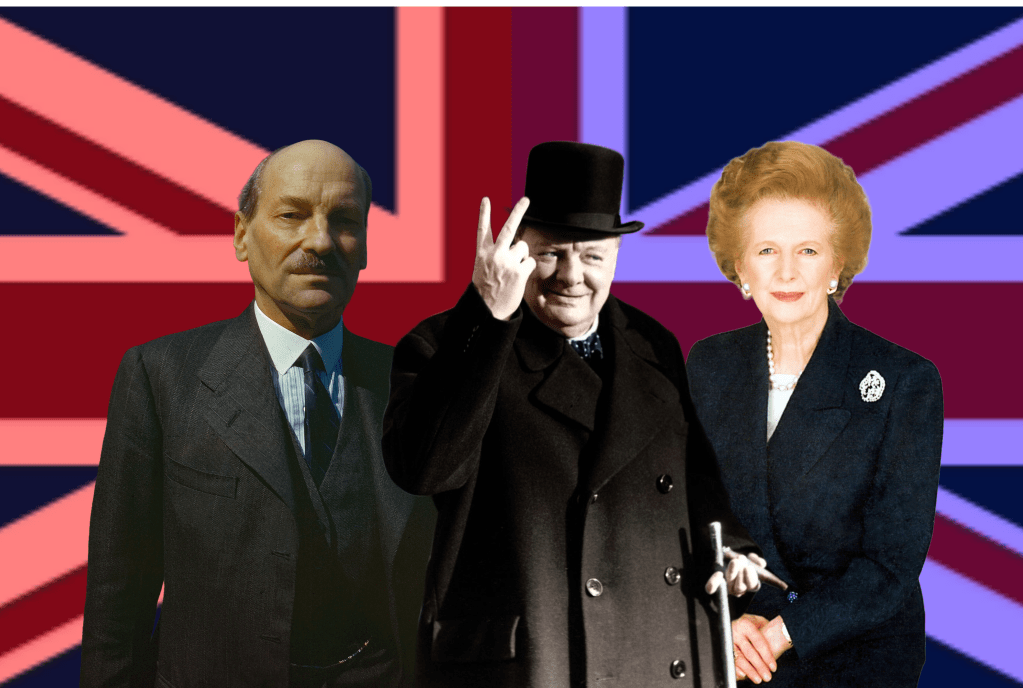
The United Kingdom has a strange relationship with its prime ministers. There are some rare cases of PM where almost everyone looks back with fondness, whilst most are unbelievably polarising. Some of hated by all. A common knack of being involved in scandal means that many of the greatest PMs are still disliked by many, whilst others are hated by some, loved by others, partly due to party division, partly due to a favouring of certain classes.
In short, it’s almost impossible to please everyone. Some of the people in my top six are despised by much of the population, however it’s simply impossible to deny the incredible achievements of certain individuals. In my top six are some of the greatest characters, speakers and motivators that UK politics has ever seen. Prime ministers who have dragged this nation through its darkest hours with its head largely held high. There’s some of the greatest ideological thinkers of all time, revolutionising their party, and indeed the state, setting it up for what it is today.
In my list of six are three Tories, two led the Labour party, whilst the old Liberal party have a sole representative. Hopefully this constitutes an unbiased ranking, as it largely symbolises the balance of power throughout the last two-hundred years of British politics. Of course, there are some honourable mentions. Robert Walpole, the first ever PM, obviously springs to mind, whilst the great Robert Peel, a key component in the making of the modern Conservative party, certainly deserves a reference. Even if we had “never had it so good”, Harold Macmillan is just unable to make my top six, but he does edge the famous rival of a man who does feature, William Gladstone, who is also unlucky to miss out.
Of course, almost no one will agree with this six, especially the order, but this debate is highly subjective, so feel free to comment your list at the end of the article. In my opinion, these are the six greatest UK prime ministers of all time.
6. David Lloyd George
In sixth is a man credited with guiding Britain through its second bloodiest conflict in history, David Lloyd George. The Welsh-speaker is remembered not only as one of the 20th century’s greatest radicals, but also for his charismatic personality and unique character.
Lloyd George was a man of great energy, who was also known for having a scathing, devastating wit, making him a fierce opponent when debating in the House of Commons. Before ascending to the role of prime minister, he saw great success as chancellor, bringing about large amounts of social reform, introducing state pensions for the first time and declaring war on poverty.
Following the start of the First World War, Lloyd George was appointed Minister of Munitions, and after flourishing in the role, was invited to form a government in December 1916. After Britain’s victory over Germany and its allies, Lloyd George was acclaimed as the man who won the war, winning a huge majority in 1918. His dynamism and bright personality made him the ideal man to lift the nation through conflict, whilst his adoption of the convoy system and grand strategy tactics were key components of Britain’s triumph.
The Welsh-speaker went on to sign the Treaty of Versailles, establishing the League of Nations- despite differing desires to Wilson and Clemenceau, the terms of the treaty were well-received in Britain. David Lloyd George laid the foundations of the modern welfare state, and drove parliament with skill, determination and confidence, but his post-war reign was far from perfect.
He was fundamentally troubled by domestic problems- his agreement to Irish independence was reluctant, whilst there were concerns that he was eager for war in Turkey. The Liberal leader presided over a period of depression, unemployment and strikes, and in the end, multiple scandals brought him down. His own party were often left ensure whether to support or abandon their leader- his self-interest and disregard meant that arguably the greatest Liberal leader of all time was partially responsible for the party’s downfall. After the Conservatives broke up the coalition, he resigned, and Labour slowly replaced the Liberals as Britain’s dominant force of the left.
Despite this, David Lloyd George is a hero in the eyes of most Britons. He passed acts raising the school leaving age to fourteen, and prohibited the employment of children below this age from working in railways and transport, building and engineering works, and factories and mines. Most importantly, his famous charismatic personality drove Great Britain through the First World War.
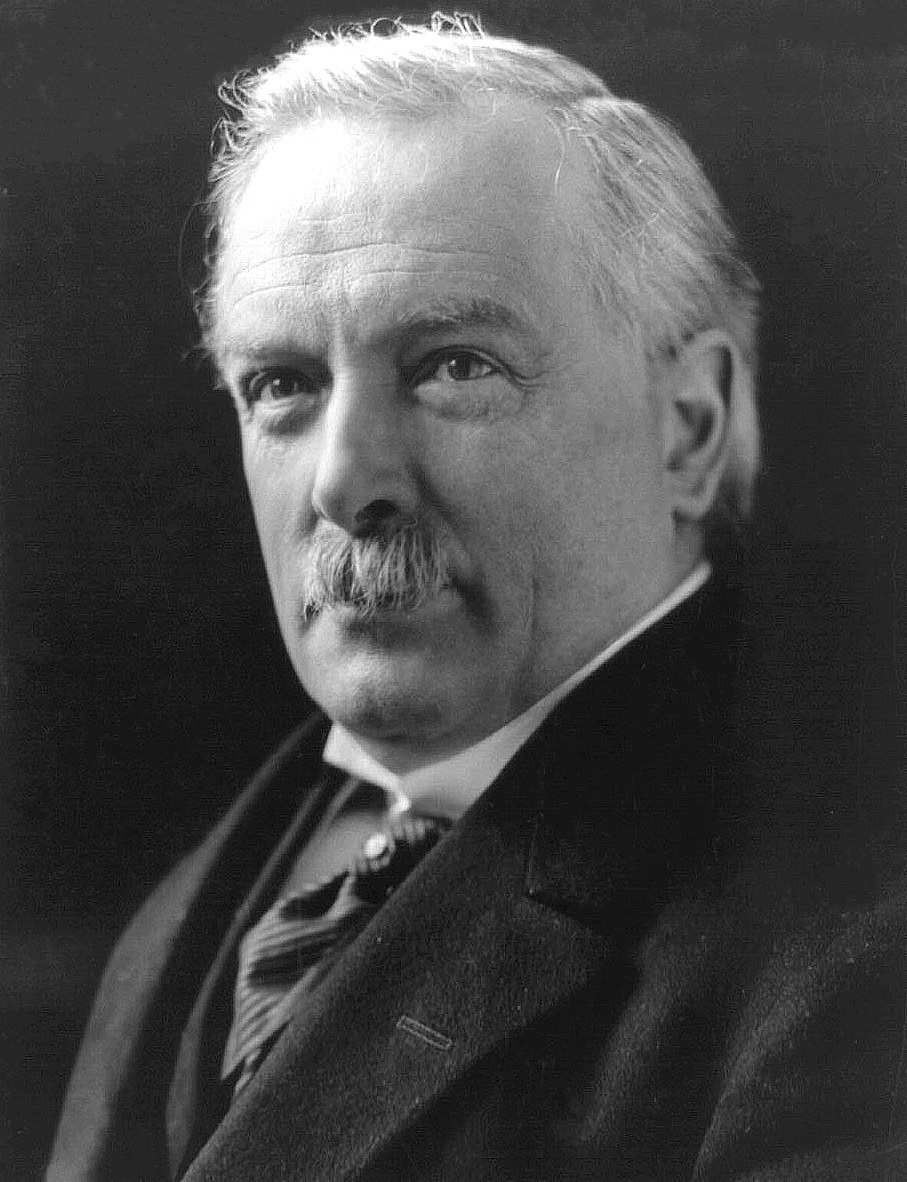
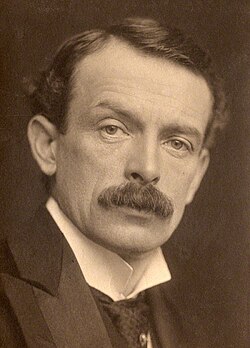
An older David Lloyd George, and a younger photograph of the Welsh-speaking PM (Wikipedia)
5. Tony Blair
Admittedly, the bar is far from high, but the fact still remains that Tony Blair is generally accepted as the greatest UK prime minister of the 21st century so far. The Labour leader was a new kind of politician with enormous charisma and personality, making him arguably the greatest opposition leader of the modern era- there was little surprise when he won a landslide majority in 1997.
Before this, Blair had held various shadow cabinet positions, but after Labour leader’s John Smith’s sudden death, he overwhelmingly won the contest to be his replacement, following an agreement with Gordon Brown that he could be a powerful chancellor. Important constitutional changes came quickly under Blair, with Scottish and Welsh devolution, reform to the House of Lords, Human Rights Act and Freedom if Information Act.
One of Blair’s biggest achievements is without a doubt the bringing about of peace in Northern Ireland- the Good Friday Agreement greatly reduced decades of violence and harm to innocent civilians, and was a problem many former PMs had struggled to solve. The youngest prime minister since 1812 managed to build a strong economy and was responsible for large amounts of public sector reform, leading to another landslide in 2001, partly due to Tory underperformance. He was also in power for the legal recognition of civil partnership between two people of the same gender, and the response to the 9/11 and 7/7 terrorist attacks.
Despite positive economic performance and strong, charismatic leadership, Tony Blair will be remembered most for his attitude to foreign affairs. He was a clear and powerful advocate for Britain’s need to be more involved, joining the American bombing of Iraq in 1998. The Labour leader risked a lot to protect the Kosovars in 1999, displaying his idea of “liberal interventionalist” to the world.
9/11 defined the legacy of Blair. He allied with the USA and President George Bush over the need to confront militant Islamism, first in Afghanistan in 2001, and much more controversially, in 2003 with the invasion of Iraq. For much of the British public, Tony Blair’s time as prime minister is hugely tainted by his role in foreign affairs. However, his extremely successful role in economic matters, as well as sheer skill in parliament makes him the rightful fifth placed PM on this last, and the greatest UK leader of the 21st century.
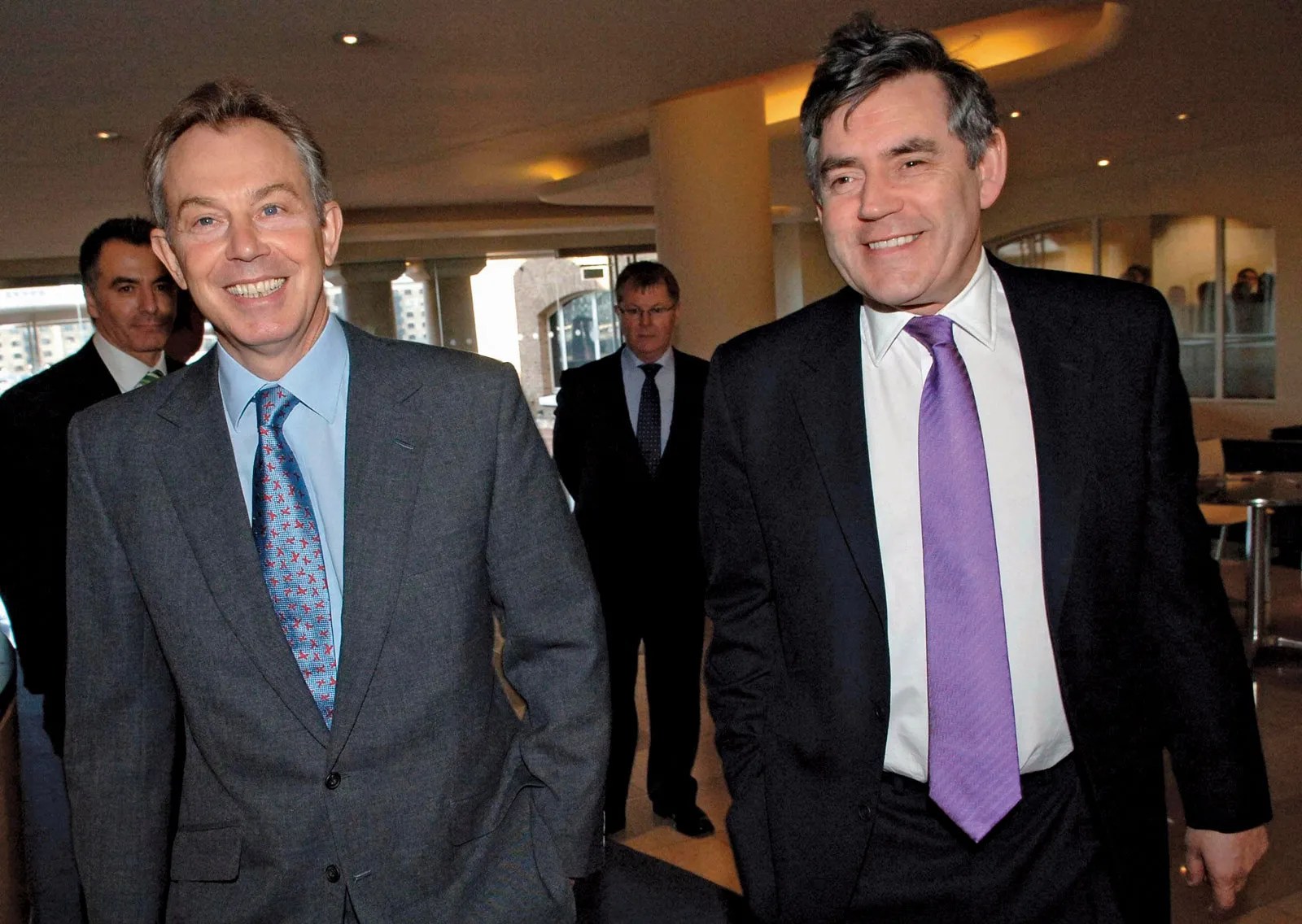

Blair with Brown, and Blair with his nation’s flag (Britannica)
4. Benjamin Disraeli
Fourth in my ranking is its sole representative from the 19th century, Benjamin Disraeli. Other than being the only Jewish PM to date, and Queen Victoria’s personal favourite, Disraeli is remembered particularly for his role in the creation of the modern Conservative party, combining social reform with the ideology’s traditional ideas.
He had to push through a long journey of many setbacks, after longing to be something more sensationally notable than his original career as a solicitor. Following Lord Derby’s resignation in 1868, Disraeli was invited to become prime minister by Queen Victoria, who he had struck up a good relationship with due to his unique charm and skilful flattery. Despite being defeated by the Liberals in the next election, amongst health issues and the death of his wife, Disraeli decided to carry on as Tory leader, highlighting his determination.
The Jew returned to office in 1874, aged 70. It was in this term that he earned a spot in fourth. Disraeli initiated a wide range of legislation to improve educational opportunities and improve the lives of working people, passing the 1975 Public Health Act, and decriminalising trade unions. His new legislation provided better housing, sanitation and working conditions for the poor of a new industrial era. After being made Earl of Beaconsfield in 1879, Disraeli governed from the House of Lords, where he began to focus on foreign policy.
The subject had become more important following the Eastern Question in the Ottoman Empire, and past experience helped Disraeli excel in a slightly different role. Travel in the Mediterranean and Middle-East influenced his foreign relations attitude, particularly with Egypt, Turkey and India in the 1870s (he gave Queen Victoria her title as empress of the latter). Disraeli also acquired Suez Cannel shares for Britain, and correctly judged that a show of force would bring Russia to terms in their war with Turkey.
Disraeli was certainly had different ideas to a lot of Tories, but this helped him revolutionise the Conservatives and create the idea of Tory Democracy, or one-nation conservatism. He created a new image for the party, running it with a firm hand, differentiating them from the Liberals on several issues, defending the monarchy, house of Lords and church from the threat of their opposition’s radical policies. What really is strange, is that Disraeli could be seen as a radical himself- he dwelt on social reform, as well as enunciating a strong foreign policy, showing his true desire to improve the lives of common people. The 19th century prime minister’s character stands out as well, throwing himself into the role of opposition after 1880 election defeat, until his death in 1881.
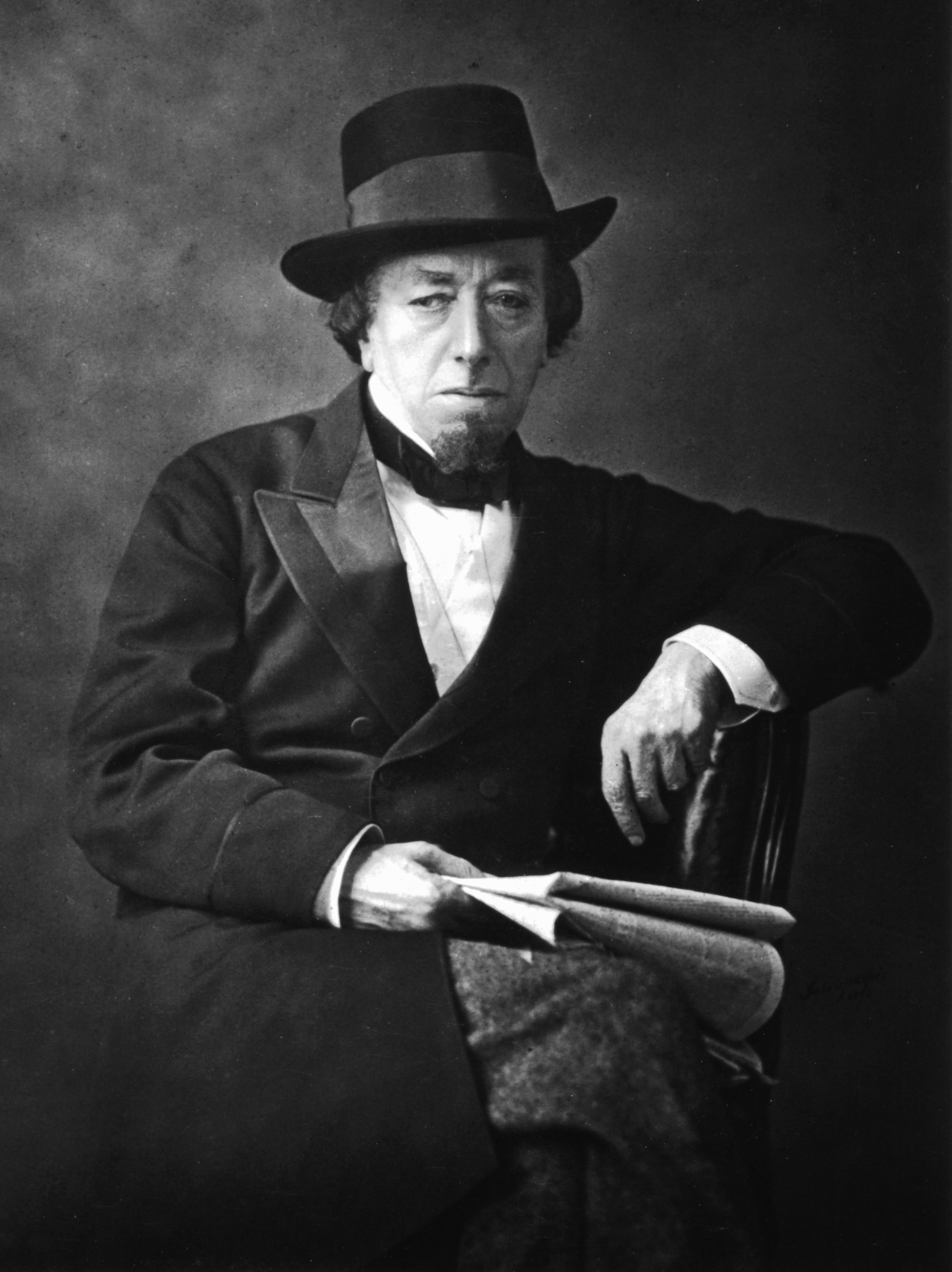
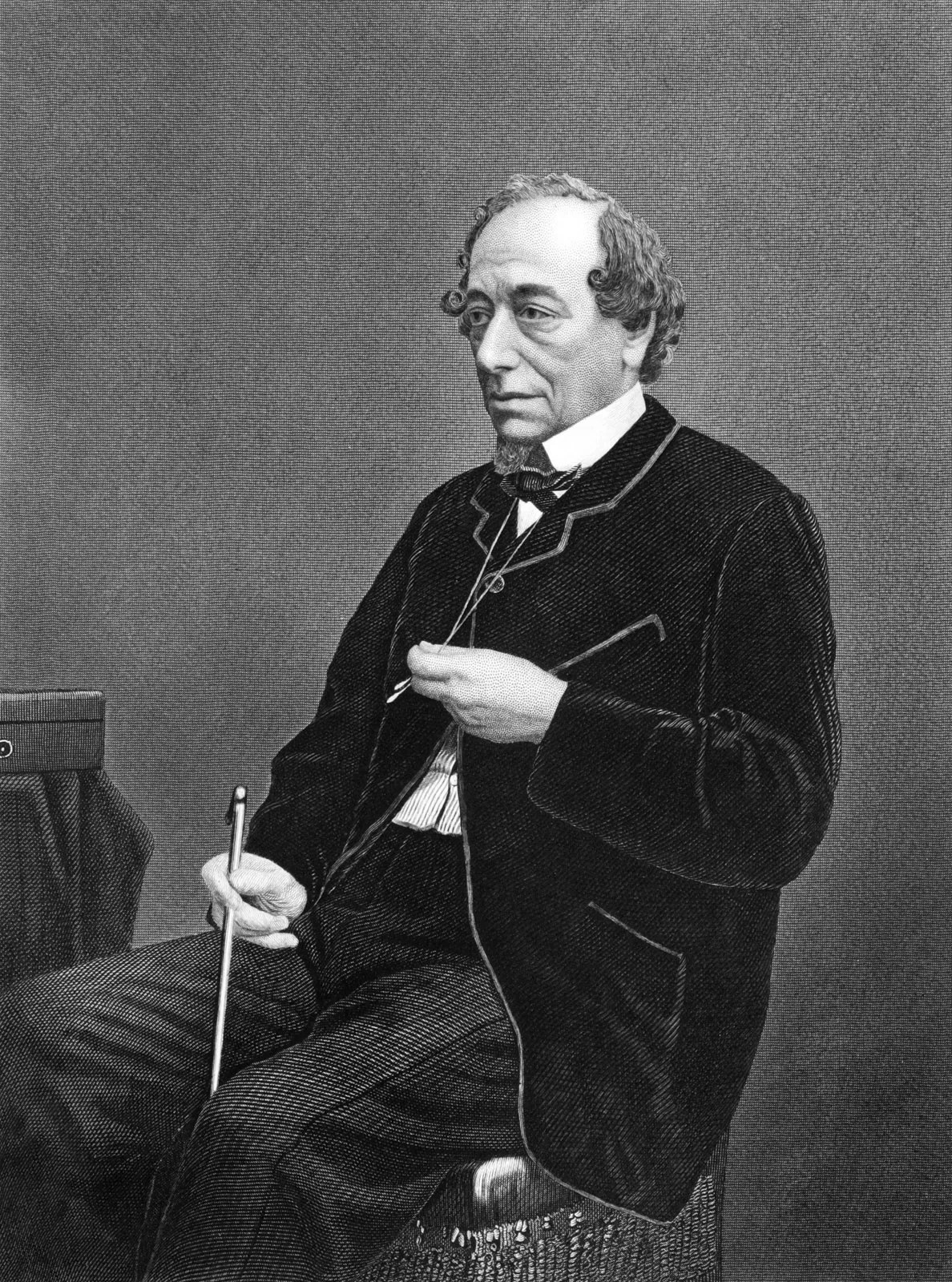
Younger and older depictions of Disraeli (Wikipedia) (Britannica)
3. Winston Churchill
Many will no doubt be surprised to see one of the UKs icons, a war-time hero, so low in the list. Firstly, I’m going to establish that he’s a legend, but secondly reveal my reasoning. Winston Churchill received poor grades at school, however a fascination with the military led him to join the Royal Cavalry- soon after, he was elected as a Conservative MP, before defecting to the Liberals and climbing their ranks at pace.
By the First World War, Churchill was head of the navy, but resigned following the disastrous Gallipoli campaign, travelling to the Western Front to fight himself. During the interwar period, the war-time great defected back to the Tories, serving as chancellor before election defeat in 1929, where he lost his seat. Churchill then spent much of the next eleven years out of office, mainly continuing his career in journalism, writing and making speeches. He was alone in his opposition to Indian independence, but his warnings about the appeasement of Nazi Germany proved correct.
1940 was the year that Winston Churchill stepped up to guide Britain through its darkest hour. He took over from Neville Chamberlain to become prime minister of an all-party coalition government, also adopting the self-created title of Minister of Defence, active in both administrative and diplomatic functions of the war effort.
It is not an overstatement to say that Churchill was the messiah of Britain in the Second World War, a guardian angel type figure who stepped up to galvanise. Some of his most memorable speeches were given during the wartime period, greatly stimulating British morale in arguably the nation’s greatest period of hardship. He rallied the nation from the brink of defeat to victory, and was an intense patriot, a romantic believer in his country’s greatness. He embodied, and was willing to fight for the values that Britain upholds.
Despite being involved in post-war peace agreements, Churchill was surprisingly replaced by Labour’s Clement Attlee in 1945. Once again, he turned to speeches, famously declaring in the USA in 1946 that an iron curtain had descended across Europe, warning of the danger of the communist Soviet Union, despite previously shaping the allies with Stalin, along with Roosevelt. Churchill made a fairy-tale return to office in 1951, however it quickly became obvious that he wasn’t truly fit for office, aging and unwell. His powerful character endured, but his leadership wavered, and was less decisive.
This is part of the reason why he is only third in my ranking. As a war-time leader, his military background, powerful personality, patriotic attitude and critique of enemies made him a more than ideal prime minister to guide Britain through the Second World War. However, the two names above him rebuilt the state from those times of hardship, not only bringing much-needed widespread change, but also revolutionising their party and ideology. I may doubt Winston Churchill’s aptitude to being a peace-time PM, but certainly don’t doubt that he will be remembered as a hero, and one of the greatest names ever to be associated with the United Kingdom.
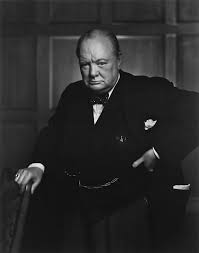
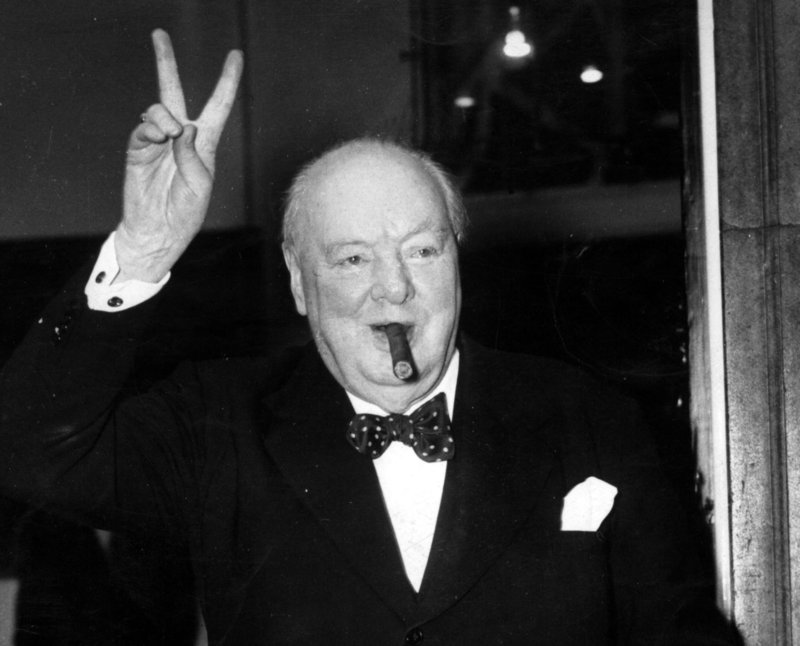
The most famous image of Churchill, and Churchill with his famous cigar and famous sign (Wikipedia) (International Churchill Society)
2. Margaret Thatcher
Margaret Thatcher is like marmite. However, even if you hate her, most wouldn’t deny that she is one of the greatest UK prime ministers ever, revolutionising the Conservative party, and more importantly, the United Kingdom as a whole, becoming the “Iron Lady”. She was the first female British PM (and by far the most successful), and was the longest serving leader in over 150 years, with eleven years in office.
Thatcher came into power in unforeseen and difficult circumstances. Her 1979 election victory was a surprise, and her first two years in office were extremely challenging, with unemployment at unprecedentedly high rates, however she slowly proved her worth as the economy saw gradual improvement. Thatcher’s reputation then saw a huge rise following the UKs victory over Argentina in the Falklands, creating the image of her being a patriarchal hero in much of the population’s heads.
Aided by divided opposition, the Conservatives won an overwhelming 1983 majority- this is where Thatcher’s true colours and radical change properly clicked into gear. Her government followed a thorough programme of privatisation and deregulation, reform of trade unions, tax cuts, and the introduction of market mechanisms into health and education. The principal objective was to reduce the role of government, and increase self-reliance.
Thatcher quickly became a figurehead for a newly energic right Conservative party, advocating for greater independence of the individual from the state- an end to the alleged excessive government interference into the economy, which led to the privatisation of previously state-owned enterprises.
The Grantham-born prime minister did indeed manage to strengthen a withering economy, and reduce drastic levels of unemployment, however rising social tensions in her first reign made her deeply unpopular- difference in class is part of the reason why she is such a divisive figure. Her attempts to curb the power of trade unions, and undermine their authority also angered much of the population.
Like many of the great prime ministers, one particular nagging issue sunk the Margaret Thatcher ship- her attitude to Europe. She was Eurosceptic, resisting continental trends and pressure within parliament suggesting that the UK should adopt a single currency and deepen political union with the EU. Her long-term foreign secretary, Howe, resigned in November 1990 in response to this- his speech that followed led to events culminating in Thatcher’s own resignation later that month.
Divisive as she may be, Thatcher was the only 20th century UK prime minister to win three consecutive terms- this was in a century that is generally seen to have some of the greatest PMs ever- Attlee, Churchill, George etc. Many of the best PMs only managed a single term, however across eleven years Thatcher accelerated the evolution of the British economy from statism to liberalism. It cannot be overlooked that she increased poverty rates drastically, but Thatcher inherited a Labour-created post-war economy that had originally thrived, yet was on its knees by the late 1970s.
A lot was made about her foreign policy attitude; however, she did actually become a key and familiar figure internationally, forming a famous friendship with US president Ronald Raegan, greatly strengthening the deeply crucial Anglo-American bond. All taken into account, whether you love her or loathe her, Margaret Thatcher may just be the most prominent figure in the making of modern Britain.
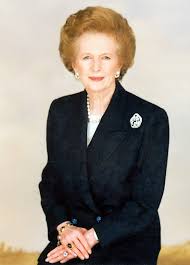
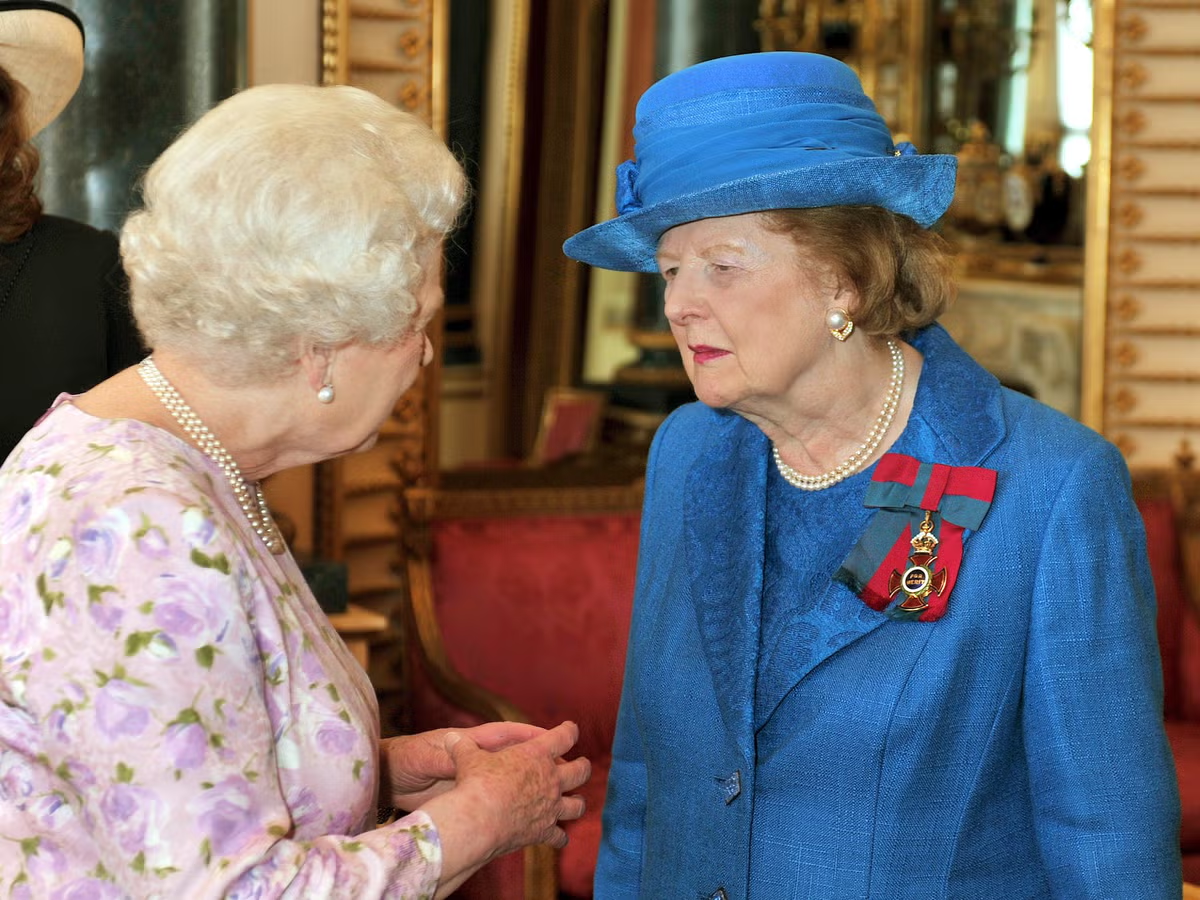
A portrait picture of Thatcher, and Thatcher with Queen Elizabeth II (Wikipedia) (Town and Country Magazine)
1. Clement Attlee
I may have just sung Margaret Thatcher’s praises, and I may be someone who generally has centre-right views, but in my opinion there’s little denying that Clement Attlee is the greatest UK prime minister of all time. In fact, his mountain of achievements makes it pretty easy to concede.
Attlee served as leader of the Labour party from 1935 to 1955, however the period that qualifies him for this list was a single term between 1945 to 1951, preceded and succeeded by Winston Churchill. It often comes as a surprise that the war-hero was beaten in an election just months after the war, however following William Beveridge’s famous 1942 report, many saw Churchill as a man who had served his purpose- many saw that Labour were offering something the Conservatives weren’t (or even recognising the need for in some ways), widespread social and economic change.
Clement Attlee’s Labour government rebuilt Britain from the ruins of the Second World War, ultimately giving its people a much better life than they had before the conflict. The scale of this change is quite unbelievable. Social services and the public sector were enlarged and improved, meaning that the free National Health Service was created (spearheaded by Nye Bevan), and that major industries and public utilities were nationalised. Staggeringly, one fifth of the British economy was nationalised.
Attlee made healthcare free on the basis of citizenship for the first time, whilst also introducing social security. The coal industry, electricity utilities, and railways and long-distance haulage were amongst the sectors nationalised, while planning permission was made compulsory- land ownership alone was no longer sufficient. Attlee’s government established a new comprehensive childcare system, reforming care to deprived and orphaned children. Paid childminders were regulated and registered for the first time, reforming care to deprived and orphaned children. Labour also allowed for the creation of National Parks and Areas of Outstanding Natural Beauty in England and Wales, giving the public rights of way and open access to land. Welfare state revolutionised the UK forever.
In the aftermath of World War Two, Attlee’s time in office was also full of intense foreign policy activity. Along with foreign secretary Ernest Bevin, he presided over a period where India, Pakistan, Burma, Ceylon and Jordon saw independence- Israel was also created following Britain’s withdrawal from Palestine. Additionally, he agreed American loans that were crucial for the rebuilding of the UK and Western Europe, before solidifying the nation’s commitment to the United Nations.
The most obvious way we can see just how significant the short reign of Clement Attlee was is by looking at just how much of modern-day Britain was created in that single term. He didn’t just rebuild the United Kingdom following its darkest hours, he also set it up for its lightest ones. Despite being born into a middle-class family, Attlee’s political views were shaped by the poverty he witnessed in London’s East End, creating an unwavering desire to give the nation’s people the best life possible. Whether you agree with the changes and privatisation that Attlee brought about, its almost impossible not to appreciate the scale of reform.
I said that Margaret Thatcher may be the most prominent figure in the making of modern Britain, however Clement Attlee can be credited with creating the United Kingdom as a whole, laying the framework and foundations for the lives that its population live today. He also transformed the Labour party as the natural opponents of the Tories, polarising British politics, and setting up elections for years to come.
Clement Attlee rebuilt and revolutionised post-war United Kingdom, and changed the lives of its people for better, forever.
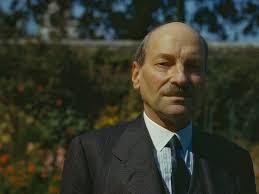
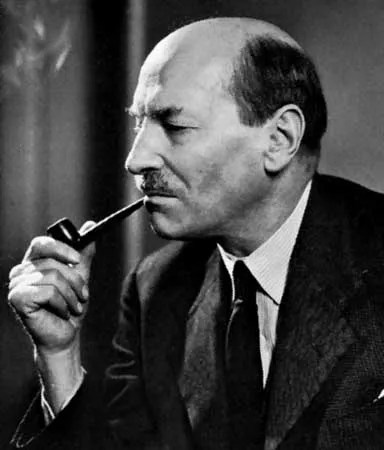
Attlee at eighty, and Attlee with his signature pipe (The Guardian) (Britannica)
Thanks for reading my latest blog post on Your World Explored by me, Lewis Defraine. Feel free to offer your support, or even constructive criticism in the comments section below. A like would be greatly appreciated, and if you’d like to receive more articles from Your World Explored, you can also subscribe. Also, you can take part in the poll down below.
Key sources-
Disraeli Gov- https://www.gov.uk/government/history/past-prime-ministers/benjamin-disraeli-the-earl-of-beaconsfield
Disraeli Britannica- https://www.britannica.com/biography/Benjamin-Disraeli/Conservative-leader
George Gov- https://www.gov.uk/government/history/past-prime-ministers/david-lloyd-george
George Britannica- https://www.britannica.com/biography/David-Lloyd-George
Churchill Gov- https://www.gov.uk/government/history/past-prime-ministers/winston-churchill
Churchill Britannica- https://www.britannica.com/biography/Winston-Churchill
Attlee Gov- https://www.gov.uk/government/history/past-prime-ministers/clement-attlee
Attlee Britannica- https://www.britannica.com/biography/Clement-Attlee
Thatcher Gov- https://www.gov.uk/government/history/past-prime-ministers/margaret-thatcher
Thatcher Britannica- https://www.britannica.com/biography/Margaret-Thatcher
Blair Gov- https://www.gov.uk/government/history/past-prime-ministers/tony-blair
Blair Britannica- https://www.britannica.com/biography/Tony-Blair

 Your World Explored
Leave a comment