
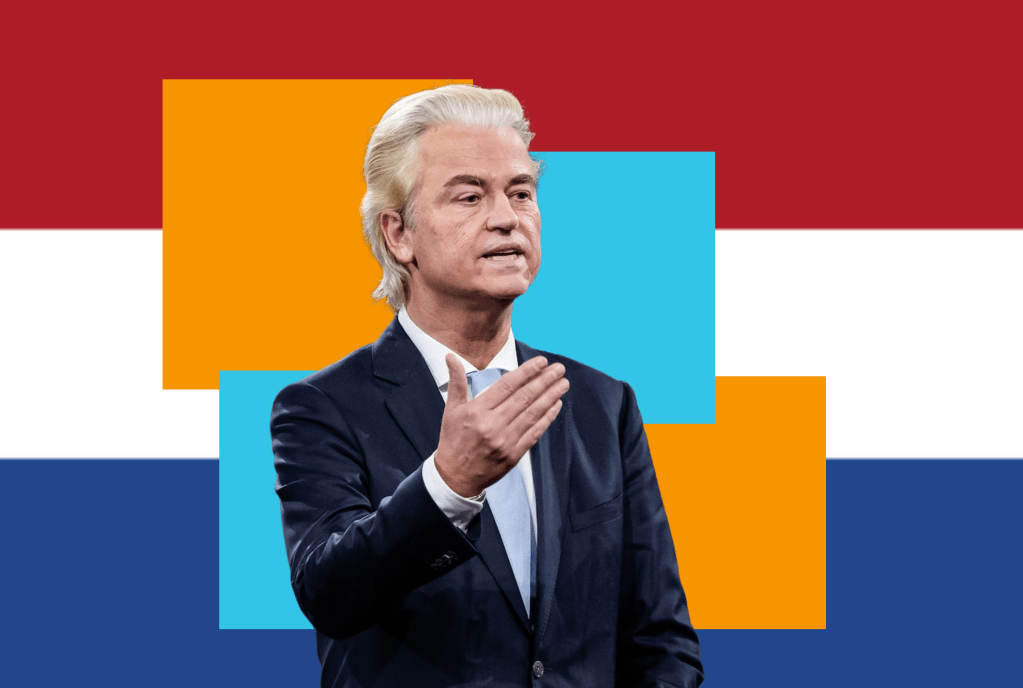
As the populist right-wing collapses in the Netherlands, the UK faces a crucial question. Could this mirror the fate of Reform?
A return to “boring politics”
CDA leader Henri Bontenbal says the Netherlands needs a return to “boring politics”– the 2025 election suggests that most voters are in agreement.
That verdict would have been predicted by a scarce few just two years ago, as the nation pivoted towards firebrand PVV leader Geert Wilders, believing he was the answer to the countless questions facing the country at the time.
Fast-forward back to the 2025 snap election, and the far-right PVV are no longer seen as saviours, but as anti-climactic failures. The populist party has seen its support drop from 23.5% to 16.7%, paving the way for the D66’s spectacular rise to power. Coalition talks will now be in the hands of the centre-left victors, meaning it is incredibly unlikely that Wilders will stray anywhere near them.
Firstly, they will look at a “broad coalition” featuring other big-hitters- the construction of a firewall against the far-right appears to be well underway. This mixed and competitive new parliament is a stark contrast to the vast total of 37 seats claimed by the PVV just 24 months ago. Whilst the far-right movement continues to spread around Europe, many Dutch voters have already firmly turned their backs.
Why the PVV collapsed
Wilders was able to rapidly gather widespread support for the PVV with his charismatic personality and simple bite-size messaging. He identified the question-marks that hung over Dutch politics, and claimed that the far-right was the solution to all of them, like a magic wand capable of eradicating immigration worries, the housing crisis, and energy issues in one grand movement.
In hindsight, there was nothing mystical about the PVV’s short-lived time in power. Precious little was done about the problems deeply condemned by Wilders throughout his prior campaign, and few concrete plans were put in place to solve them- hints of hypocrisy have tainted the reputation of the leader.
The 2023 coalition was born from a marriage of convenience, following a year of shaky, strenuous talks between people reluctant to work with the far-right. Despite this, the Netherlands was still left shocked as news of the PVV’s withdrawal over an immigration row broke to the public. Wilders’ decision was described as “irresponsible” and “unnecessary” by then prime minister Schoof, whilst his deputy, Keijzer, went a step further, labelling it as a “betrayal of the Netherlands”.
As the Dutch public walked into polling booths on the 29th of October, many appeared to feel let down- a miserable feeling had been bred by the PVV’s inability to fulfil their promises. Just a day later, it became obvious that Jetten could be the man to reinvigorate the nation. Optimistic, cheerful, and ambitious, he grabbed the headlines as he guided the D66 to election victory.
After two years of chaos and distrust, Bontenbal is another challenging the culture of negativity, with the simple mission of “making boring great again”. He regards Wilders as “a megaphone for dissatisfaction and anger”, and has sought to combat him with an environment of positivity. In just two years, the PVV have gone from being viewed as the saviours of the Dutch political scene, to an entity that could destroy it.
The rise of Reform and their similarities to the PVV
Europe has experienced a rapid and well-documented rise of the far-right in recent years. It has spread like wildfire by means of populism, however the Netherlands may have already leapt out of the flames- it has been singed by them, which could prove to be enough for the Dutch people.
The United Kingdom, on the other hand, is now viciously feeling the heat. Reform’s rise has been swift, controversial and dividing- some see Farage as exactly what the nation needs, whilst others view him as the opposite, driving a “force of division”. However, despite polar opinions, even many supporters would still admit that the party would be an experiment in charge of the country.
Uninspiring council performances have sown seeds of doubt into the minds of the public. Farage is a man many believe Reform couldn’t live without, yet he required eight attempts to become an MP, with previous projects petering out before they could truly take off. As polling numbers slowly decline, Reform have many options to progress- they could soften rhetoric pre-election like National Rally, or even moderate afterwards, as done to great success by Fratelli d’Italia.
Even if these actions are followed, their reign could still be a car crash. Instead of the recognition of a second term, Reform’s time in parliament could be up remarkably quickly. Rather than tasting the sweet tones of triumph like Meloni, Farage could end up spitting out the cold, harsh flavour of capitulation like Wilders.
Similarly to Reform, the PVV placed heavy emphasis on immigration in an attempt for power, making big statements on how they’d solve the issue. Whilst the headlines appeared positive, it was the smaller print that troubled the party in office, as they struggled to implement the actions they had lauded. Reform have done precious little to convince us they won’t follow a similar path- startlingly, Farage’s policy is even thinner than Wilders’, creating doubts of whether the party can genuinely find solutions to the catalogue of problems plaguing the UK.
Both parties have set the bar incredibly high through their use of populist rhetoric. In the case of the PVV, not only did they fail to leap over it, they crumpled in a heap on the floor. Farage has promised great things should he walk into No 10 by 2029, meaning that if those vows aren’t fulfilled quickly, impatience, anger and regret will spread at pace. The PVV survived a year, and due to the volatile nature of Reform’s support and history, they may struggle to avoid capitulation if everything doesn’t fall into place throughout their idealistic, immigration-quashing world.
Polar feelings on Reform means that opposition will be strong, but vast change needs time to be implemented. The PVV’s time in office highlights that the populist right-wing may not receive the time they need, creating an ominous feeling that Reform’s tenure could derail, crash and burn soon after problems arise.
Why hope remains for Reform
Despite this, hope can be found in the UK political system. First past the post means that the country lacks the coalition culture that is staple in the Netherlands, meaning a majority is far more achievable- Farage likely will not need the co-operation that foiled Wilders. Additionally, the UK’s conventional parties are at near all-time lows at the moment, with Badenoch and Starmer appearing unable to compete with Farage.
That is not the case in the Netherlands. Albeit led by Wilders’ failings, the centre parties have seen a stunning revival, greatly contributing to the speed of the PVV’s downfall. Change is possible before the 2029 election, but stunning a word few would attach to the Tories and Labour at present. Of course, it must also be mentioned that the PVV are extreme-right, whilst it’s unlikely that Reform will ever stretch those distances.
Why Wilders and Farage are similar
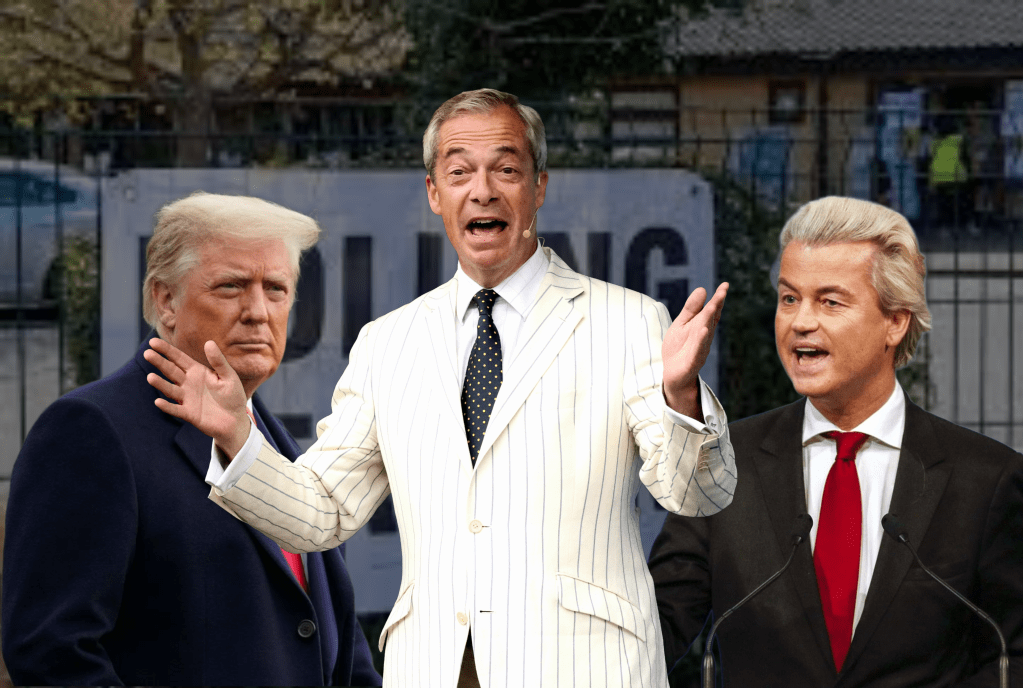
That being said, Wilders and Farage are branches from the same tree. Their shared charismatic personalities have allowed them to resonate with large sections of the population, sweeping support through relentless campaigning- both have a remarkable media presence. Perhaps crucially, both could prove to be better politicians when shouting from the outside in. They are brilliant professional critics, but in Wilders’ case, it has already been demonstrated that his talents end at that point.
A warning for 2029
There’s an ever more common belief that Reform UK are the answer to the deep questions that trouble and afflict the United Kingdom. This branch of thought has been developed by simplistic populist messages, designed to seize the minds of the public. There is little hard evidence that Farage will be successful, and giving him the chance to be would be a monumental risk with potentially catastrophic consequences.
He could moderate like Meloni, but the more obvious comparison can be drawn to Wilders’ PVV. The Dutch party promised so much, but delivered incompetence, with sprinklings of controversy guiding them down a fiery road towards self-directed capitulation and downfall.
I worry that Reform could meet the same fate, and perhaps others should share that concern. By voting Farage, we enter a dangerous game of roulette- black solves the nation’s problems, red sends the country into spiralling crisis.
Thanks for reading my latest blog post on Your World Explored by me, Lewis Defraine. Feel free to offer your support, or even constructive criticism in the comments section below. A like would be greatly appreciated, and if you’d like to receive more articles from Your World Explored, you can also subscribe. Also, you can take part in the poll down below.


 Your World Explored
Leave a comment